
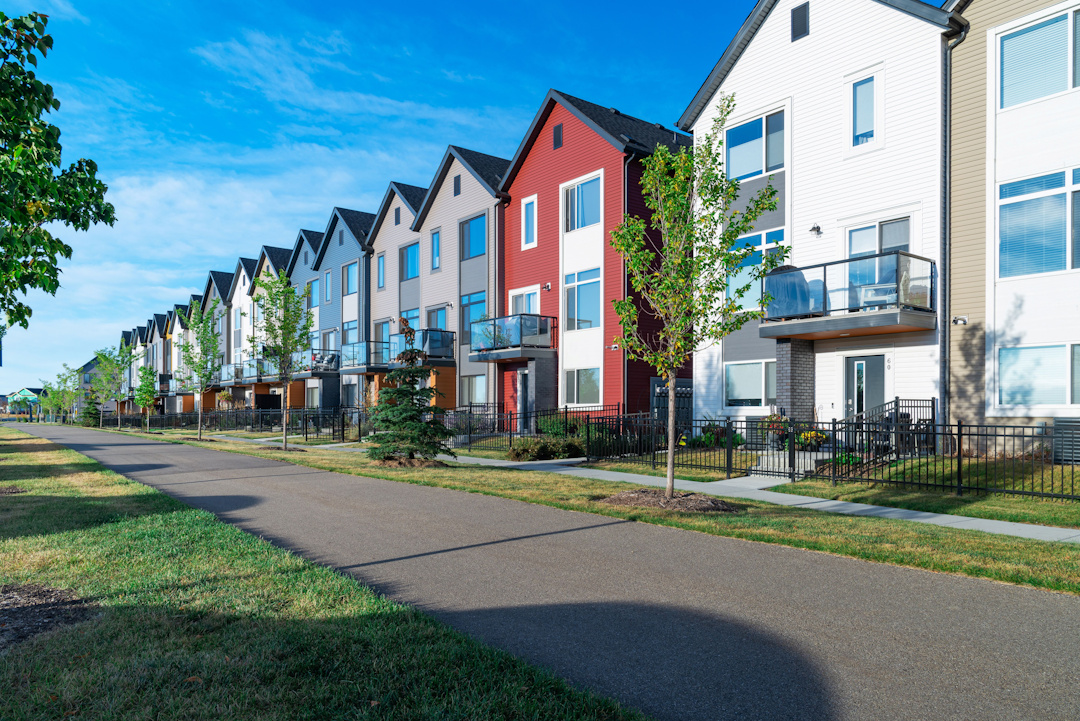
(Credit: Vivid Ribbon Photography & Anthem Properties)
A Community of Communities: How Edmonton is Reimagining Small-District Living
SponsoredBy Payton Phillips, BILD Edmonton Metro
As Edmonton evolves, the city's approach to urban development is guided by the principles of a 15-minute district — a concept that prioritizes accessibility, walkability, and community within compact urban areas.
With new town centres emerging, planners, builders, and developers are focused on creating neighbourhoods that meet the diverse needs of residents, from young families and seniors to newcomers seeking community and connection.
This priority of connecting housing with services and amenities is not a novel concept for town centres in communities. In 2024, the City of Edmonton approved 15 District Plans centered on this concept, which provided policy guidance on how Edmonton will eventually grow to 2 million people. While these plans highlight where and how development occurs and provide predictability on where public infrastructure and investments will be made, its big aspiration is enabling people to live close to where they work, and to access nearby amenities and services.
At its core, the 15-minute district aims to ensure that essential services — like schools, healthcare, grocery stores, parks, and transit — are all within a short drive, walk, or bike ride from home. Meeting the growing demand for local amenities is not only about convenience but also about fostering a deeper sense of place.
Close to Home: Schools, Grocery Stores, and Parks
"Whether through open houses, surveys, school council meetings, or stakeholder workshops, public input plays an important role in how we plan for new community infrastructure," said Planning Supervisor for Edmonton Public Schools Robert Tarulli.
"These conversations help us understand what residents truly value in their neighbourhoods, such as the desire for walkable schools, access to green space, safe routes for children, or spaces where families can gather and connect."
As Edmonton grows and evolves, the key question becomes clear: how can future developments support livability, equity, and fiscal sustainability for everyone who calls the city home?
According to Teresa Spinelli, Owner and Founder of The Italian Centre stores, the answer lies in building and maintaining a sense of community. "Our stores' main customer bases include a lot of immigrants, as well as younger people in our suburban stores, because rent is cheaper and young families tend to live there when buying their first homes," she said. "It's interesting, because you'll see young people talking to old people, and it really creates a sense of community that is very diverse."
The 15-minute district not only addresses the needs of today but also sets a foundation for the future. Neighborhoods with connectivity and a variety of shops and services contribute to the region's overall economic progress by opening opportunities to shape communities and reimagine existing neighbourhoods. "As we reach our population horizon of two million , complete communities will become increasingly important. So, schools, parks, and open spaces that encourage activity and interaction are really the glue that binds these City Districts together," said Tarulli.
The guiding principle for the school system is to accommodate students as close to home as possible — including providing parents with comfort and support for their children to safely walk or bike to school.
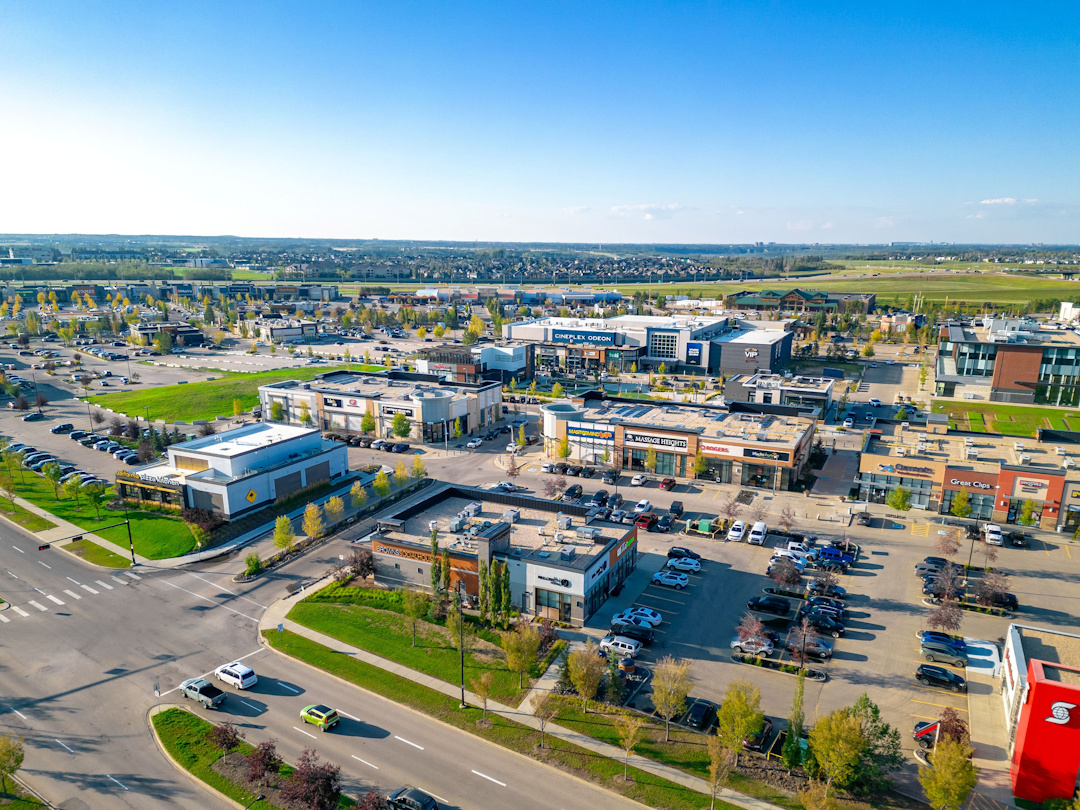
(Credit: Vivid Ribbon Photography & Anthem Properties)
How We Grow
"From a community design perspective, Edmonton has always tried to create great communities that meet the needs of its current and future residents," said Brookfield Vice President Mike Kohl. "We have to consider the people – whether it's renters to first time homeowners, starting a family, or even just adding a dog, all the way to moving back down on the homeowner spectrum."
To Kohl, 15-minute cities are meant to provide the ability for a resident to live somewhere throughout all stages of their life. "This means creating a 15-minute district between everywhere a person may go in a day, from parks, schools, home and employment to places of worship."
For continued growth, particularly in Edmonton's suburbs, planners are considering who these new neighbourhoods are truly being designed for. The answer? Everyone.
"Growth is happening in almost all areas of our city," said Tarulli. In developing communities, Edmonton Public School Board planners are working with developers, the City, school boards, and with the Province to ensure school sites are ready for construction — and are also designed with the potential to share amenities, like gymnasiums and playgrounds, with the wider community.
Following the Trends
Spinelli echoed the importance of being proactive. "As a business, we can't just wait for rooftops; we have to go into communities that already exist. We're small, so the demographics don't matter as much. Things like walkable traffic and community engagement are what's important."
When you combine a diverse demographic and range of lifestyles with more connected roadways, walking paths, open spaces, and schools, "it all contributes to communities that are highly sought after," said Tarulli. "Cities with multiple centres of activity are better equipped to the changing patterns of work, schooling, and daily life."
In 2024, Edmonton added nearly 65,000 new residents, and enrolment within Edmonton Public Schools increased by over 5,000 students. "For us, the demand for student spaces puts pressure on existing schools, making it increasingly difficult to accommodate students in the communities where they live," said Tarulli. "But, by planning collaboratively and sharing information with colleagues, other school divisions, and the City of Edmonton, we are working towards a common goal." A goal of developing well-connected neighbourhoods and looking beyond the surface.
Similarly, Brookfield Developments relies on constant feedback when building new communities. "With our 15-year communities, we need to evolve the space to meet the needs of its residents," said Vice President Mike Kohl. "Secondary suites have been a big deal recently, with multi-generational living, and how we program these types of activities and amenities is key."
On new communities under development, like Heritage Valley and Windermere, there is a lot of work being done on market studies and consumer intelligence studies to understand the demographics. "We are actively developing, so we know who's buying and we know the trends," Kohl said. "It's a marriage between those elements."
The Role of Community
As Spinelli summed it up: "We exist to create community, so the fact we sell olive oil and pasta is just a side. What we really love is to hear stories from locals about how they've connected with our stores. To some of our customers, we are their family. So, it really is about the memories, people, and warmth for us."
As Edmonton continues to expand — as demonstrated in the case study of Heritage Valley and Windermere— it's clear that the 15-minute city isn't just a planning tool, but a vision for how people can live more connected and fulfilling lives. It's about more than proximity; it's about possibility. Possibility for a child to safely walk to school, for neighbours to share a cup of coffee at a local cafe, for new Canadians to find belonging, and for small businesses to grow alongside the communities they serve.
The work of shaping new neighbourhoods thrives in conversations and collaborations made by planners, educators, business owners, and residents alike. With every new development, Edmonton isn't just building homes — it's cultivating the conditions for connection, care, and a shared future. Because in the end, a 15-minute district is about more than just time; it's about the life that happens within those minutes.
This story is part of BILD Edmonton Metro's Urban Growth Case Study, a report that underscores that urban growth in Edmonton is not only necessary to accommodate new arrivals – it is a powerful economic driver for the city. This report includes recommendations for how the City of Edmonton and the development industry can work together to welcome an additional one million residents, in alignment with the City's long-term vision as outlined in The City Plan. Download the report.
Share