
Beloved community garden deemed a resource worth conserving
The Strathcona Rail Community Garden has been added to Edmonton's inventory of historic resources, which could signal a widening of the definition of heritage in Edmonton, says the advocate heading the preservation effort.
"It goes well back in telling the story of the settlement of Edmonton, but also the City Beautiful (movement) and beautification during the Great Depression and post-World Wars," said Kyle Schole, who is vice-chair of the Edmonton Historical Board but spearheaded this project independently.
The garden is on a wedge of city-owned land along the rail line near 86 Avenue, between 105 and 106 Streets. Schole told Taproot it was originally part of River Lot 11, which was claimed by Joe McDonald, a man of Scottish and Métis descent and one of the original founders of the Strathcona community. The plot was one of many vacant lots across the city that was transformed into a garden in a bid to increase food production and beautify the city in the 1920s or '30s (precise historical records were destroyed in a flood in the 1970s).
To make the case to add the garden to the inventory of historic resources, Schole researched the space and interviewed members of the gardening group.
"At a couple of moments, I was almost moved to tears by some of the passion and the joy that this place brings them today," he said. "It's a space that, yes, has a longstanding story and tells a heritage and has a lot of stories that go with that, but also, for today, it's a spiritual place that brings joy to folks who continue to improve those soils and work this land."
Schole said the garden's recognition as a historic place aligns with potential forthcoming updates to city policy. Administration has been working on a new heritage places strategy to reimagine how it identifies, commemorates, and preserves historic spaces. A main goal of updating the strategy is to widen the definition of "heritage places" to include not just historic buildings, but also natural spaces, cultural landscapes, and community landmarks.
Schole said there are seven parks and 13 trees or landscape features currently on the inventory, meaning they are recognized as deserving of conservation but are not legally protected from demolition. Resources that are designated as municipal historic resources are protected from demolition or inappropriate alteration. Alexander Circle, a small park in the Glenora neighbourhood, was Edmonton's first open space to be designated a municipal historic resource.
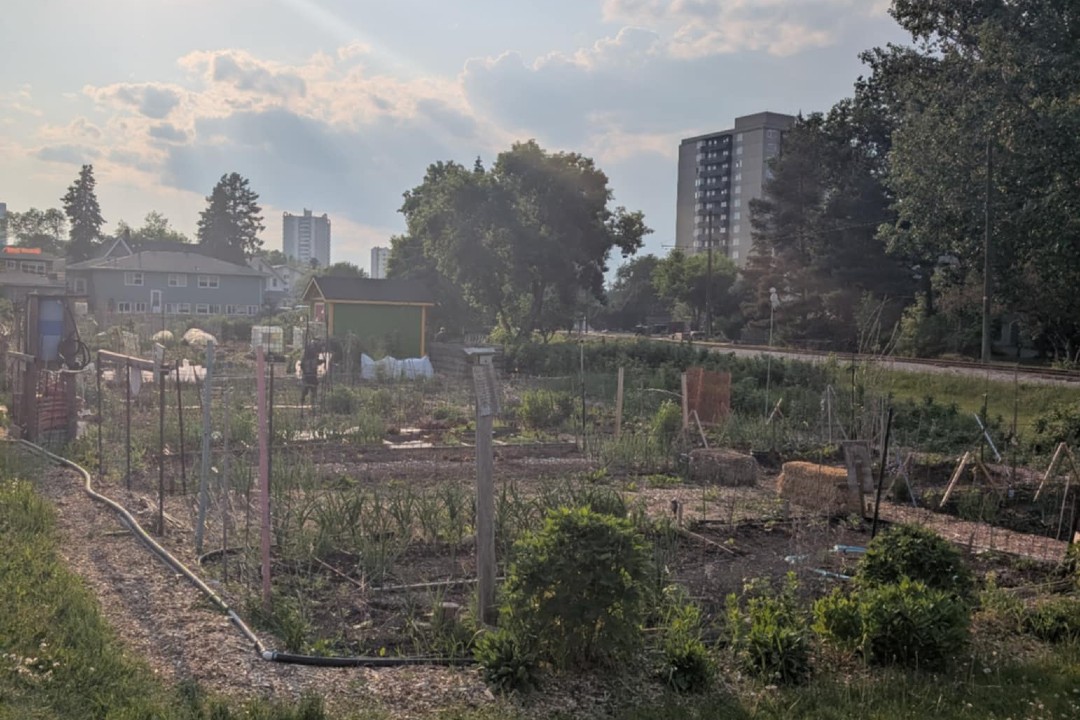
Neighbours have cultivated the Strathcona Rail Community Garden at 10543 86 Avenue NW for about a century. (Kyle Schole)
Schole said it is an encouraging step forward for the garden to have made it onto the inventory, but he's already pushing for it to be designated as a municipal historic resource.
"I'm not aware of any ecological features that have actually managed to be advanced forward to full designation at this point," he said. "That is one of the outcomes that I'm personally hoping to see come of the work on a new heritage strategy."
Public engagement conducted in the summer of 2025 found that many respondents consider natural heritage a top priority to include in the new strategy. "Respondents viewed natural areas, urban forests, and environmental features as essential components of heritage that provide continuity and community connection," the city said in a report.
City administration plans to have a draft version of the new strategy ready for review early this year and to present the final version to city council for approval in mid-2026.
Share