Alberta Food Processors Association pivots to app after funding cut
The Alberta Food Processors Association is leveraging artificial intelligence to help shoppers keep their dollars local with the Made in Alberta app.
"We kept hearing that people were struggling to know if something was made in Alberta," Bianca Parsons, the AFPA's executive director, told Taproot. "We thought, 'This could be as simple as literally taking a photo.' Maybe you're at home, you take a photo of your coffee cup, and the app will say, 'It looks like you're drinking a hot beverage — here are some local ones to choose from.' It gives people an opportunity to, hopefully, fall in love with something new."
Taproot tried the coffee cup photo Parsons mentioned and got suggestions for products by Beverage Bombs, Gioielli Tea Co., and Token Bitters. The app also allows users to browse a directory of more than 3,000 Made in Alberta products by category or search term and save them for future reference. It was developed by Playcanics and debuted in December.
The AFPA has stewarded the Made in Alberta program on behalf of the provincial government since 2023. Parsons said support for shopping local has only grown since, especially once the United States started applying tariffs on Canadian goods and made threats against Canada's sovereignty.
"All of a sudden, when we heard 'elbows up,' we also heard people say, 'Actually, I genuinely care. Is this actually made in Alberta? What does it mean to have been made in Alberta?'" Parsons said.
There are many different official designations for how much something is made in a specific place, Sam Jenkins of Punchcard Systems shared when his company released the Check the Label app, which focuses on how Canadian a product is. With Made in Alberta, the "substantial, final transformation" of the goods must take place in the province, Parsons said. For example, raw materials don't necessarily need to be grown here to meet the AFPA's threshold.
"We know there are so many incredible coffee roasters out there," Parsons said. "Our criteria allows for you to bring your beans in, but if you roast them here, well, now that product is made in Alberta."
The AFPA has calculated the value of Albertan growers, processors, retailers, food service buyers, and suppliers at $28 billion. Parsons said the eligibility criteria for Made in Alberta are more inclusive than similar programs in other provinces. British Columbia's Buy BC certification is open to vendors who spend 51% or more of processing costs on products within the province, she mentioned.
Made in Alberta began as a labelling program with no ambitions to build an app. The provincial Ministry of Agriculture and Irrigation had pledged $5 million for the AFPA to deliver the program through mid-2027. The funds were meant to develop the program, build a website, and promote Made in Alberta to consumers and producers. But Budget 2024 limited Made in Alberta funding to $2.8 million, leading the AFPA to create an app instead, Parsons said.
The agriculture ministry did not respond to Taproot's request for information about the funding shortfall. Meanwhile, it is soliciting input on the demand for local food in Alberta. The survey closes on Jan. 30.
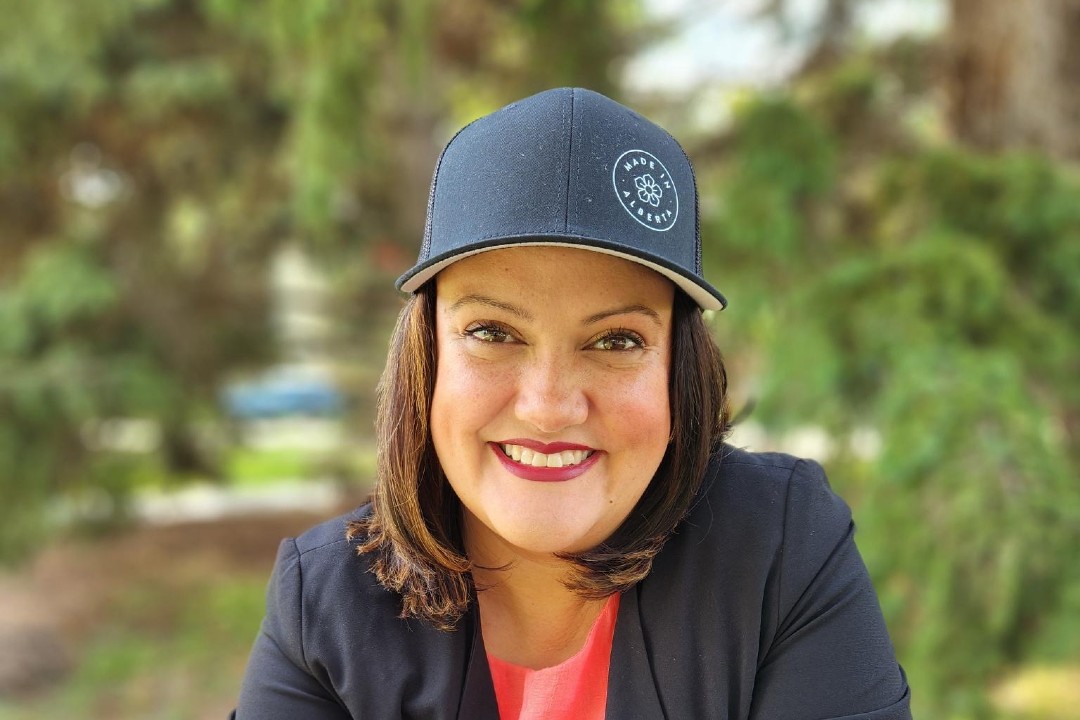
Bianca Parsons, the executive director of the Alberta Food Processors Association. (Supplied)
Pivot or no, the funding dip adds pressure to the already-strained non-profit, Parsons said. The AFPA relies on grants as well as on sponsorships from ATB, MNP, and the Business Development Bank of Canada.
"The reality of the grant world is it's very difficult for not-for-profits, because you don't have a large ecosystem, you don't have a large staff, and at the same point, you also don't have the resources to be able to dedicate a ton of time into filling out grants," Parsons said. "Usually, all of your time is spent on helping your members."
Despite the overall swell of support for goods made in Canada, Parsons noted that Health Canada has added new hurdles for food and beverage producers. As of Jan. 1, producers must add front-of-label symbols to their packaging if a product is deemed high in saturated fat, sugar, or sodium, with some exceptions. "If you're in the United States and you're a producer, you're not having to change your packaging to do that right now," she said.
Plus, Parsons said she anticipates federal changes to plastic legislation that could further complicate packaging for producers. The AFPA is launching a regulatory committee this year to further its advocacy work with governments.
The AFPA is also launching an education series called Business - Innovation - Training - Expansion, or BITE. It will take place once a month in Edmonton and Calgary, Parsons said. The AFPA will host a conference in Calgary on April 23 and host its first Alberta Food & Beverage Summit on June 4 and 5 at a variety of venues in Edmonton. The summit includes a golf classic, an annual general meeting, a buyers showcase, and the Alberta Food & Beverage Awards.
Share