
A moment in history: Jan. 9, 1954
By Scott Lilwall
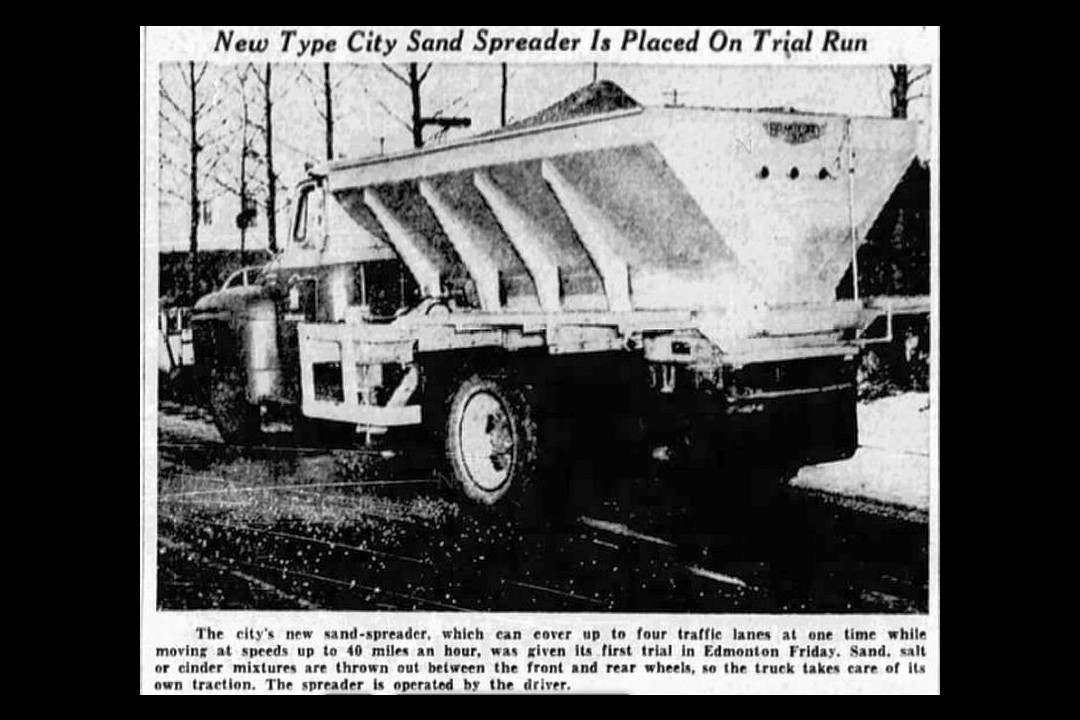
On this day in 1954, a new sanding truck was setting off on Edmonton's snowy roads.
The new sand spreader promised to cover up to four lanes of traffic at once while moving at speeds of up to 65 km/h, and since the sand, salt, or cinders were thrown out between the wheels, the truck was said to take care of its own traction.
These days, Edmonton maintains a small fleet of plows, sanders, and other specialized snow-clearing equipment. But for much of its history, clearing the streets was done chiefly by hand shovelling, often by the people living in the neighbourhood. Even with horse-powered snowplows chipping in when possible, it was slow and heavy work.
In the 1900s, automobiles were a rarity on Edmonton's streets. But even then, snow was a concern when moving people around the rapidly growing city. A 1906 article in the Edmonton Bulletin broke down the cost estimates for the streetcar system, which was still in the planning stage. It included estimates for a sweeper car and a plow to keep the tracks clear in the winter at a cost of $5,000, which was quite the sum at the time.
Following the Second World War and suburbanization, there was rapid growth in both the number of roads in Edmonton and the number of people driving on them. So the city's snow fleet grew as well, adding graders and specialized streetcars to keep Edmontonians moving.
A pamphlet from 1978-79 outlines the city's plan for dealing with an emergency snowstorm, focusing on clearing major roads and arterial routes and encouraging drivers to stay off uncleared side streets whenever possible. It also threatened fines of $25 and towing for anyone parked along the routes during snow clearing.
The aims of the city's snow-clearing plan have remained the same over the past century, but the methods and technologies have changed. Even in the past 20 years, the city has seen significant shifts (and controversies) in the way it handles snow. For example, before 2006, it was common for snow to be pushed off the streets and piled in parks and other community spaces. But new rules from the provincial government put an end to that, forcing municipalities to move the snow to designated storage areas. This led to issues with massive windrows collecting on the sides of streets and on medians.
The city has set a base budget of $67 million for snow removal this year. But there's a good chance more will be needed; Edmonton saw record amounts of snow in December. Complaints about slow progress clearing it around Christmas prompted Mayor Andrew Knack to speak out about the "unprecedented" winter weather. "Even with the increases in our snow removal budget each of the last 4 years, I believe we need to consider further investment in snow and ice control," he wrote. "The question we must answer together: are we willing to pay for that increased service?"
If you're wondering where the plows are (and what their names are), you can watch their progress on a live map.
This clipping was found on Vintage Edmonton, a daily look at Edmonton's history from armchair archivist Rev Recluse of Vintage Edmonton.
For more on snow removal in Edmonton, listen to Episode 338 of Speaking Municipally.
Share