
The Pulse
Jan. 9, 2026
Here's what you need to know about Edmonton today.
Essentials
- -3°C: Increasing cloudiness early in the morning. 60% chance of flurries late in the morning and in the afternoon. Wind up to 15 km/h. High minus 3. Wind chill minus 22 in the morning and minus 7 in the afternoon. (forecast)
- 4-3: The Edmonton Oilers (22-16-6) defeated the Winnipeg Jets (15-22-5) on Jan. 8. (details)
- 8pm, Jan. 10: The Oilers (22-16-6) host the Los Angeles Kings (18-14-10) at Rogers Place. (details)
Updates: What happened next in business and tech
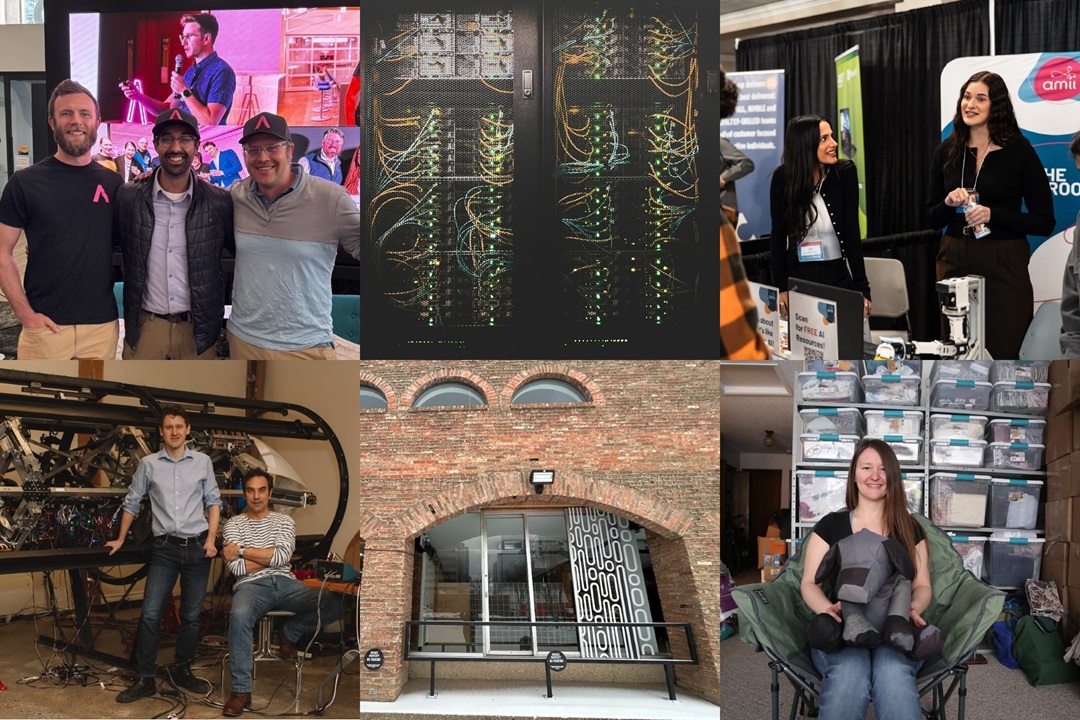
Looking back on 2025 on the business, tech, and innovation beats, we saw the acquisition of IronSight, the approval of a Nordic spa in the river valley, the launch of MIT REAP Edmonton, and the end of several accelerator programs, among other things. Here's what happened next and what to expect on some of the other business and tech stories Taproot brought you:
Startup TNT hires executive director to allow co-founders to iterate and build community (May 22, 2025)
The original story Startup TNT hired CK Dhaliwal as its first executive director in May. The country's most active pre-seed investor hired him to steward a transition into a new era where localized chapters are autonomous, and the founders can focus on the investment pool that makes up the backbone of TNT's value proposition.
Then what? Startup TNT celebrated raising more than $20 million for 120+ companies by the time it had its 50th investment summit, an agri-food event held in Toronto on Nov. 27 . On Nov. 5, Startup TNT held an Alberta summit instead of having separate ones in Edmonton and Calgary; Edmonton's Pulmvita won the day, taking home more than $200,000 in investment.
What's next? Startup TNT co-founder Zack Storms is now the built tech lead at Edmonton Unlimited, where he will oversee the Built World Tech venture pilot program. Applications for the program are open until Jan. 20. Meanwhile, the Thursday night tradition that gave TNT its name continues.
Upper Bound focuses on AI literacy to better prepare future workers (May 16, 2025)
The original story: AI literacy was one of the themes at the Upper Bound conference held by the Alberta Machine Intelligence Institute in May. Amii's Jill Kowalchuk said preparing students for a future job market shaped by AI requires more than technical skills. "AI literacy is not just becoming accustomed to using a particular AI tool," she said. "(My work) speaks to ethics. It speaks to the societal impacts of artificial intelligence, and being able to not only use a tool, but collaborate with that tool in an effective and meaningful way to support skill development."
Then what? Amii launched its AI Literacy for Everyone platform in October, about a month after announcing its AI Pathways: Energizing Canada's Low-Carbon Workforce program. The two programs are among many updates from Amii in 2025.
What's next? The research institute will soon offer 750 scholarships for students in environmental sciences and meteorology, thanks to a grant from Environment and Climate Change Canada. The next Upper Bound conference takes place from May 19 to 22.
TransPod aimed for speed but points to province's rail plan for pause in building test track (April 8, 2025)
The original story: Toronto-based TransPod aims to construct a full-scale hyperloop test guideway in Edmonton by 2026, after pausing development due to the provincial government's work on the passenger rail master plan, which was due in the summer of 2025. CEO Sebastien Gendron said the project, which aims for 45-minute travel between Edmonton and Calgary, secured a 2020 memorandum of understanding with the province. The City of Edmonton and Edmonton International Airport have committed to working with TransPod on the test guideway, planned from the airport to the city's south side. Eventually, TransPod aims to build a rail line between Edmonton and Calgary that travels at more than 1,000 km/h.
Then what? TransPod signed an agreement with Canadian companies Algoma Steel and Supreme Steel to supply its proposed rail project. TransPod said it expects the project to induce demand for up to 2 million tonnes of Canadian steel, create 140,000 jobs, and add $19.2 billion in GDP.
What's next? The Government of Alberta missed its summer 2025 deadline for the passenger rail master plan, but will share the plan in 2026, the press secretary for the Ministry of Transportation and Economic Corridors told Taproot.
Headlines: Jan. 9, 2026
- The City of Edmonton has added messages like "Please don't hit me" and "Give this train a brake" to its LRT trains to remind drivers of road rules and reduce collisions involving trains in the city. Since it began running two years ago, trains on the Valley Line Southeast LRT have been in 24 collisions, including 18 that involved other vehicles.
- Edmonton doctors are urging the Alberta government to declare a state of emergency as major hospitals, including the Grey Nuns Community Hospital, University of Alberta Hospital, and Misericordia Community Hospital, are overflowing and unable to safely accept new patients. Paul Parks of the Alberta Medical Association said hospitals are in "disaster mode," struggling with population growth, underfunding, and a severe flu season, impacting patients in Edmonton and those diverted to facilities like WestView Health Centre in Stony Plain. A provincial spokesperson said calls to declare a state of emergency are "misguided and would add nothing to what is already being done."
- Edmonton's Lucy the elephant received a clean bill of health following two physical checkups at the Edmonton Valley Zoo in fall 2025. Veterinarians Jennifer D'Agostino and Michael McClure said the geriatric elephant, who has chronic arthritis and sinus congestion, receives excellent medical care, superior nutrition, and an enriching environment. D'Agostino noted Lucy's physical health is great for her age and existing conditions.
- In an update on its snow-clearing efforts, a City of Edmonton spokesperson said success is hard to measure at this point, but that the City is meeting its standards. While initial efforts focused on priority roads such as highways and major bus routes, residential road clearing is set to begin on Jan. 12. A Phase 2 parking ban will be in effect.
- The Glenrose Rehabilitation Hospital in Edmonton will receive a new therapeutic pool by 2028, replacing the one closed in 2024 due to age and safety concerns. The Alberta government will contribute half of the $6.5 million cost, with the Glenrose Hospital Foundation fundraising the remainder.
- A water main break has closed a south Edmonton street until Jan. 10, according to EPCOR. The closure on 99 Street near 60 Avenue, which began on Jan. 6, is affecting traffic in the area. Drivers can detour along 51 Avenue and 63 Avenue.
- A provincial survey suggests many Alberta teachers find mandatory K–3 literacy and numeracy screenings ineffective and burdensome. Nearly 74% of respondents said the assessments do not help identify student needs or support early intervention, the Alberta Teachers' Association said. Teachers cited lost instructional time, inappropriate content and results they do not trust. The province maintains the screenings, mandated under Bill 6, help identify learning needs early and align with practices in other provinces. Education experts offered mixed views, with some pointing to workload pressures and recent labour tensions as key factors.
- The union representing academic staff at Edmonton's NAIT will hold a strike vote on Jan. 14 and 15. The NAIT Academic Staff Association, which represents 1,000 union members, said it reached a bargaining impasse with the school in December.
A moment in history: Jan. 9, 1954
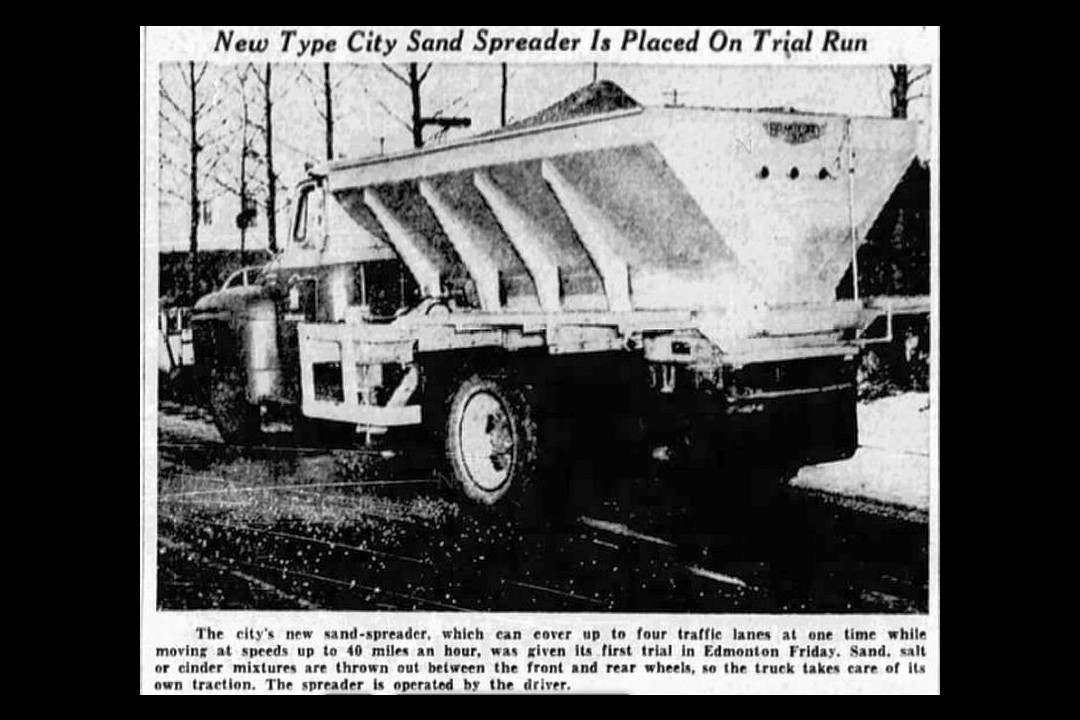
On this day in 1954, a new sanding truck was setting off on Edmonton's snowy roads.
The new sand spreader promised to cover up to four lanes of traffic at once while moving at speeds of up to 65 km/h, and since the sand, salt, or cinders were thrown out between the wheels, the truck was said to take care of its own traction.
These days, Edmonton maintains a small fleet of plows, sanders, and other specialized snow-clearing equipment. But for much of its history, clearing the streets was done chiefly by hand shovelling, often by the people living in the neighbourhood. Even with horse-powered snowplows chipping in when possible, it was slow and heavy work.
In the 1900s, automobiles were a rarity on Edmonton's streets. But even then, snow was a concern when moving people around the rapidly growing city. A 1906 article in the Edmonton Bulletin broke down the cost estimates for the streetcar system, which was still in the planning stage. It included estimates for a sweeper car and a plow to keep the tracks clear in the winter at a cost of $5,000, which was quite the sum at the time.
Following the Second World War and suburbanization, there was rapid growth in both the number of roads in Edmonton and the number of people driving on them. So the city's snow fleet grew as well, adding graders and specialized streetcars to keep Edmontonians moving.
A pamphlet from 1978-79 outlines the city's plan for dealing with an emergency snowstorm, focusing on clearing major roads and arterial routes and encouraging drivers to stay off uncleared side streets whenever possible. It also threatened fines of $25 and towing for anyone parked along the routes during snow clearing.
The aims of the city's snow-clearing plan have remained the same over the past century, but the methods and technologies have changed. Even in the past 20 years, the city has seen significant shifts (and controversies) in the way it handles snow. For example, before 2006, it was common for snow to be pushed off the streets and piled in parks and other community spaces. But new rules from the provincial government put an end to that, forcing municipalities to move the snow to designated storage areas. This led to issues with massive windrows collecting on the sides of streets and on medians.
The city has set a base budget of $67 million for snow removal this year. But there's a good chance more will be needed; Edmonton saw record amounts of snow in December. Complaints about slow progress clearing it around Christmas prompted Mayor Andrew Knack to speak out about the "unprecedented" winter weather. "Even with the increases in our snow removal budget each of the last 4 years, I believe we need to consider further investment in snow and ice control," he wrote. "The question we must answer together: are we willing to pay for that increased service?"
If you're wondering where the plows are (and what their names are), you can watch their progress on a live map.
This clipping was found on Vintage Edmonton, a daily look at Edmonton's history from armchair archivist Rev Recluse of Vintage Edmonton.

Happenings: Jan. 9, 2026
Here are some events happening this weekend in the Edmonton area.
- Jan. 9: Ice Grooves: Tea Cup DJ starting at 6pm at City Hall Plaza
- Jan. 9: Ana Falastini Canada Tour starting at 6:30pm at Canada Palestine Culture Association
- Jan. 10: Learn to Ice Bike and Kicksled starting at 11:10am at Sir Wilfrid Laurier Park
- Jan. 10: Tony Cashman/Send & Receive starting at 3pm at Garneau Theatre
- Jan. 10: Film of the month: Ici et là-bas starting at 6pm at Landmark Cinemas 9 (Edmonton City Centre)
- Jan. 10: Gin Cocktail Mixology Masterclass starting at 6:30pm at Halo Bar and Bistro
- Jan. 10: Tiff Hall's Very Lit Music Show starting at 9:30pm at Rapid Fire Exchange
- Jan. 10: PepperMUNT Late-Night Cabaret starting at 10:30pm at Varscona Theatre
- Jan. 11: Fresh Verse by Stroll of Poets starting at 2pm at Audreys Books
- Jan. 11: Harlem Globetrotters: 100 Year Tour starting at 3pm at Rogers Place
- Jan. 11: Mohsen Namjoo Solo starting at 7pm at The Orange Hub
- Jan. 11: Script Salon: Workshop West Indigenous Playwrights Circle starting at 7:30pm at Holy Trinity Anglican Church
And here are some upcoming events to keep in mind:
- Jan 21-25: Winterruption at various locations
- Jan. 27: Solar 101: Solar for Your Home or Business online
- Jan. 29-Feb. 8: Edmonton Chinatown Dining Week at various locations
Visit the Taproot Edmonton Calendar for many more events in the Edmonton region.

The Taproot Mini - No. 123
Test your crossword prowess and deploy a little of your Edmonton knowledge. Complete the puzzle.
Know someone who would like the Mini? Encourage them to subscribe to The Pulse!
The Taproot Mini is brought to you by ATB, your homegrown source of good advice to help conquer life's tougher puzzles. Learn how.
