
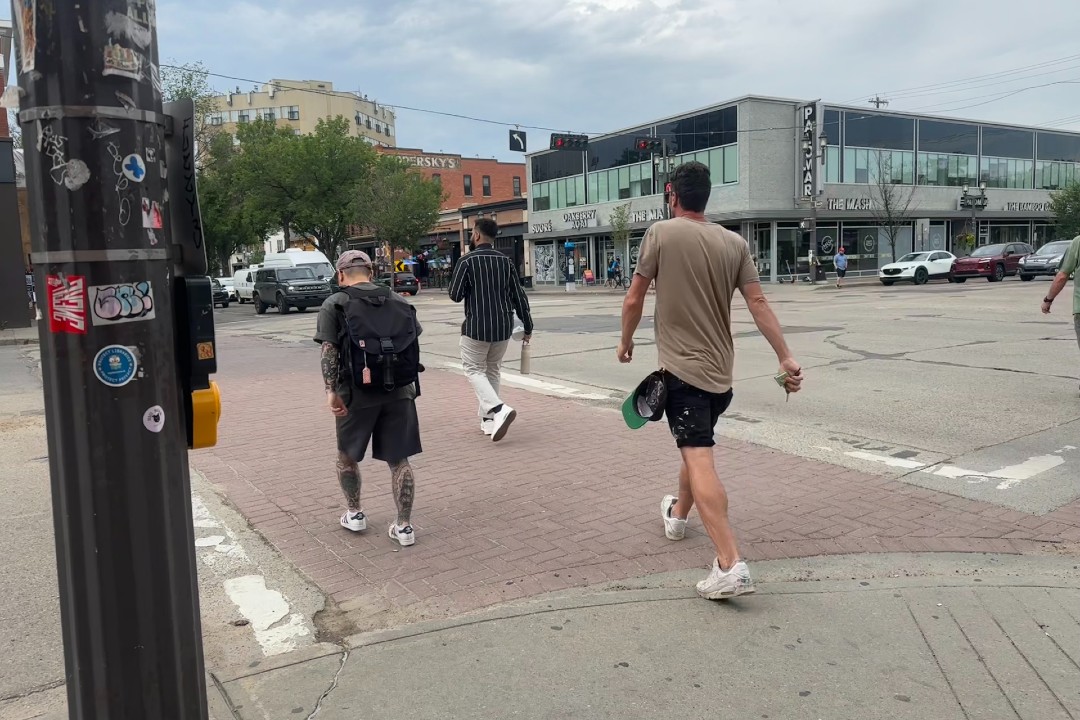
The scramble crosswalks on Whyte Avenue, such as this one at Calgary Trail, will remain in place this summer. (Stephanie Swensrude)
Removal of Whyte Ave scrambles delayed until 2027
Three scramble crossings on Whyte Avenue will remain in place for another summer season so the city can better coordinate with events and construction projects.
Earlier this year, the City of Edmonton quietly posted online that it would be converting the scramble crosswalks back to traditional ones as part of the transit priority measures project. The intersections at 105 Street, Gateway Boulevard, and Calgary Trail were set to be redesigned this summer in a bid to get buses down the avenue faster. Shafayat Hossain, engineering project manager with transportation planning and design at the City of Edmonton, told Taproot in March that the whole suite of changes could halve transit delays at those intersections. The redesign will expand pedestrian space and remove bus bays, so buses won't have to exit and re-enter traffic.
The redesign has now been put on hold until next summer. "The new schedule will allow the city to issue a longer construction tender, increasing market interest and helping secure the best value," spokesperson Nicole Boychuk told Taproot. "The revised schedule will help to ensure construction can be completed within a single construction season, reducing the risk of work pausing over winter and minimizing overall disruption in the area."
At a scramble crosswalk, all vehicles stop, allowing pedestrians to cross the intersection in any direction, including diagonally. The scramble at 105 Street was added in 2018, and the scrambles at Gateway Boulevard and Calgary Trail were added in 2021.
Active transportation advocates say scramble crosswalks are safer because they completely separate vehicle traffic from pedestrians, as drivers are not allowed to turn through a crosswalk at the same time that a pedestrian would be using it. The redesign is expected to prohibit right turns on red and allow left turns only during a dedicated arrow, which means the only time vehicles and pedestrians could end up in the same space is during a right turn on green, as long as everyone follows the signals properly.
While the city received both negative and positive feedback about the plan to remove the scramble crosswalks, it was not a factor in the decision to adjust the project schedule, Boychuk said.
A memo sent to councillors in April, shortly after the project gained media attention, said construction was expected to take four to six months. Administration said it would install signage about the redesign to educate pedestrians about the changes. The memo said administration would monitor the crosswalks and consider adjustments for pedestrian safety.
Share