
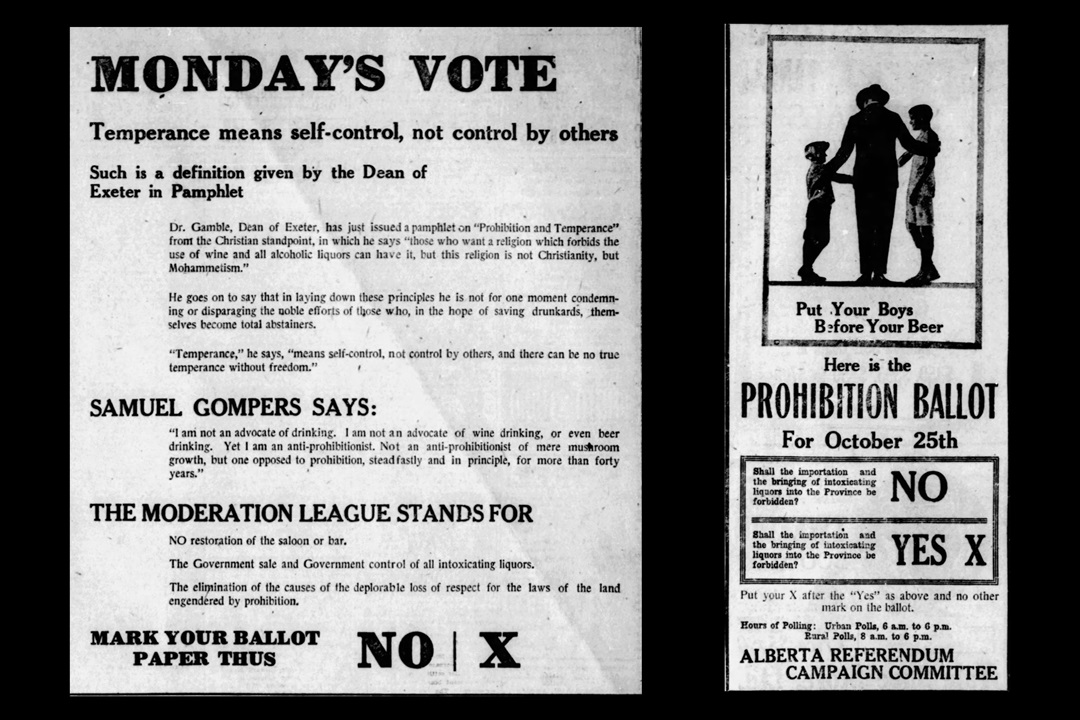
A moment in history: Oct. 23, 1920
By Scott Lilwall
On this day in 1920, Edmontonians were preparing to vote on whether to ban alcohol imports.
Prohibition in Alberta didn't happen all at once. Instead, it was a years-long endeavour that involved several plebiscites, delays, loopholes, and a lot of heated debate.
Selling alcohol in Alberta was already prohibited following a 1915 plebiscite, which succeeded with about 61% of the vote. But that didn't mean that Alberta was completely dry. The prohibition had a few exemptions: alcohol could still be sold for medicinal or religious reasons, and anything with a low alcohol content wasn't considered intoxicating enough to be banned. Crucially, the law only prohibited the sale of liquor in the province. It could still be made, exported, and imported.
So, Albertans could still order liquor via mail from other provinces. A few local producers took advantage of this loophole: one Calgary brewery would truck its beer across the border to Saskatchewan and then import it back to Alberta buyers as a product of another province. By 1917, almost all Canadian provinces were in the same situation: Local sales were prohibited, but they couldn't restrict inter-provincial imports. The fact that booze could still flow in from other provinces meant bootlegging was limited in Alberta at the time. Although apparently, some bakers took to illegally creating their own vanilla extract instead of paying the high fees to buy it with a permit.
In 1918, the federal government used the War Measures Act to ban the inter-provincial trade of liquor, claiming that it would increase industrial production during wartime and conserve vital resources like grain. That prohibition would last until January 1920, when the federal government encouraged the provinces to hold their own votes on whether to ban the import of liquor. Albertans voted on the ban with the same enthusiasm as the 1915 plebiscite: 61% in favour. But it would be months before the federal government actually enacted the ban, which gave drinkers ample time to stock up before the dry years hit.

Prohibition might have been politically popular in Alberta. But in practice, not so much. With importation now banned, smuggling and bootlegging operations started up in earnest. British Columbia became a major source of illegally imported booze, with much of it flowing through Crowsnest Pass. It was claimed that up to 60% of adult men in Alberta were breaking liquor laws.
Prohibition ended in Alberta the same way it began — with a vote. The provincial government was facing financial trouble, and tax revenues on alcohol sales were an attractive option. In 1923, the province held another plebiscite after the urging of hotel owners with four options, ranging from keeping prohibition to allowing all alcohol sales for private consumption. The majority of voters picked the latter option. Prohibition ended in Alberta on May 12, 1924, with an Edmonton woman legally buying six pints of Guinness.
The 1920 plebiscite had a large impact on Alberta's trading relationship with the other provinces. And 106 years later, voters have decided on an even bigger question on Alberta's relationship with Canada. Earlier this week, Alberta held a referendum posing 10 questions, including whether to hold a vote on separating from Canada. Albertans overwhelmingly voted to remain in the country, with more than 85% of Edmontonians rejecting the idea of separation. Eight of the other nine questions on the ballot, concerning immigration and constitutional matters, appear to have garnered more than 50% approval, though counting continued past the Oct. 22 deadline for unofficial results.
This clipping was found on Vintage Edmonton, a daily look at Edmonton's history from armchair archivist Rev Recluse of Vintage Edmonton.
Share