
The Pulse
Oct. 23, 2026

Here's what you need to know about Edmonton today.
Essentials
- 4°C: Rain mixed with snow ending near noon then cloudy with 30% chance of rain showers. Rainfall amount 5 mm. Wind northwest 30 km/h gusting to 50 increasing to 50 gusting to 70 early in the afternoon. High plus 4. UV index 1 or low. (forecast)
- Green: The High Level Bridge will be lit green for Phelan-McDermid Syndrome International Awareness Day. (details)
- 6-5: The Edmonton Oilers (8-1-1) defeated the Carolina Hurricanes (8-2-2) in a shootout on Oct. 22. (details)
- 5pm, Oct. 24: The Oilers host the Toronto Maple Leafs at Rogers Place. (details)
- 1pm, Oct. 24: The Edmonton Elks play the Saskatchewan Roughriders at Mosaic Stadium. (details)
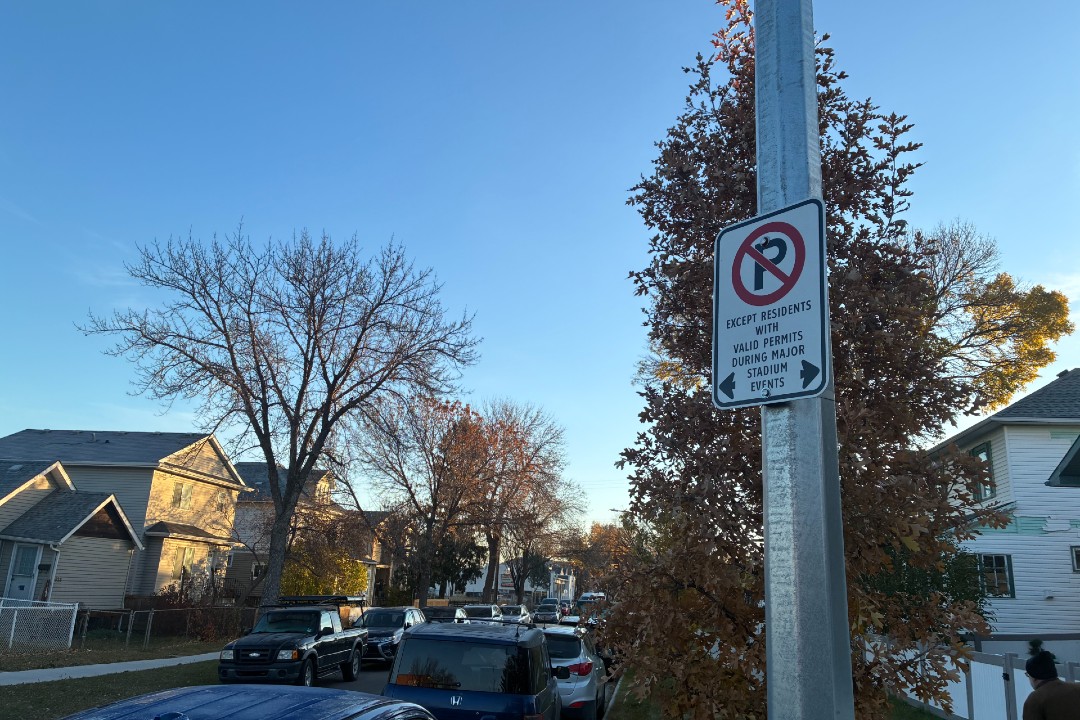
Your turn: Parking on residential streets
This week's roundup of calls for public engagement includes feedback opportunities on Edmonton's residential parking program as well as surveys about a future neighbourhood in Leduc County and parks in Spruce Grove.
The City of Edmonton has launched an interactive feedback page about the residential parking program, which uses restrictions and permits to manage parking demand in 19 neighbourhoods. Permits are only available to residents of single-family homes and multi-family buildings up to three storeys in height. The city said it is redesigning the program because Edmonton's needs have evolved since it was introduced in the 1970s.
Changes to the residential parking program are part of a broader strategy to manage curbside space in a more equitable way that aligns with long-term goals in the City Plan, administration said. While private vehicle storage is an important and valued part of the transportation system, an increasing number of uses and activities are in competition with curbside parking for the limited space available, the city said. These include dedicated transit lanes, active transportation infrastructure, and temporary patios.
When it comes to parking along the streets of growing and changing neighbourhoods, "more people may be competing for the same limited amount of street parking," the city said. "Residents, visitors, caregivers, service providers, delivery drivers, and people accessing nearby destinations all have different parking needs." The redesigned residential parking program will better manage parking pressures in areas experiencing growth and balance access, livability, and the efficient use of curbside space, the city said.
An online survey is available until Nov. 15, and there will be a pop-up event at Coronation Park Sports and Recreation Centre on Oct. 24.
Parking is a common concern across Edmonton when new development is proposed, especially in mature neighbourhoods. The city removed minimum parking requirements from its zoning bylaw in 2020, meaning developers can choose how much on-site parking to provide. The city said this has enabled more diversity of housing types and reduced building costs, adding that there is still an average of one stall for every two units in the small-scale residential (RS) zone.
However, earlier this month, Premier Danielle Smith directed the city to reinstate parking minimums and revert the zoning bylaw to parameters that were in place before 2024. Edmonton city council and administration are still waiting for written instructions, including a firm deadline.
The engagement includes the Curbside Compass, which allows users to explore how development patterns and vehicle users can change how much parking is available on a street. Parking looks different when homes have rear-detached garages, front driveways, multiple units, or limited on-site parking. The tool shows what could change depending on how many personal vehicles, visitor passes, and weekly deliveries each home has.
Administration said it will use the feedback to redesign the residential parking program and present it to council for approval in spring 2027.

Love Pro Wrestling 53: Scared Stupid
For months, the Mad Lads have run roughshod over Jaxx Wylder and the Canadian Goose, even going so far as to cut Wylder's hair. Now, the Goose and Jaxx have earned not only an opportunity for revenge, but also a chance at the LPW Tag Team Championship! That's just one of the spectacular matches on tap at the Rec Room South Edmonton on Oct. 30. Don't miss the mayhem.
Headlines: Oct. 23, 2026
- Edmonton city administrators proposed industrial development incentives for council's 2027-2030 budget deliberations in December. One would reimburse a single major component of oversized industrial infrastructure, at a cost of $23 million over four years. The other would cut property taxes on new industrial buildings by 25% for three years, with costs still undetermined.
- The Alberta government issued written directions to Edmonton and Calgary to reverse infill zoning changes that allowed greater density and building heights on small-scale residential sites. An Order in Council signed Oct. 22 requires Edmonton to restore rules that were in place before a 2024 bylaw amendment, as well as minimum parking requirements that applied before July 1, 2020. Mayor Andrew Knack said the directive could negatively affect housing affordability, construction and supply, adding that the city would review the order and assess its implications. Edmonton has three months to pass and implement the required amendments. The province has also given the city 18 months to review its Zoning Bylaw to ensure it complies with provincial policies.
- Edmonton city council will consider a proposed bylaw requiring flyers containing graphic or disturbing images to be delivered in sealed, clearly labelled envelopes. The community and public services committee voted 4-0 on Monday to recommend the amendment, which was introduced by Coun. Aaron Paquette after parents and women who had undergone abortions raised concerns about images of fetuses appearing in their mailboxes. The rules would apply to all unsolicited, hand-delivered materials featuring disturbing imagery, including animal rights literature, but would not cover mail delivered by Canada Post.
- Edmonton's Citadel Theatre has received a $1-million donation from longtime supporter Arnold Rumbold to establish a fund supporting the development of new Canadian plays. The Rumbold New Play Prize will help artists develop original theatrical works, with the goal of producing a new work each year for audiences in Edmonton and across Canada. The donation builds on the theatre's work commissioning new plays and supporting emerging projects through its Playwrights Lab, which has selected Amanda Samuelson, Nicole Moeller, Mhairi Berg and Jana O'Connor for its 2026-27 program. Led by Associate Artistic Director Mieko Ouchi, the lab runs until June 2027, when participants will present readings of their work at the Citadel's Collider Festival. The prize will be held in an endowment fund at the Edmonton Community Foundation.
- Covenant Health began screening for weapons at two more Edmonton emergency departments. The systems at Misericordia Community Hospital and Grey Nuns Community Hospital screen patients and visitors. Patients who refuse screening can still receive emergency care under Protective Services oversight, Covenant Health said.
- Wings Safe Housing and Support marked 40 years of helping women and children who face family violence in Edmonton. The organization said it has served more than 6,000 women and children since opening in 1986. It operates 50 furnished apartments and provides resources such as case management and safety planning.
- Edmonton's Community Mural Grant Program supported 15 new murals this summer, marking its 15th anniversary. The City said its Beyond Belonging action plan provided an additional $40,000 to fund five murals promoting inclusive public spaces.
- Edmonton entrepreneur and philanthropist Irving Kipnes has died at the age of 90. His philanthropy included a $25-million gift to create the Dianne and Irving Kipnes Health Research Institute in 2025. The University of Alberta is flying its banner at half-mast through Oct. 25 in his honour.
- The Edmonton Oilers said in a release they have activated Ryan Nugent-Hopkins from injured reserve and placed Jason Dickinson on injured reserve.
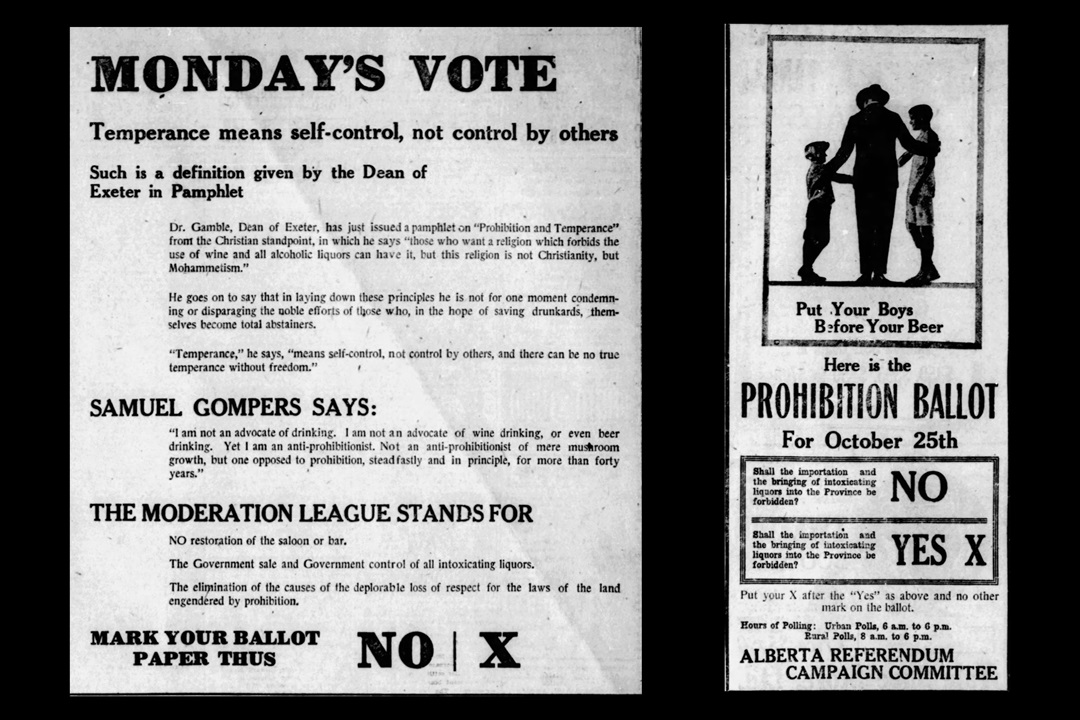
A moment in history: Oct. 23, 1920
On this day in 1920, Edmontonians were preparing to vote on whether to ban alcohol imports.
Prohibition in Alberta didn't happen all at once. Instead, it was a years-long endeavour that involved several plebiscites, delays, loopholes, and a lot of heated debate.
Selling alcohol in Alberta was already prohibited following a 1915 plebiscite, which succeeded with about 61% of the vote. But that didn't mean that Alberta was completely dry. The prohibition had a few exemptions: alcohol could still be sold for medicinal or religious reasons, and anything with a low alcohol content wasn't considered intoxicating enough to be banned. Crucially, the law only prohibited the sale of liquor in the province. It could still be made, exported, and imported.
So, Albertans could still order liquor via mail from other provinces. A few local producers took advantage of this loophole: one Calgary brewery would truck its beer across the border to Saskatchewan and then import it back to Alberta buyers as a product of another province. By 1917, almost all Canadian provinces were in the same situation: Local sales were prohibited, but they couldn't restrict inter-provincial imports. The fact that booze could still flow in from other provinces meant bootlegging was limited in Alberta at the time. Although apparently, some bakers took to illegally creating their own vanilla extract instead of paying the high fees to buy it with a permit.
In 1918, the federal government used the War Measures Act to ban the inter-provincial trade of liquor, claiming that it would increase industrial production during wartime and conserve vital resources like grain. That prohibition would last until January 1920, when the federal government encouraged the provinces to hold their own votes on whether to ban the import of liquor. Albertans voted on the ban with the same enthusiasm as the 1915 plebiscite: 61% in favour. But it would be months before the federal government actually enacted the ban, which gave drinkers ample time to stock up before the dry years hit.

Prohibition might have been politically popular in Alberta. But in practice, not so much. With importation now banned, smuggling and bootlegging operations started up in earnest. British Columbia became a major source of illegally imported booze, with much of it flowing through Crowsnest Pass. It was claimed that up to 60% of adult men in Alberta were breaking liquor laws.
Prohibition ended in Alberta the same way it began — with a vote. The provincial government was facing financial trouble, and tax revenues on alcohol sales were an attractive option. In 1923, the province held another plebiscite after the urging of hotel owners with four options, ranging from keeping prohibition to allowing all alcohol sales for private consumption. The majority of voters picked the latter option. Prohibition ended in Alberta on May 12, 1924, with an Edmonton woman legally buying six pints of Guinness.
The 1920 plebiscite had a large impact on Alberta's trading relationship with the other provinces. And 106 years later, voters have decided on an even bigger question on Alberta's relationship with Canada. Earlier this week, Alberta held a referendum posing 10 questions, including whether to hold a vote on separating from Canada. Albertans overwhelmingly voted to remain in the country, with more than 85% of Edmontonians rejecting the idea of separation. Eight of the other nine questions on the ballot, concerning immigration and constitutional matters, appear to have garnered more than 50% approval, though counting continued past the Oct. 22 deadline for unofficial results.
This clipping was found on Vintage Edmonton, a daily look at Edmonton's history from armchair archivist Rev Recluse of Vintage Edmonton.

Happenings: Oct. 23-25, 2026
Here are some events happening this weekend in the Edmonton area.
- Oct. 23: Live at The Carrot presents: Melody McArthur Music starting at 7pm at The Carrot Community Arts Coffeehouse
- Oct. 23: NEVERMORE starting at 7:30pm at Citadel Theatre
- Oct. 23-24: Mōnad) at Mile Zero Dance
- Oct. 23-25: GDX Conference at Queen Elizabeth II Building
- Oct. 24: Halloween-Themed Embroidery Workshop with Carley Pettitt starting at 1pm at Alberta Craft Council
- Oct. 24: Cat Meet-up in the Park: Halloween Edition starting at 2pm at Paul Kane Park
- Oct. 24: Journey to the Past starting at 4pm at Robertson-Wesley United Church
- Oct. 24: Moonlight Masquerade Gala starting at 6pm at Kirk Centre
- Oct. 24-25: SCARS Fall Market at Alberta Aviation Museum
- Oct. 25: Book Launch with Alexina Dalgetty starting at 2pm at Audreys Books
- Oct. 25: The Men's Collective starting at 2pm at The Bell in Scona
- Oct. 25: Edmonton Blues Hall of Fame Annual Induction Ceremony and Celebration starting at 7pm at Yardbird Suite
And here are some upcoming events to keep in mind:
- Nov. 7: Opera Night at Ayco Cafe (West Block)
- Nov. 15: Along the Way at All Saints Anglican Cathedral
- Nov. 21: Downtown Winterval at 104 Street Downtown
Visit the Taproot Edmonton Calendar for many more events in the Edmonton region.

The Taproot Mini - No. 313
Test your crossword prowess and deploy a little of your Edmonton knowledge. Complete the puzzle.
Find more events like the one in 4-Across in the Taproot Edmonton Calendar.