Voters are split on how the city should support business
The responses to Taproot's listening work in the lead up to the municipal election on Oct. 20 reveal that voters care about how the city supports businesses and economic development.
Earlier this year, Taproot launched our listening campaign at several in-person and virtual events, and we posted a 2025 election question on our site. We have been gathering responses ever since, and at last count, more than 900 people have provided them. The listening was built around a simple question: "What issues do you care about as you consider who to vote for in the 2025 municipal election, and why?"
A few dozen people mentioned the economy and business in their response. While many respondents said they wanted more support for businesses, others said the city gives too much support to the private sector. Some said they want to see more investment in downtown revitalization, while others wanted to see the industrial sector on the edges of the city thrive.
Small business support
One respondent said they wanted to see policies that allow for businesses such as small neighbourhood coffee shops. "More bakeries and coffee shops, using local ingredients, local flavours. Promotion of these types of businesses, or making it easier for businesses like this to thrive EVERYWHERE and not just select areas of the city." The new zoning bylaw, which went into effect in January 2024, does make it easier to set up small-scale businesses in residential neighbourhoods.
The city also offers grants to commercial developments in residential neighbourhoods, and one-on-one support, webinars, and events aimed at entrepreneurs.
Downtown revitalization
Many survey respondents linked downtown investment with economic return.
Puneeta McBryan, outgoing CEO of the Edmonton Downtown Business Association, told CBC Edmonton earlier in the election campaign that when downtown suffers, the whole city feels it. "When we talk about our city being in fiscal distress, property taxes going up, not enough money ... that is inextricably tied to what's happening downtown."
The density of buildings and the higher ratio of non-residential properties in a typical downtown means that a city usually collects more taxes from its downtown than the rest of the city. Despite making up a tiny portion of Edmonton's footprint, downtown contributed 10% of the city's taxes at its peak in 2010. However, city administration estimated that, by 2024, the number had fallen to 5.2%. Tax revenue goes down as property values decrease, thanks to aging, empty buildings (the downtown vacancy rate was nearly 19% in the second quarter of 2025).
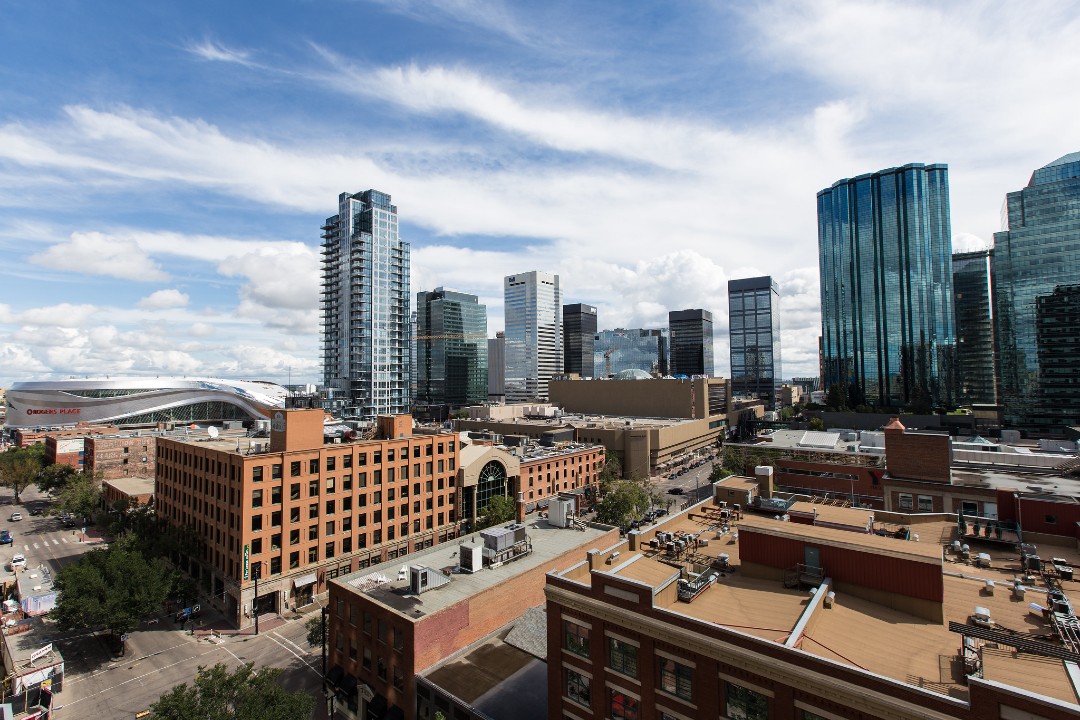
Some survey respondents said they want a candidate who invested in downtown, while some were opposed to supporting large corporations. (Mack Male/Flickr)
Some respondents wanted the city to provide downtown businesses with financial support to help them keep the neighbourhood clean.
"Provide tax incentives to (downtown) businesses that encourage them to clean in front of their businesses (and) wash their windows and sidewalks," one respondent said. "Place an enormous amount of time and energy (into) engaging our downtown business owners to help improve the continued decline of our downtown. We do not have people coming downtown as we had hoped by this time after Covid as it's still dirty and scary especially at night," said another.
Many respondents echoed McBryan's sentiments that it is important to support the city's downtown. But others said the city should focus its investment elsewhere. "I am sick to death of the amount of money that continues to be spent ... on DOWNTOWN REVITALIZATION," one said.
The city provided one downtown business with a massive investment earlier this year when council extended the downtown community revitalization levy through an agreement with the provincial government and the Oilers Entertainment Group. The agreement covers building a $250-million event park beside Rogers Place and the infrastructure for the Village at ICE District, as well as demolishing the Coliseum. The City of Edmonton will contribute $102.8 million from the downtown community revitalization levy that is to be repaid through the increased property tax revenues the investment is intended to catalyze. It will also contribute $35 million in capital costs to demolish the Coliseum, which has already been approved by council. The province will provide $158.4 million in grant funding towards the projects. OEG, meanwhile, will contribute $3 million, plus $22 million in the form of the land for the event park, and $62 million in debt financing.
Businesses over people?
Proponents of the event park deal said it was a key project to help revitalize downtown. However, some respondents were opposed to a deal like the one with OEG (whose founder and chairman, Daryl Katz, is the 14th richest person in Canada) and said they didn't support what they characterized as a handout to corporations. "Moving money away from corporate buildouts to community projects... why do the Oilers need us to pay for their stuff?!" one respondent said. "I don't want to see more public dollars go to line Katz's (and his ilk's) pockets," said another.
More generally, some respondents said it can feel like the city prioritizes businesses above citizens. "I worry that because people are struggling, we're going to go backwards in this election with people voting for councillors who will put developers and businesses before people," one respondent said. Another said they "want to see businesses and industry shoulder more of the tax burden, especially for the continual demands they place on municipal government."
Regional economic development
Some respondents said they want candidates to focus on regional economic development, and to make Edmonton attractive to national and international investors.
"Is Edmonton relevant and investable on the national and world stage? Do we have enough jobs for the thousands of people moving here? Do we have enough commercial/industrial property tax revenue to pay for a rapidly growing city with rapidly aging infrastructure without having to dramatically increase property tax rates?" one response said.
The city is a member of Edmonton Global, an economic development agency that represented 14 regional municipalities when it was established in 2017. Several municipalities have since voted to leave the organization. Edmonton is also a member of Alberta's Industrial Heartland Association.
Some respondents said while the energy sector is important to the economies of Edmonton and Alberta, they want candidates to focus on diversifying the Edmonton region's economy.
"Continued economic development expanding us beyond oil and gas, post secondary, and government sectors," one response said. "We are doing well in areas like AI and tech and I think there are lots more good news stories out there."
Share