
Sport Edmonton seeks funding boost to expand grants, measure impact
By Stephanie Swensrude and Karen Unland
The CEO of Sport Edmonton plans to make the case for a significant funding increase as Edmonton city council prepares its 2027-2030 capital and operating budgets.
Evan Daum said Sport Edmonton is seeking about $1.1 million annually from the city, which would allow the organization to issue grants, hire more staff, offer professional development, and study the economic and social impact of community sport.
"We think that we can achieve a lot with that amount annually, and we think it's reasonable based on the other sport councils," Daum told Taproot.
Sport Edmonton's funding works out to the equivalent of 19 cents per resident, compared with 59 cents in Calgary, $1.30 in Medicine Hat, $1.84 in Wood Buffalo, $2.20 in Lethbridge, and $2.44 in Grande Prairie, Daum said. His vision for Sport Edmonton is a cross between what's offered by the Edmonton Arts Council and the Edmonton Chamber of Commerce, but for sports, combining advocacy, networking, professional development, and grants.
"We want to be able to have the resources to invest in (sports organizations) directly, to help them financially," he said, drawing a parallel to what the EAC does for arts. As a proof of concept, Sport Edmonton launched an Event Accelerator Fund earlier this year, distributing $40,000 from Edmonton Destination Marketing Hotels to four existing events and two new ones.
Sport Edmonton was founded in 1999 as the Edmonton Sport Council and was rebranded in 2024 under the leadership of Reed Clarke, who has since been elected to city council representing Ward Nakota Isga. The agency, which has two employees, receives about $222,000 in base operating funding from the city but must find corporate partners and other funding sources, such as membership, to deliver additional services.
Daum acknowledged that Edmonton supports sport and recreation in other ways, including by operating facilities, but the gap in per-capita funding remains too large to ignore. "If we really want to lean into this sport-city narrative, we do have to help grassroots sports in that way," he said.
Sport Edmonton's ask is one of many that city council will face as it deliberates on the next four-year budget, which is expected to be a tight one. Extensive public engagement indicated a desire to focus on core services but no consensus on what those are, though arts, culture, tourism, inclusion, and economic development were most likely to be ranked as low-priority.
Economic development activities bring new money into the city, however, and sport is a big driver of that, said Janelle Janis, executive director of event attraction and sponsorship at Explore Edmonton.
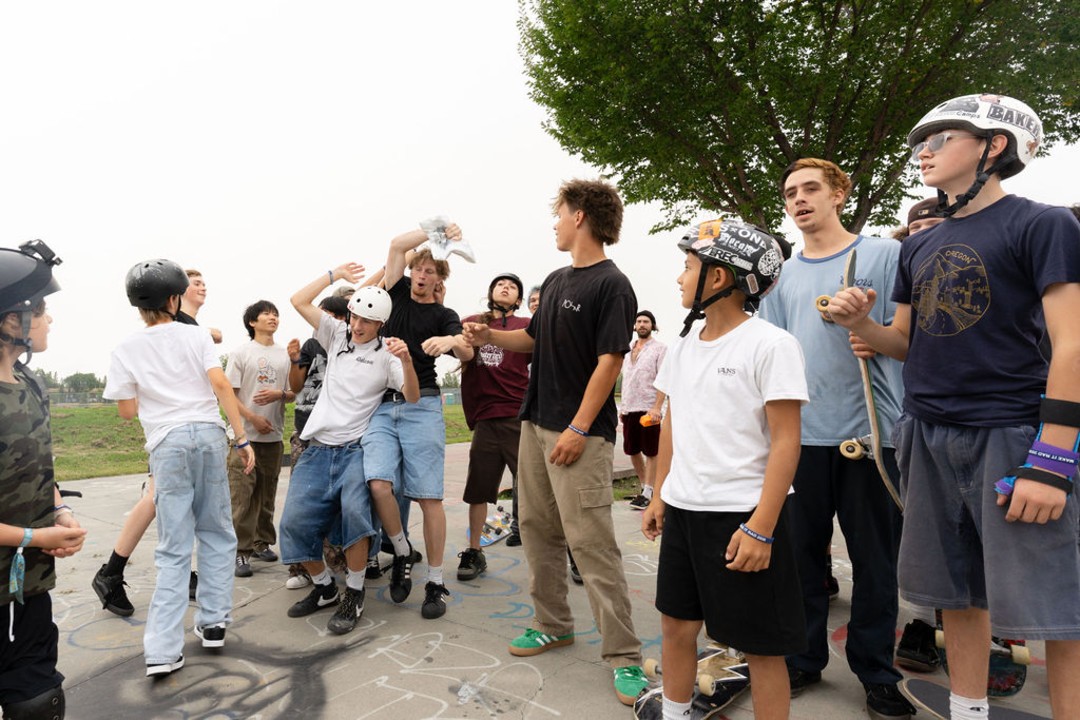
Sport Edmonton hopes a funding increase would help it support more grassroots sporting events, like the Edmonton Skateboarding Association's Make It Rad skate jam and fundraiser, which took place in August. (Sport Edmonton)
Tools like the Event Impact Calculator from Destinations International make it possible to quantify the benefits of high-profile events like the IIHF World Junior Championship, and lower-profile, big-impact events like the Volleyball Canada Youth Nationals.
The latter is expected to bring roughly 20,000 athletes and 32,000 accompanying spectators to Edmonton, generating 50,000 hotel-room nights and producing about $60 million in economic impact, Janis said.
"We need to do a better job of telling that story," she said. "We're bringing so many people to Edmonton, and we're hosting them here, and we're hopefully changing them into Edmonton champions when they leave."
In this budget cycle, Janis's agency is not seeking funding beyond what council has already approved when it increased Explore Edmonton's funding to $11 million per year at the end of 2025.
The impact of smaller, locally organized competitions is more difficult to measure than those big-scale events. Daum cited disc golf tournaments and youth soccer competitions that attract participants from across Alberta and Western Canada but do not go through any kind of bidding process.
"From a community sport perspective, it's just a guess right now," he said. "Just anecdotes and people having coffee-shop talks. That doesn't inform good decisions."
Daum said additional funding would allow Sport Edmonton to develop an impact-of-sport report, helping the city understand participation levels, the economic benefits of grassroots events, and what facilities are needed. He noted ice time in hockey arenas is limited, and there is no facility in Edmonton capable of hosting a large-scale baseball event. He added that the city should consider the needs of changing demographics, who may desire a cricket pitch, for example.
High-profile sporting events also rely on a foundation of volunteers to help them succeed, and they come from grassroots sports organizations, Daum added.
"We need to make sure as a community that that foundation … for all of the successful things we do that are high-profile is maintained and nurtured," he said. "That's really what Sport Edmonton tries to do in our humble way."
This story is based on a larger conversation with Evan Daum and Janelle Janis on the Aug. 14 edition of Taproot Exchange, a members-only livestream that goes deep on issues of interest to Edmontonians. Become a Taproot member for access to future livestreams, as well as recordings and transcripts.
Share