
The Pulse
Jan. 27, 2026
Here's what you need to know about Edmonton today.
Essentials
- -4°C: Mainly cloudy. Clearing late in the afternoon. Wind up to 15 km/h. High minus 4. Wind chill minus 16 in the morning and minus 6 in the afternoon. UV index 1 or low. (forecast)
- Yellow: The High Level Bridge will be lit yellow for International Holocaust Remembrance Day. (details)
- 7-4: The Edmonton Oilers (27-19-8) defeated the Anaheim Ducks (28-22-3) on Jan. 26. Mattias Ekholm scored his first NHL hat trick. (details)
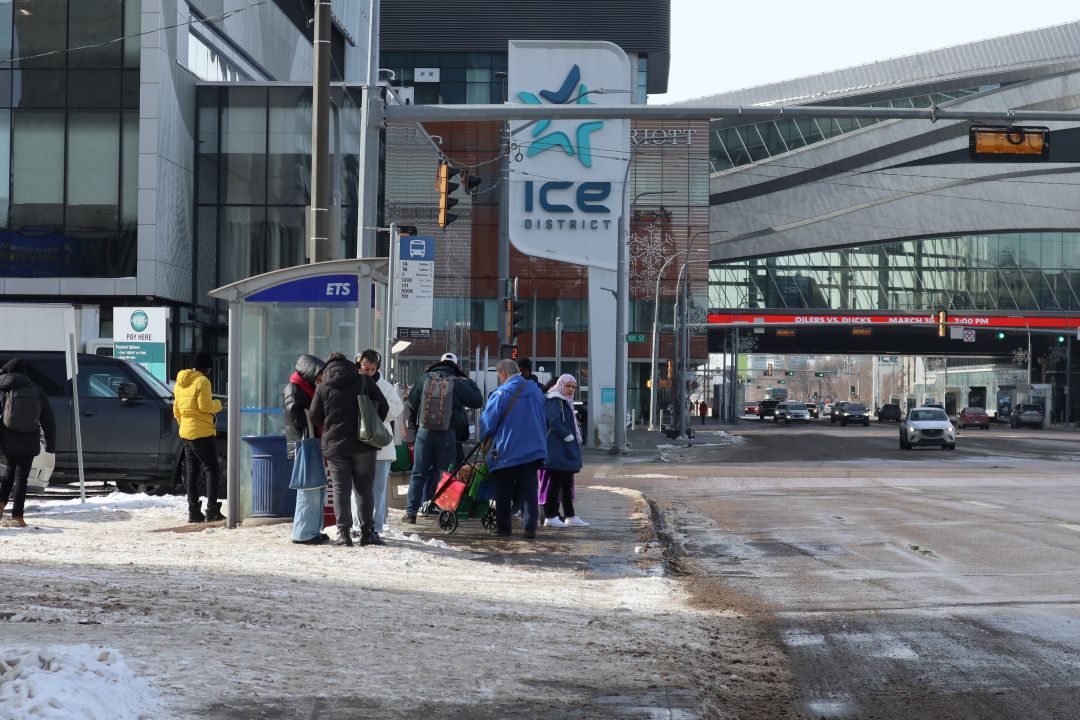
Frequency is freedom, but it's not free, says ETS head
The manager of the Edmonton Transit Service says she wants a frequent and reliable system — one where a rider can show up at their stop and know that a bus or train is just minutes away.
"I tell everybody, frequency is freedom," Carrie Hotton-MacDonald told Taproot. "I want that on a T-shirt, because it's the truth. It's a complete game changer for us as riders."
But it's hard to deliver that frequency in a system that lacks predictable and sustainable investment, the branch manager for ETS said. "We're at the point where we've checked the couch cushions, and we have, I think, made decisions to be as efficient as we can and stretch every dollar," she said. "I need more buses. I can't sugarcoat it. It's just a lack of investment and capacity."
Edmonton city council will spend this year shaping the 2027-2030 operating and capital budgets, and Hotton-MacDonald said her branch is getting ready to build a budget based on the direction of city councillors. "We've got a lot of competing pressures on the renewal side, let alone considering anything growth-related, so we'll have to wait and be patient and see how this all shakes out and what they prioritize in a very constrained environment," she said.
ETS needs about 250 buses over the next four years to replace the oldest vehicles in the fleet, a city report said. ETS also needs 100 buses over four years to address the rapid population growth the city has experienced in recent years. With diesel buses costing around $1 million each, simply meeting minimum service standards with newer vehicles represents roughly $350 million in capital spending.
That aging fleet affects everything from reliability to frequency, Hotton-MacDonald said. "It's really difficult to have a reliable service when some of (the buses) are over 10 years past their end of useful life. That's insane. It's embarrassing."
The city's capital investment outlook, which council is scheduled to discuss on Jan. 27, describes just how constrained finances are ahead of the next four-year budget. The report suggests the city will be able to spend about $11 billion on both renewal and growth projects across all departments in the next 10 years, representing a funding shortfall of $10 billion. City administration has advised council to keep growth projects to a minimum and instead focus on renewing the city's aging assets.
Hotton-MacDonald said ETS is willing to find creative solutions to rider issues if need be. For example, Coliseum Station requires riders to go down a set of stairs in a narrow and dark environment and then back up the stairs to access the train. Instead of completely redesigning and replacing the station, as the city did with Stadium Station, she said a cheaper solution could be to provide at-grade access at Coliseum and get rid of the lower level entirely. "It serves no valuable purpose, in my opinion," she said. "I think we can completely change how people interact with the station and how they connect over to the bus side."
Headlines: Jan. 27, 2026
- An Edmonton city auditor's report revealed significant issues with the October 2025 municipal election, citing long lines, inadequate staff training, and ballot box problems. Mayor Andrew Knack called the long wait times "unacceptable," with 16% of voters waiting more than an hour. Edmonton Elections and the auditor suggested more comprehensive training and addressing staffing levels in response to provincial mandates for hand-counting ballots and new voter registers. City council's audit committee will discuss the report on Feb. 4.
- The City of Edmonton has no plans to end hybrid work arrangements for approximately 1,280 staff in Edmonton Tower, who currently work in the office two to four days weekly. While downtown business and real estate leaders advocate for a full return to boost the core, Mayor Andrew Knack said that flexibility is important and a full return isn't the right tool for revitalization. Bryce Jowett of Civic Service Union 52 said the current approach is efficient and ending it would be a political move. Jowett also questioned whether the City has enough space given plans to consolidate staff by selling Chancery Hall and Century Place.
- The Coronation Park Sports and Recreation Centre in Edmonton, which includes the Peter Hemingway Aquatic Centre at 11160 135 Street NW, officially opens on Jan. 27 at 5:30am and will host its public grand opening celebration on Jan. 30, from 11am to 2pm. This facility is North America's first indoor triathlon training centre, featuring a 50-metre pool, running track, and cycling track, along with indoor courts, a bouldering wall, and fitness areas. Mayor Andrew Knack will speak at the event.
- Edmonton Transit Service will implement its mid-winter service changes beginning Feb. 8, adjusting several bus routes and school specials to better match seasonal ridership. The changes include bus bay reassignments at Meadows and Northgate transit centres, along with a routing adjustment for Route 506 and a shortened trip for Route 654 serving Strathcona High School. Routes 2 and 2-Owl remain on detour due to the Wellington Bridge replacement until at least fall 2026.
- Edmonton city council is considering how much residents are willing to pay to improve snow removal amid a winter marked by unusually heavy snowfall. Coun. Aaron Paquette will put forward a motion at the Jan. 27 council meeting asking City of Edmonton administration to outline costs and options for boosting snow and ice control capacity during extreme weather. Paquette said better service would require either shifting money from other city programs or raising property taxes by several dollars a month. Mayor Andrew Knack said current service levels fall short and noted that hauling snow away would nearly double the city's $55 million annual roadway budget.
- The City of Edmonton is seeking ideas to preserve and adaptively reuse the historic Rossdale Power Plant. The plant was Edmonton's first electrical facility, operating until 2008. River Crossing project lead Avril McCalla said the Request for Information process, which remains open until April, aims to gather community and market expectations for repurposing the decommissioned plant while honouring its legacy. Principal heritage planner David Johnston highlighted the plant's long presence in the city.
- The Edmonton Oilers have recalled forward Josh Samanski from the AHL's Bakersfield Condors and loaned forward Isaac Howard. Samanski recorded 28 points in 39 games with the Condors this season. He will join Oilers teammate Leon Draisaitl on the German national squad for the Olympic Winter Games Milano Cortina 2026. Howard scored five points in 28 games with the Oilers and 23 points in 16 games with the Condors.

Happenings: Jan. 27, 2026
Here are some events happening today in the Edmonton area.
- Cracking the Glycan Code with Native Mass Spectrometry starting at 11am online
- Solar 101: Solar for Your Home or Business starting at 12pm online
- Life Skills: Boosting Your Brain Health starting at 12:30pm at Edmonton Public Library (Jasper Place)
- Leduc Business Mixer starting at 2pm at Fox Burger (Leduc)
- The Dry Months Series: Classic Cocktails starting at 6:15pm at Spilt
- Crossroads Alberta's Crop Conference at DoubleTree by Hilton Hotel West Edmonton (until Jan. 28)
And here are some upcoming events to keep in mind:
- Feb. 3: Inside the strike: ATA crisis communications at Edmonton Public Library (Capilano)
- Feb. 4: Pathways to Empowerment Forum: Removing Barriers to Gender Equity at Edmonton Public Library (Stanley A. Milner)
- Feb. 7-8: Togather Chinatown Arts Festival at Pacific Mall
Visit the Taproot Edmonton Calendar for many more events in the Edmonton region.

The Taproot Mini - No. 135
Test your crossword prowess and deploy a little of your Edmonton knowledge. Complete the puzzle.
Speaking of 5-Down, did you know it only costs 10 loonies a month to be a member of Taproot? Learn what you get for that investment.
The Taproot Mini is brought to you by ATB, your homegrown source of good advice to help conquer life's tougher puzzles. Learn how.
