Edmonton's new-look council has much the same look as before, with some exceptions, the co-hosts of Speaking Municipally found after paying city hall a visit for its first meeting of the new council. (Stephanie Swensrude)
Noted: A vision for council, new districts for the province
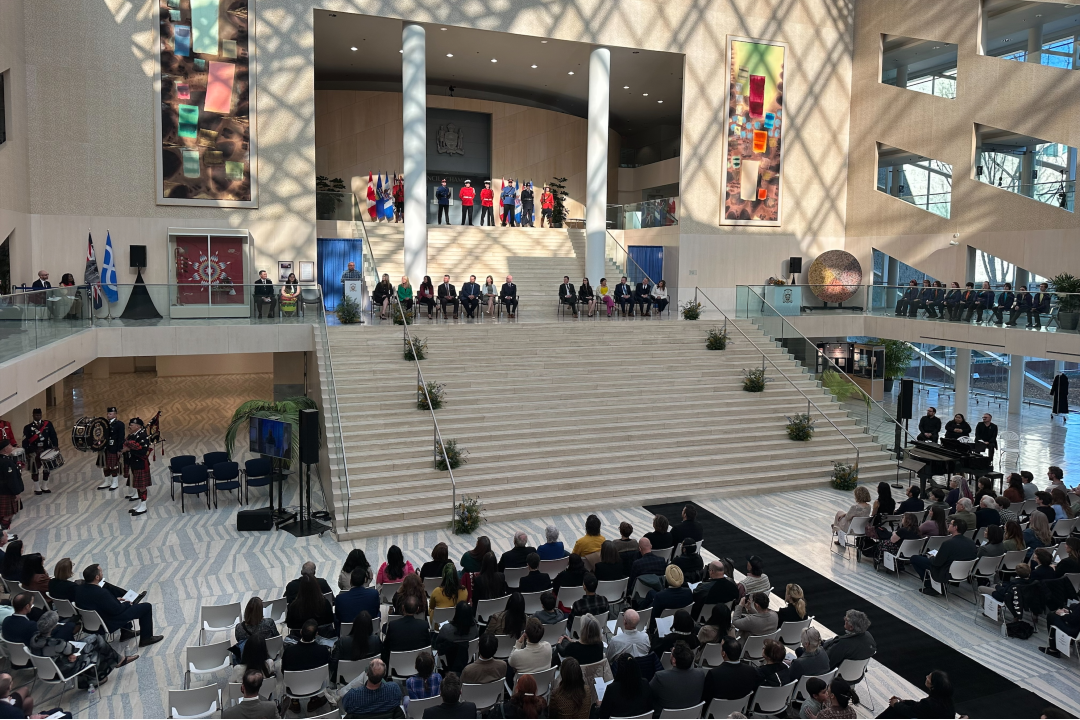
All has changed, but little is new at city hall, the co-hosts of Episode 330 of Speaking Municipally found as they ventured to the building to watch the new mayor and council be sworn in on Oct. 29, holding the mic as they went.
Andrew Knack is back, again, but this time the three-time councillor is going by a new title. "He's the mayor, but he doesn't feel like the mayor yet," co-host Mack Male said. "You know, it hasn't sunk in."
Male and co-host Stephanie Swensrude discussed Knack's opening speech ("hit all the right notes," Male said), his plan to create a plan, and a provincial report on how to balance voting districts with Alberta's population growth. Here's a quick snapshot.
Knack's strategic vision
The co-hosts noted that Knack said in his opening speech that no one moves to a city in decline, and that more than 200,000 people have moved to Edmonton in recent years. Swensrude noted that while the Edmonton-is-broken rhetoric is tiring, Knack may be overstating things. "Respectfully, I don't think people are like, 'Edmonton, the new hottest city in Canada,'" she said.
A city that's growing but could be doing so with some people reluctant to be here could need some vision. That's exactly what Knack is pushing for as mayor — a strategic vision co-created with the rest of council.
"I want to start off early on to make sure that this council sets a clear strategic vision, something that we can make sure we're holding our city manager accountable to, something that I know city staff want to get behind and work together on, and then something that we can the public can also hold us accountable to," Knack told Taproot at the ceremony.
Electoral boundaries
The electoral boundaries commission's report grabbed the co-host's attention. The report authors propose that Edmonton should gain one seat, from 20 to 21, before the next provincial election in 2027. Swensrude noted the commission's proposal is to redraw districts and consolidate some central ridings. "That's because several of the inner city, central core neighbourhoods are not growing as fast as the ones on the (edge) of Edmonton," she said.
Male noted one of the proposed new ridings, Edmonton West Enoch, is particularly interesting.
"This one's urban, rural, and Indigenous (folks) all together into one," he said. He added the report's authors noted that many Albertans are against so-called hybrid ridings where rural and urban constituents are mixed together.
The Oct. 31 episode of Taproot's civic affairs podcast also includes discussion of a post from former mayor Don Iveson, the end of the teachers' strike, and more. Listening and subscription options are all right here.
Share