Some voters told Taproot that reconciliation with Indigenous nations matters for their vote
The growing responses to Taproot's listening work in the lead up to the municipal election on Oct. 20 reveal that some voters expect results rather than rhetoric when it comes to how the city reconciles with Indigenous nations and peoples.
Edmonton and its residents are all treaty people because the city resides on Treaty 6 land. The city, province, and Canada itself were built atop Indigenous territory in ways that led to significant harm. In Edmonton, the damaging legacies include the Camsell Hospital, which housed Indigenous people from across Canada for tuberculosis treatment, often against their will, the large number of residential schools in Alberta, and the forced removal of the Papaschase people from what's now partially Mill Woods.
Earlier this year, Taproot launched our listening campaign at several in-person and virtual events, and we posted a 2025 election question on our site. We have been gathering responses ever since, and at last count, more than 925 people have provided them. The listening was built around a simple question: "What issues do you care about as you consider who to vote for in the 2025 municipal election, and why?"
Roughly 20 people told Taproot that reconciliation with Indigenous nations and peoples will inform who they will vote for on Oct. 20. Many of these respondents tied reconciliation and Indigenous peoples with other points, including being more critical of police funding, supporting cultural heritage, building appropriate housing, protecting Indigenous women and children, and supporting Indigenous leadership and indigeneity.
One respondent said they will vote for candidates who support "meaningful movement towards defunding the police, addressing anti-Blackness, Islamophobia, and Indigenous discrimination." They added that they want to see Edmonton "prioritizing Indigenous reconciliation in all policies."
Another said they will vote for candidates who support the city building diversified affordable housing. "We need to build affordable housing for larger and extended families that reflects their needs. This requires new approaches to housing that take into consideration the worldviews, architecture, and family structures of Indigenous and new settler communities."
When it comes to candidates, Indigenous reconciliation has not been a dominant talking point. Recently, Shani Gwin, founder and CEO of pipikwan pêhtâkwan, said in a post that mayoral candidates have mentioned Indigenous peoples, but have done so "usually in regards to overrepresentation in houselessness or when they discuss 'safer cities.'"
Gwin continued: "What has been disappointing to see is the lack of any Indigenous representation of community members in campaign photos or videos WITH the candidate. If there was, that may signal to me there's relationship building or investment … or that we are even an important community worth your campaign time … This is not enough."
Taproot has worked to explain where Edmonton is at when it comes to Indigenous reconciliation and its relationship with Indigenous peoples and nations.
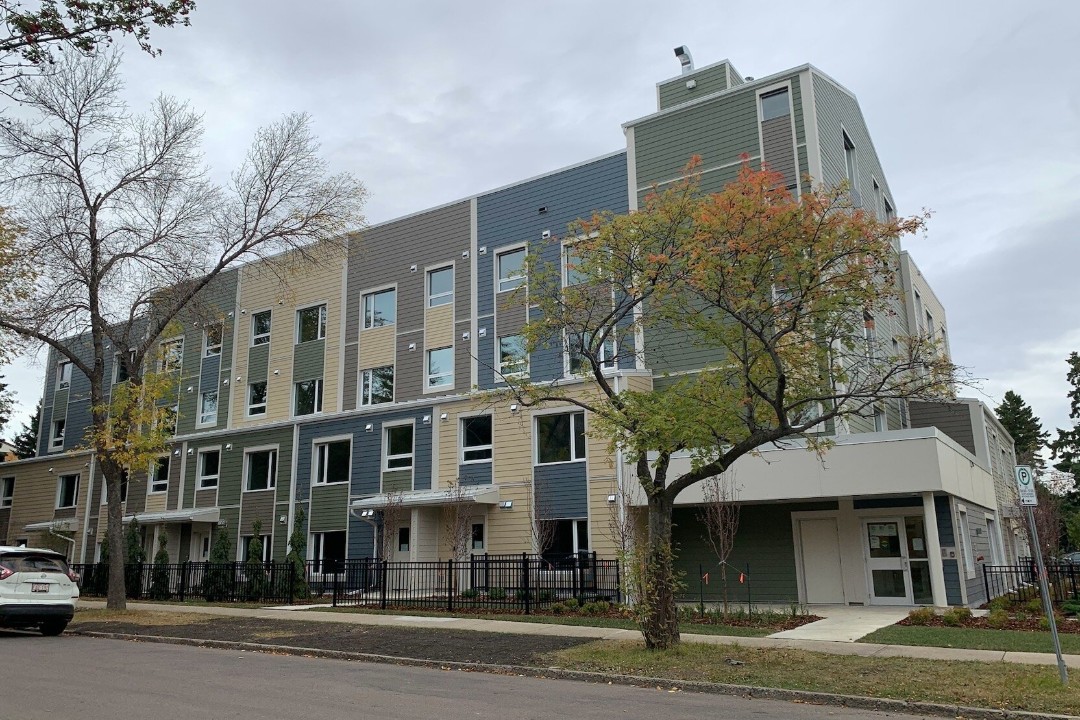
NiGiNan's Omamoo Wango Gamik housing in the Belvedere neighbourhood in Edmonton. The development has 42 housing units. Voters told Taproot Indigenous reconciliation matters to them, and often paired their concerns with calls for better and new approaches to housing. (Supplied)
Indigenous-led housing
Taproot examined Edmonton's progress and challenges on Indigenous-led housing as part of our award-winning Housing Complex series. In that story, Karen Bruno, co-director of Indigenization at EndPovertyEdmonton (which wound down its operations at the end of 2024), and Cree from the Maskwacis area, said the glaring problem with Edmonton's overall housing system is that it works for those with the fewest needs, not for those who use heavy drugs or suffer from complex challenges.
"It's supposed to be the people who are the ones in most need (being housed), and yet we have all these people who are in the most need (who) are not being housed," Bruno said.
A trend sources noted within that reporting was the tension between housing services aimed at what some refer to as "pan-Indigenous" groups, meaning a group that's Indigenous focused but not tied to a specific nation, and an increasing push for specific Indigenous nations with members in Edmonton to strike specific deals with the city to aid their members.
The Housing Complex series also spoke with people within Edmonton's complicated housing system. One, Nadine Chalifoux, whose Cree name means Green Butterfly Woman, told Taproot that attending a mayoral forum in 2013 and speaking up about homelessness gave her insight into politicians.
In 2024, the current council endorsed the creation of the Indigenous Housing Grant. In June, the city signed a letter of intent with Treaty 8, north of Treaty 6, to work together on Indigenous-led housing. The city has also created an Indigenous housing liaison to navigate relationships and agreements.
Indigenous relations office
On relationships, the city created the Indigenous relations office through work that pre-dates the current council. The office harkens back to the signing of the urban Aboriginal accord in 2005, and is tasked with implementing the Indigenous Framework.
The office negotiates and maintains memoranda of understanding with Enoch Cree Nation, the Confederacy of Treaty Six First Nations, the Otipemisiwak Métis Government, and Treaty 8.
In 2024, Bruno told Taproot the Indigenous Relations Office was created to convene and foster relationships but that its work can often feel "political."
Urban reserves
Saskatoon created the first urban reserve in Canada in 1988.
These reserves are modern land agreements between the Crown and an Indigenous nation that see land within a city set aside for the benefit the nation and its members. In 2017, Edmonton signed a memorandum of understanding with Enoch Cree Nation that included working toward creating an urban reserve. That proposal is for an urban reserve within Edmonton's Glastonbury neighbourhood.
In January 2021, council directed administration to create an urban reserves strategy. The current council approved that strategy in June 2021, but Edmonton does not yet have an urban reserve. Saskatoon, Winnipeg, Vancouver, Quebec City, Sydney, and many other cities across Canada do.
In 2020, Edmonton renamed its 12 wards for city council to reflect the Indigenous linkages to the land that the city is built on.
Over to you
For more on Edmonton's 2025 municipal election — from where candidates stand to voting info — visit edmonton.taproot.vote. There you can complete the Taproot Edmonton Survey and immediately see which candidates for mayor and council in your ward align with your views.
Share