
Groups target turning character homes into co-ops to protect neighbourhood heritage
Some residents of mature Edmonton neighbourhoods are working to create ways to preserve the character of their neighbourhoods by converting older homes into co-op housing.
Yasushi Ohki told Taproot that his company, Green Violin Community Development Company, is developing a model that would allow residents who want to preserve the character of their neighbourhood to pool money and purchase older homes, in part to prevent them from being demolished to make way for infill developments.
"(We could) get investors who have that lens — they love living here, they want to preserve their own property value by maintaining this cute neighbourhood," he said. "Not to be trite, but you know — quaint, cute, historic, nostalgic, romantic — any one of those words on what describes what we love about neighbourhoods."
There are about 40 emerging and established community land trusts in Canada, including the Calgary Urban Indigenous Land Trust and Canmoreland CLT.
While Ohki has been primarily working with people living in the Allendale neighbourhood, some Garneau residents are interested in seeing the model in their neighbourhood. Jillian Ames is a housing researcher at the University of Alberta and has lived in Garneau for about a year.
Ames said while she isn't opposed to dense housing types in a central, transit-rich community like Garneau, she believes some family-friendly homes should be preserved. "I think that we do need to be conscious of the community that we're trying to move towards and have a vision, and make sure that we're covering all (housing types) and not just letting big developers with all the dollars come in and dictate what the fabric of the community ends up being," Ames said.
On a related note, the Garneau Community League has launched a private house registry to connect prospective buyers to owners looking to sell in the neighbourhood. "This registry is not for investors or speculative buyers," the league said on its website. "It's for people who want to make Garneau their home, and for sellers who want to pass their house on to someone who will truly be part of the community."
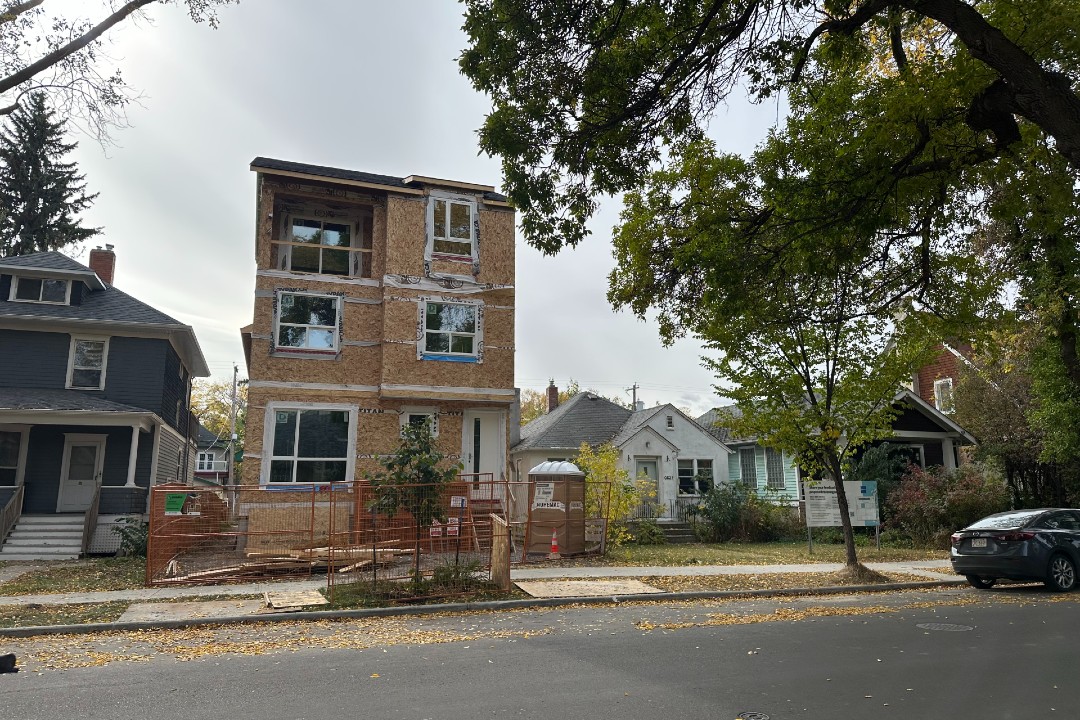
Some residents of core neighbourhoods want to pool resources to purchase older homes and convert them to co-op housing, in part to prevent those older homes from being demolished. (Stephanie Swensrude)
To create the community land trust model, Ohki, who lives in the neighbourhood of Spruce Avenue, plans to create a charitable corporation under the Alberta Societies Act, meaning it could give out charitable receipts and buy property. The corporation would have a mission statement and bylaws, and would be governed by a board of directors. When a residential property goes up for sale that interests the group, Ohki said members would pool funds so the group can buy the property in cash. The group would build a relationship with the seller in the hopes of convincing them to sell to their neighbours instead of an infill developer.
If the purchase goes through, the corporation would then rent the property as a co-op. In his model, Green Violin would maintain the property using housing fees collected from the co-op members.
To support the operation, Ohki said he would set up community bonds. Neighbours could invest, say, $5,000 into the property by buying a certificate. After it matures, the investor would receive their money back plus interest, paid with proceeds from co-op revenue. The interest rate would be 5% for a five-year bond that is paid out on maturity, or 3% for a three-year bond with annual payouts, Ohki said.
"Generally, they're social bonds, so they're less of a (financial) return, but there's more of the social impact return," he said.
Ohki said he hopes to be incorporated under the Alberta Societies Act by January and start a fundraising campaign in the spring. Though it will take a long time to set up the model, he said once the organization buys a few properties, it will become easier. "(Once the organization has) become established and a known entity, and they've got processes, and they're proving that it's worthy, then maybe they can do another three ... and suddenly you've got this growing of the land trust," Ohki said. "That's what we need to do to keep up with all the demand for preservation and affordable housing."
Share