
On the agenda: Century Park development, election, engagement
This week, councillors are set to discuss transit-oriented development in Century Park, an audit of the 2025 municipal election, and community engagement during the neighbourhood renewal process.
There is a utility committee meeting on Feb. 2, a public hearing on Feb. 3, and an audit committee meeting on Feb. 4.
Here are some key items on the agenda:
- K&H Land Development has applied to rezone land adjacent to the Century Park LRT Station and Transit Centre to facilitate the development of about eight hectares of vacant land, some of which is now used for park-and-ride, into a transit-oriented development. The original plan for the development designated 27 Avenue as a pedestrian-oriented main street. The proposed rezoning would result in a vehicle-oriented design instead, to support the businesses that will eventually open along 27 Avenue, the developer said. If council approves the rezoning, the developer could build mixed-use buildings up to 22 storeys tall.
- The Office of the City Auditor released a report about the 2025 municipal election, highlighting issues with the computer system and paperwork that may have contributed to long lines. The report said that staff found it difficult to operate the technology and recommended better training in future elections.
- An audit recommends that city staff be clearer about how feedback is used during neighbourhood renewal to prevent confusion and frustration around which designs residents can influence. Administration has four levels of engagement, ranging from the advise level (where staff consider public feedback in designs) to the decide level (where residents make decisions directly). The Office of the City Auditor said it observed interactions where residents were asked to provide feedback, but it wasn't clear how designers would use that feedback. Administration said it will be more clear when engaging residents.
- The 2026 operating plan for EPCOR Water Services involves streamlining lot grading and new service applications for housing developers. The plan, which will be reviewed by utility committee, said water and sewer connections grew nearly 50% last year, mainly due to increased infill development. The improvements are expected to provide greater certainty to developers. Other plans for 2026 include spending $288 million to support the performance and resiliency of its assets, planning for flood mitigation at its Gold Bar Wastewater Treatment Plant, and replacing prioritized distribution mains.
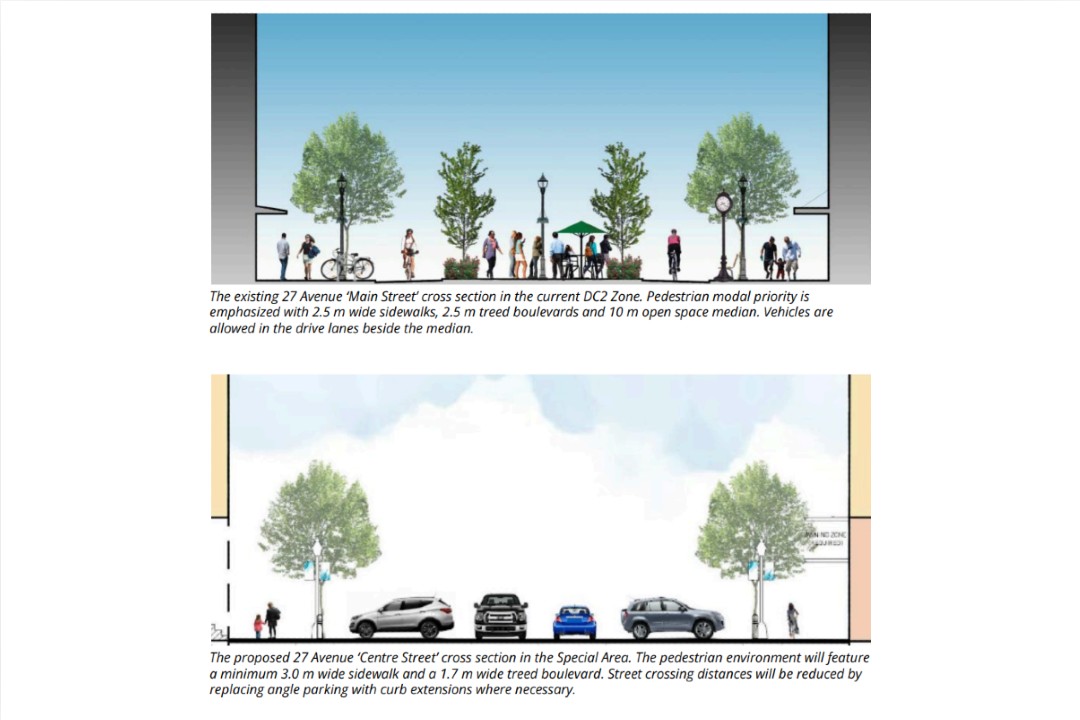
A proposed rezoning would see a future pedestrian-oriented street near the Century Park LRT Station replaced with a street geared more toward vehicles. (City of Edmonton)
Here are updates on some items we told you about last week:
- Administration told council property taxes could grow by nearly 44% in the next decade. Staff said the capital budget will be tight in the next 10 years and recommended that council focus on renewing, maintaining, and repairing assets instead of funding new projects. Beginning in 2029, administration will begin collecting money for a dedicated renewal fund through property taxes, which is expected to help. Coun. Ashley Salvador asked administration to provide a report about increasing that tax levy to narrow the gap further. Salvador also requested a report outlining how many buses are needed to maintain current transit service levels to 2030, as well as the service impacts of not meeting minimum requirements. Meanwhile, Mayor Andrew Knack said he thinks the budget process will be the most thorough he's experienced since he was elected to council more than a decade ago.
- Council voted 10-3 to provide a $6.5-million grant to the Winspear Centre to help it solve a revenue crunch related to the new downtown district energy hub. Councillors Karen Principe, Erin Rutherford, and Jo-Anne Wright voted against providing the grant.
- Council postponed its discussion on whether it should accelerate the timeline for widening two arterial roads in The Meadows from two lanes to four lanes. The discussion is scheduled to take place on Feb. 3.
- The councillors talked at length about the authorization of neighbourhood structure plans, and the new terms of reference that have changed at what point in the planning process that council hears about certain growth metrics. Concerns were raised about future suburban neighbourhoods contributing to the city's large asset inventory. Coun. Anne Stevenson moved to authorize the creation of a neighbourhood structure plan for Kettle Lakes, but with the conditions that a draft be presented to urban planning committee before the final plan is presented to council at a public hearing, and that the plan include information on how city expenditures will not exceed city revenues. She was unsuccessful in requiring these conditions; council voted 7-6 to remove them from the motion, and the authorization then passed 9-4.
Meetings stream live on YouTube on the Chamber channel and River Valley Room channel.
For more on various civic issues, including a look at how authorizing new neighbourhood structure plans affects the city's financial situation, listen to Episode 341 of Speaking Municipally.
Correction: This file has been updated to reflect that utility committee was to review the operating plan for EPCOR Water Services, not EPCOR as a whole.
Share