
O Canada? Patriotism in the time of Alberta separatism
Most Albertans are still on the same page when it comes to Canada Day, despite growing talk of separatism, says a researcher who explores the province's sense of identity.
"I don't think a lot of Albertans are conflicted when it comes to their relationship with the Canadian flag," said Jared Wesley, who runs the Common Ground project out of the University of Alberta. "We actually see some Canadian symbols at separatist rallies, for crying out loud. They wear blue T-shirts, but it's the Toronto Blue Jays T-shirt with the maple leaf on it."
Albertans can hold separatist and federalist views at the same time, Wesley told Taproot, referencing a Facebook post in which a person expressed disgust at adding Pride colours to the Canadian flag while also advocating for Alberta to leave Canada.
"Leaving aside the politics of it, her comment that she felt that the Canadian flag was being 'disgraced' in that way reveals that she still has an attachment to it," he said.
While we prepare for the Oct. 19 referendum asking Albertans if they want to stay in Canada or hold a binding referendum on leaving, Common Ground has embarked on another round of focus groups this summer. Sessions have been held in Edmonton and Fort McMurray, with more to come in St. Paul, Lethbridge, Calgary, and Hanna.
Wesley's team walks participants through a series of discussions and activities about "what life's like for the typical Albertan these days." One of those activities involves defining "Joe Albertan," an archetype derived from Common Ground participants' impressions of the typical Albertan.
The latest version of Joe is "not a separatist, but he might listen a little longer than he used to to some of the arguments about it," Wesley said. "That's an important finding, because it suggests that the Overton window (an academic term for socially accepted discourse) for separatism is widening. The realm of possibility around this is increasing, and that is a necessary but not sufficient condition for a change in public opinion."
When separatist sentiments come up in the sessions, they seem to be grounded in emotion more than facts and figures, but that's telling, Wesley said. Some feel Alberta has been given a "raw deal" by the feds, and even if the numbers don't check out, that's not really the point.
"Alberta is best considered the jilted lover of Confederation," he said. "Not according to everyone, but according to the mainstream view, Alberta has unrequited love for Canada. Albertans feel like they're putting more into Confederation than they're getting out — coming at them with spreadsheets is unlikely to solve that. Imagine if your lover came to you and said, 'I don't feel like you love me as much as I love you,' and you handed them a spreadsheet with the total of your relationship, (suggesting) 'Actually, you're getting a lot out of this.'"
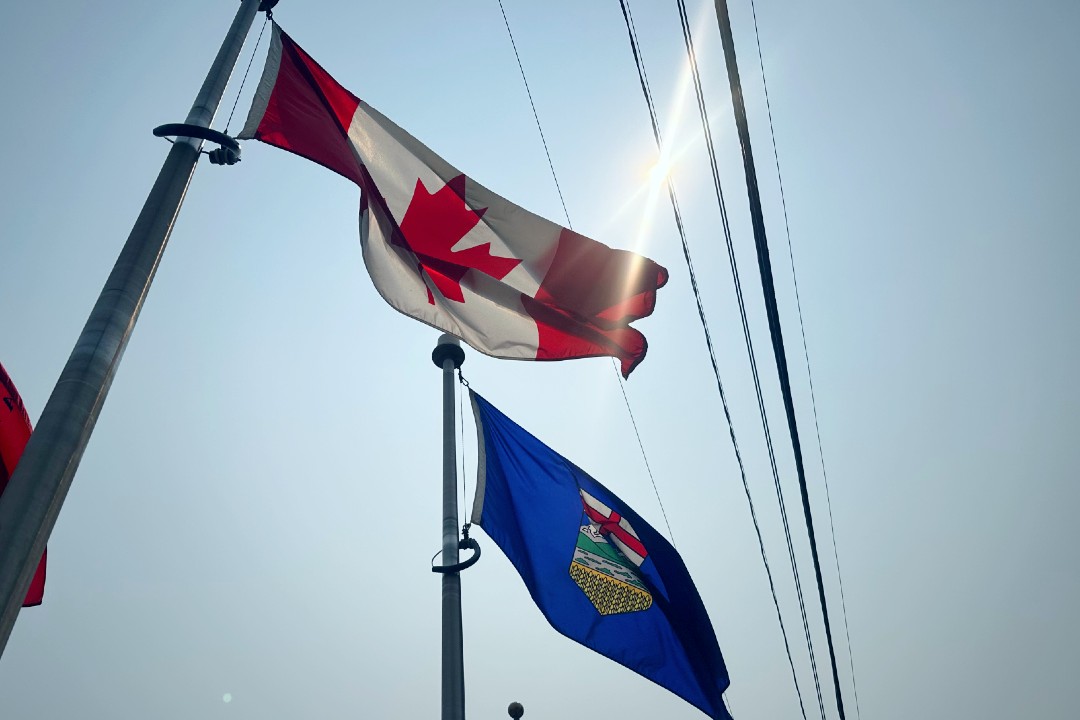
Flags for Canada and Alberta fly just off Whyte Avenue on June 29, 2026. (Stephanie Swensrude)
The Forever Canadian petition that Thomas Lukaszuk started to try to head off a referendum gathered more than 400,000 signatures. A successful legal challenge by First Nations stopped Elections Alberta from certifying the signatures gathered by the separatist Stay Free Alberta (until another court ruling allowed it), but that did not stop the UCP government from adding a "referendum on a referendum" to nine other questions about immigration and constitutional matters that Albertans will be asked to vote on in October.
Meanwhile, Edmonton city council passed Coun. Aaron Paquette's motion asking administration to report back to council on "options for strengthening Edmonton's constitutional, legislative and fiscal independence" in light of the separatist threat.
It's complex and political, which can lead some to disengage, but now is not the time to check out, Wesley suggested. "We get into all of these legal and constitutional questions, but politically, if there were ever a time when there would be a majority vote with a sizable turnout, it would be difficult for politicians — on all sides — to ignore that."
For his part, he's one of the signatories to the Lead Not Leave initiative, led by a group of "frustrated federalists" who believe Alberta's future is strongest within Canada.
And on this year's Canada Day, he isn't losing any sleep about being a Canadian and an Albertan simultaneously. He plans to celebrate in his neighbourhood amongst families with thematically decorated bicycles. There will likely be a lot of red and white, but the Alberta blue matters, too.
"I think it's important … that we not forget that we're Albertans, too," Wesley said. "(The mistake that) I see a lot of federalists in this particular campaign making is that they're only flying the Canadian flag, and that's missing the other part of Alberta's identity. It's also missing an opportunity, I think, to reclaim what it means to be Albertan. To be Albertan means to be Canadian for the vast majority of people who live here."
See the July 1 edition of The Pulse for a selection of contributions from Taproot readers on how they're thinking about Canada Day this year.
Share