
No easy answers for city budget, says rookie councillor
So far, Edmonton city council's budget process has taught Coun. Reed Clarke that there aren't as many levers to pull as he thought when he ran for office.
"When I came into this, I was like, 'There's probably an expense issue we've got to look at, but there's also a revenue issue we've got to look at,' but as I go through this, there's just not that many places to generate more revenue," Clarke said. "I mean, there's property taxes, obviously, there's user fees, there's fines, there's development permits, but there's not that many things you can pull on that revenue side."
Clarke, who was CEO of Sport Edmonton and the Edmonton Stingers before he was elected in Ward Nakota Isga in October 2025, joined Episode 365 of Speaking Municipally to discuss how he's approaching the 2027-2030 budget.
Edmonton makes most of its operating and capital budget decisions in four-year chunks, with annual adjustments. After public engagement throughout the first half of this year, administration will release its proposed version of the 2027-2030 budget in early fall, which council will debate and amend in late November and early December. The decisions made this year will shape the entire term.
Early in the budget-building process, Clarke inquired about partnerships with the private sector, similar to the sponsorship that led to the naming of the Booster Juice Recreation Centre in Terwillegar. The potential return wasn't as high as he thought it would be, he said. "Even if we got out there and we put ads on everything, and we got good Edmonton-based companies to support these things, I don't know if it'd be enough money," he said.
He also considered a push to sell city-owned buildings and land, but again, the potential results weren't enough to make a huge difference, he learned. "A lot of (the land) is not shovel-ready, it's not serviced to the level we need, so it's not easy to just hand over to a developer and say, 'Hey, buy this land and go at it,'" he said. He added that many of the hundreds of city-owned buildings are not in good enough condition to sell without significant improvements, plus it makes sense to maintain some of them for the not-for-profit sector.
One area that could increase revenue, however, is in bylaw enforcement, he said. For example, the city found that parking bans were only adhered to in about 10% of cases after a record snowfall in late 2025, hampering snow-clearing efforts. Fines were not high enough to motivate people to move their cars, and few bylaw officers were writing tickets. Plus, few cars were towed due to a lack of tow-lot space, a problem that has recently been mitigated somewhat.
All this to say that some people have been breaking the rules and not facing consequences. It's not just about parking bans — Clarke said more enforcement is needed on construction, sidewalk clearing, and other bylaw violations, too. That would not only potentially bring in money, but also increase trust in local government, he said.
"(Investing in) a department that has an opportunity to actually generate revenue and to enforce the bylaws and the policies that we actually make at council seems to make a lot of sense to me," he said.
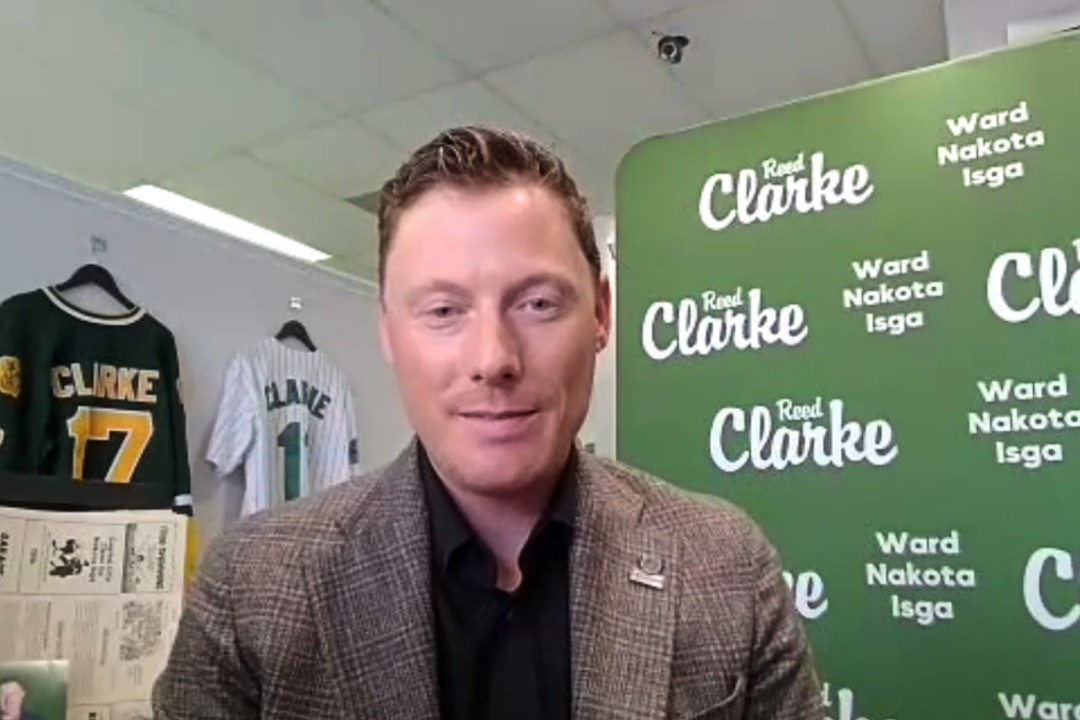
Coun. Reed Clarke spoke to Speaking Municipally about how he is thinking about the 2027-2030 budget. (YouTube)
Clarke also sees an opportunity in infill construction, especially along the future Valley Line West LRT. His ward is seeing a lot of development, and infill is already helping the residential tax base city-wide, he said. He hopes that the Stony Plain Road area sees more investment from developers.
"We've got a few buildings knocked down already, which is great to see, because that will lead to development, and I'm kind of working one by one with lots and developers to try to see what they need to really get that residential done," he said, noting the potential for multi-family towers and mixed-use development along the transit corridor.
Clarke said he hopes council can keep the tax increase to an average of 3.75% over the four-year budget to signal to Edmontonians that it understands the financial pressures they're under.
"We need to get those signals out to the public that we're listening, we're taking actions, we heard you, and we're investing in the things that you think are important," he said. "At the end of the day, I want people to feel great about the city — they should be proud of it … It's an amazing place, there's so much opportunity, there's so many good things here, and I want them to have trust in us and trust in me that we're making the best decisions for them."
For much more from Clarke on the budget and what he's learned in his first 10 months on council, listen to the July 17 episode of Taproot's civic affairs podcast. And go back to the July 10 episode to hear from Coun. Aaron Paquette of Ward Dene for his perspective on the budget.
Share