
The Pulse
Nov. 13, 2025

Here's what you need to know about Edmonton today.
Essentials
- 9°C: Mainly sunny. High 9. UV index 1 or low. (forecast)
- White: The High Level Bridge will be lit white for Adoption Awareness Month. (details)
- 2-1: The Edmonton Oilers defeated the Philadelphia Flyers in overtime with a goal from Jack Roslovic. (details)
- 5:30pm: The Edmonton Oilers (8-6-4) play the Columbus Blue Jackets (8-7-1) at Nationwide Arena. (details)
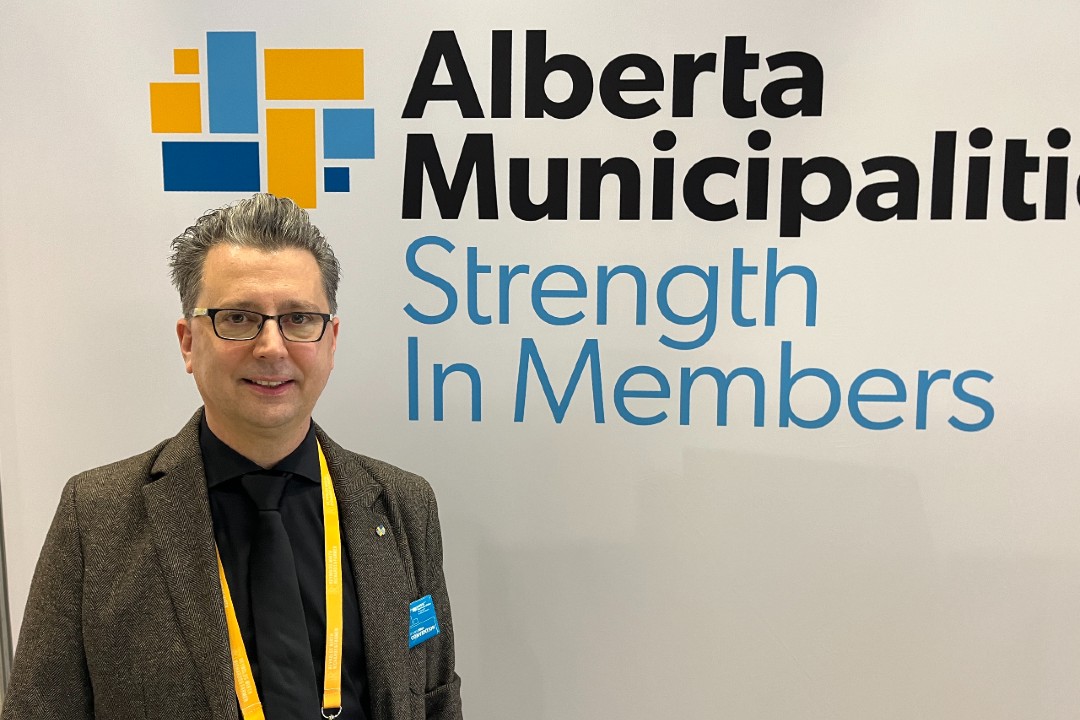
Alberta Municipalities wants province to rethink property tax
Alberta Municipalities wants the provincial government to fund more infrastructure in its 2026 budget before municipalities must make "critical" changes due to a nosedive in support over the last 15 years.
"(Alberta's) government is well aware of our ask for increased infrastructure funding, in particular, but it hasn't translated into action in terms of a lift in that funding," Dana Mackie, the CEO of ABmunis, told Taproot. "This isn't just an ask for the sake of asking, there really is a demonstrated need, and there's been a history of decision-making through several administrations now, at the provincial level, that has put municipalities into a point where they're really starting to make some very difficult decisions … It is at a critical juncture."
Rising property tax rates in Alberta are the result of reduced funding transfers from the province, as well as inflation, new municipal responsibilities, and a rising provincial property tax that municipalities must collect, ABmunis says in Property Taxes Reimagined: Fair Funding for Strong Communities, an information campaign that launched in early October. The organization notes that municipalities received an average of $635 per resident in 2009, and that number fell to $327 by 2023, after adjusting for inflation.
Municipalities also rely on funding transfers from the provincial and federal levels of government, like those allotted from the province via the Local Government Fiscal Framework, which replaced the Municipal Sustainability Initiative in 2023. The change from the initiative to the framework pleased Mackie at first, but hasn't yet yielded the results ABmunis was hoping for.
"The overall amount was reduced through that process by hundreds of millions," Mackie said. "We've had a significant gap of infrastructure funding, and as I think many Albertans understand, this is coming at a time when we're having record amounts of people coming into our province from elsewhere in Canada, or even from outside of Canada. We really need to keep up with that growth, and at the same time, we have existing infrastructure that we need to maintain. It's just not tenable right now with current funding levels."
Municipalities derive most of their revenue from property taxes, with a smaller portion coming from user fees, the property tax campaign notes. Unlike the federal or provincial governments, municipalities are not allowed to create new taxes, approve a budget with a deficit, or borrow beyond their means. When municipalities don't have enough money to break even, they raise property taxes or cut spending on infrastructure and services. Cuts might mean deferring maintenance on roads, buildings, and underground pipes, or even delaying and changing major projects, Mackie said.
Another thing municipalities want more money from, he said, is Family and Community Support Services, a preventative social services program that offers an 80-20 funding partnership between the province and municipalities or Métis settlements. "It's very critical," Mackie said. "That program hasn't seen an adjustment for inflation or population growth in well over 10 years. It's at about $105 million today, and it really should be about $162 million."
The province feels municipalities already receive substantial support, indicates a statement from the office of Dan Williams, the minister of municipal affairs. "Municipalities set their own property tax rates through their annual budgets, and they collect those revenues directly to fund local services and infrastructure," Williams's office said.
Premier Danielle Smith asked Williams to work towards keeping property taxes manageable in a mandate letter released on Sept. 22. Further, Williams noted that the province will invest $2.5 billion in municipalities via the Local Government Fiscal Framework over the next three years, and that Alberta's government renegotiated the federal Canada Community-Building Fund to invest $276 million in infrastructure.
Mackie said ABmunis factored those investments into the property tax campaign, adding that the opening of the legislature this fall has provided some hope for the budget expected in February. "I did see some promising language in the Throne Speech around a focus on infrastructure funding," he said. "The language and the focus is good, but I think what our members need to see is an actual lift when we get to Budget 2026."

Don't miss this family-friendly festival Downtown
Kick off the holiday season with Downtown Winterval, a festival that brings 104 Street to life with sleigh rides, ice-carving lessons, photos with Santa, and live music. New this year, we've got street hockey for the kids, all on a street-wide patio! Join us Nov. 22 from 3pm to 8pm.
Headlines: Nov. 13, 2025
- A new City of Edmonton report explores whether partnering with the private sector to build future arenas and libraries could be beneficial. The report, requested by city council's infrastructure committee in June, shortlists the Woodcroft Library renewal, Cumberland Fire Station development, Windermere North Transit Centre, and various arenas as potential collaboration projects. Former city councillor Tim Cartmell suggests looking at renting existing spaces instead of building new ones. "How many empty strip malls are we going to have in 10 years?" he asked.
- The federal government is seeking builder qualifications to redevelop a final section of land at the Village of Griesbach, with construction expected to begin next year on 355 new homes. Mike Kelloway, parliamentary secretary to the federal minister of transport and internal trade, said at least 40% of the homes will be offered at below-market rates for moderate- and medium-income households. Proposals are due by Dec. 22, with successful candidates moving to the next stage in early 2026.
- Police Chief Warren Driechel said the Edmonton Police Service is looking at new tools to make reporting crime easier. "I think there's a lot of unreported crime," he said. Driechel suggested the new tools could cause a spike in reported crimes, which "puts more demands on the service," and could impact budget needs.
- The Edmonton Police Service is partnering with Esri Canada to develop an underground tracking system at Churchill Station, which has the highest number of reported incidents in Edmonton's LRT stations (600 out of 2,985). The Edmonton Transit Enhanced Community Safety System (ETECS) will track officers in real-time using smartphones and a dashboard displaying video feeds. EPS spokesperson Cheryl Voordenhout said ETECS, which has been in development for three years, is "a proof of concept for a community safety sytem." The project is funded by a $1.3 million federal grant from the Canadian Safety and Security Program, the research and development arm of the Department of National Defence.
- Both Better Edmonton and the Principled Accountable Coalition for Edmonton (PACE), municipal parties that ran candidates in last month's election, say they have debriefed and plan to continue operating. "We feel like we've had some success, and now we have a lot of runway ahead of us that we can use to improve how we did in this election for the next one," Cameron Johnson, Better Edmonton's chair, said. PACE co-founder Doug Main said the party is "pretty much disappointed in the way the election turned out, but determined to carry on."
- The City of Edmonton has reopened 95 Avenue to four lanes of traffic for the winter season, as construction on the 95 Avenue Renewal Project has made significant progress. Phase 1, from 182 Street to 170 Street, is substantially complete, featuring a new shared pathway and road resurfacing. Phase 2, from 163 Street to 170 Street, is complete for the 2025 construction season, and will resume in spring 2026.
- A fire at a GFL Environmental landfill in Parkland County, which started on Nov. 9, was still burning three days later. Officials said the fire is expected to continue burning "for some time." Specialized industrial firefighters are using soil and water to smother the fire, which is in the southwest section of the landfill containing construction and demolition waste. The City of Edmonton issued an advisory encouraging residents to reduce exposure to the smoke.
- A powerful solar storm lit up skies across Alberta this week, with vivid displays of the aurora borealis, visible well beyond the usual northern viewing spots. Frank Florian, senior manager of the planetarium and space sciences at the TELUS World of Science - Edmonton, explained the red and green colours were triggered by a coronal mass ejection from the sun interacting with Earth's magnetic field.
- Canada has lost its measles elimination status, which it achieved in 1998, due in large part to outbreaks in Alberta. James Talbot, a former chief medical officer of health for Alberta, said the provincial government should be embarrassed by the province's role, as Alberta has reported 1,956 cases since its outbreaks began in March, and that it owes Albertans an apology for the province's poor record. Karina Top, a pediatric infectious diseases specialist at the Stollery Children's Hospital, called it a "collective failure," and noted Alberta had the highest per capita rates of measles in North America.

Happenings: Nov. 13, 2025
Here are some events happening today in the Edmonton area.
- Small Shops - Strategies & Support starting at 9am at Bison Lodge
- Part 2: Building Security for Your Business and Family starting at 11am online
- Soft Skills. Hard Cash with Aggie Mikulski starting at 12pm at Edmonton Unlimited
- Building Community In and Around Affordable Housing starting at 12pm online
- How to Choose the Right CRM for Your Business (Even If You've Tried Before) starting at 1pm online
- Here's Nina 2025 starting at 5pm at Edmonton EXPO Centre
- 2025 Start Alberta Tech Awards starting at 5pm at Allard Hall
- Perogies Cooking Class starting at 5pm at DON'YA Ukraine's Kitchen (Jasper Avenue)
- Reunion Edmonton starting at 6pm at Slow Pour Beer Bar
- Unmask the Magic starting at 6:30pm at Signature Fine Wine & Spirits (Beaumont)
- Broad View International Film Festival at Garneau Theatre (until Nov. 15)
- Daniel James McFadyen starting at 7:30pm at The Aviary
And here are some upcoming events to keep in mind:
- Nov. 19: Big Shot: Circular Economy Pitch Night at Edmonton Unlimited
- Nov. 20: The Tyee & Taproot Edmonton Meet-Up at Rocky Mountain Ice House
- Nov. 22: Downtown Winterval at 104 Street Downtown
Visit the beta version of the Taproot Edmonton Calendar for many more events in the Edmonton region.

The Taproot Mini - No. 92
Test your crossword prowess and deploy a little of your Edmonton knowledge. Complete the puzzle.
Did you know that Taproot sells memberships? Might be a great way to show how much you love the Mini!
The Taproot Mini is brought to you by ATB, your homegrown source of good advice to help conquer life's tougher puzzles. Learn how.
