
The Pulse
March 10, 2026
Sponsored by:

Here's what you need to know about Edmonton today.
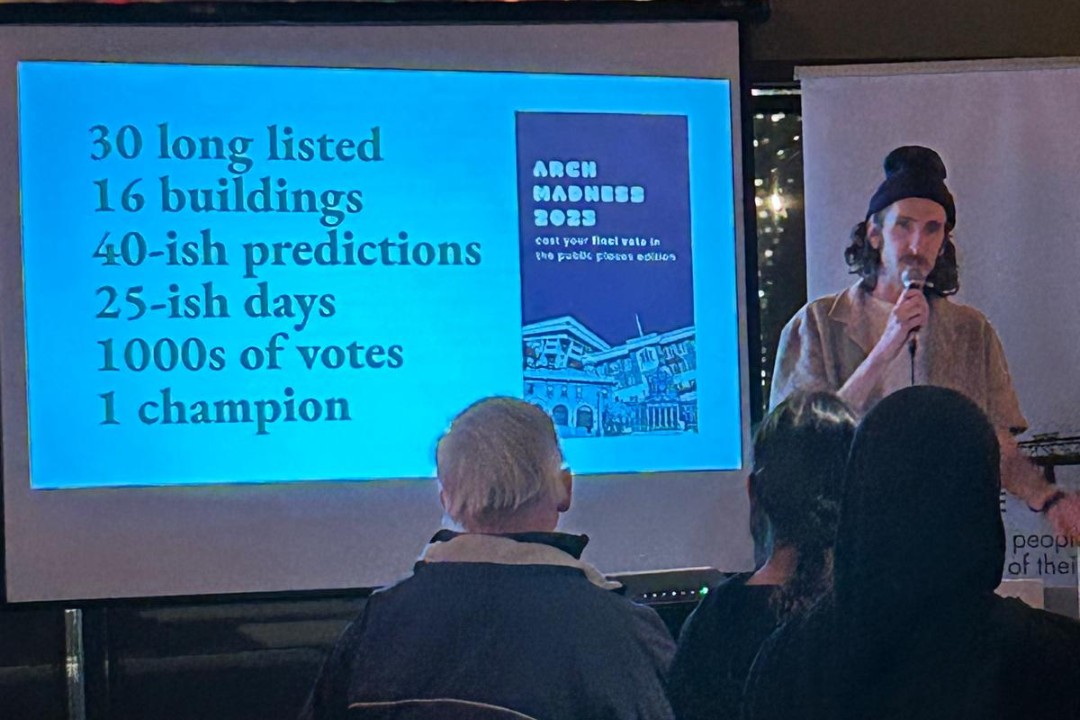
Architecture bracket exposes history at risk
This year's edition of the "Arch Madness" showdown for iconic Edmonton buildings will focus on properties at the highest risk of demolition, examining both what the city stands to lose and opportunities for renewal.
"We are at a pretty critical junction here," said Dan Rose, creator of the annual bracket competition, which will run until March 31 through polls on his Instagram stories. "I don't think it's too hyperbolic to say that heritage architecture design is facing an unprecedented and unparalleled volume of threats."
This DEFCON 1 assessment from Rose, the former chair of the Edmonton Historical Board, is based on a blend of insights from the historical community and the cold truth that buildings have an expiry date — unless someone intervenes to preserve them. Hence, the stark terms users will be asked to take into account when voting for a building.
"This year, you have to answer a nearly unanswerable question: if you could only save one of these historic landmarks, which one would you save?" Rose posted when announcing the 2026 bracket.
The contenders are the Princess Theatre, the former Royal Alberta Museum, Spruce Avenue School, Donald Ross School, the University of Alberta's Horse Barn and Humanities Centre, the former University Grocery in Garneau, the High Level Bridge, the Freemasons' Hall, the Strathcona Garage, the Edmonton Light and Power Substation #100, the Argyll Safeway (now the city's Reuse Centre), the Horne & Pitfield Building, the Civil Defence Bunker, Dyde House, and A. MacDonald Consolidated. As of March 9, the Horse Barn and the Humanities Centre had been eliminated.

Rose held the first annual Arch Madness in 2021 as something of a "COVID foible," as both the online bracket and visits to historical sites were safe activities in the social-distancing era, he told Taproot. Moreover, Rose makes a habit of getting people engaged with history outside conventional means.
"I've always been interested in finding accessible ways to engage people around complex conversations about built heritage, architecture, and design, and the importance of conservation," Rose said. "It's kind of been my (modus operandi) for the better part of my time doing heritage things — to try and find novel ways to bring people into a conversation that … isn't the most accessible subject matter for people to wrap their heads around."
Rose said he hopes more people will become invested in the future of these buildings. Some bracket members have legal protections, but those protections are fallible, Rose said. For example, the Princess is a provincial historic resource and is listed on the register of municipal historic resources (which differs from the unprotected properties on the city's inventory of historic resources). And yet, in Rose's estimation, the Princess is at the greatest risk for demolition of the entire bunch.
"I'm not kidding, that building could literally crumble, like, tomorrow," Rose opined based on a tour of the building this winter. "There's standing water in the basement of that building right now, which is pretty horrifying."
To use a grim metaphor, historical protections prohibit execution, but do little to prevent a slow, gradual death. "Even for buildings that are designated by these lists, such as the Princess, the little piece of paper and the little plaque on the building certainly do not prohibit an owner from simply letting the building fall into disrepair," Rose said.

Give the gift of Taproot
Would someone in your life appreciate reliable intelligence about what's happening in the Edmonton region? Would they also enjoy a chance to win free tickets to events and access to members-only experiences? Buy them a Taproot membership, and guarantee they'll be informed, connected, and empowered the whole year through!
Headlines: March 10, 2026
- Edmonton will receive funding for 10 new school projects as part of Alberta's Budget 2026, Education Minister Demetrios Nicolaides announced March 9. This funding, part of $3.3 billion allocated province-wide over three years, addresses growth pressures, especially in Edmonton Catholic Schools, where high schools are at 112% utilization. Edmonton Public Schools secured funding for four schools, Edmonton Catholic Schools for three, and three francophone schools also received allocations.
- Edmonton city council will consider a motion next week to evaluate restrictive covenants and exclusivity controls that can prevent competing grocery stores from opening near existing or former locations. Ward papastew Coun. Michael Janz says the restrictions, sometimes used by companies such as Sobeys and Safeway, limit competition and reduce grocery access in neighbourhoods. Council is set to debate the proposal on March 17.
- Multifamily building landlords are urging the City of Edmonton to reinstate weekly trash pickup, citing issues with the current biweekly collection system. At city council's utility committee meeting on March 9, property owners, including Scott Seibel of Opaque Developments, detailed problems such as limited space for multiple bins, blocked parking, property damage, and covering illegal dumping costs. Edmonton has seen an 8.8% reduction in waste per person since 2021 and an 80% drop in single-use bags.
- YWCA Edmonton has announced the recipients of its 2026 Women of Distinction Awards, recognizing six leaders for their contributions to the Edmonton community. The winners are Pilar Martinez (Trailblazer), Shiza Wasi (Emerging Leader), Carolyn Campbell (Business & Entrepreneur), Maggie Mitchell (Arts & Culture), Holly Hallborg (Community Changemaker) and Rosalind Smith (Bellamy Award). The awards honour women and gender-diverse individuals whose leadership and work advance equity and opportunity. They will be recognized at the Women of Distinction Awards Luncheon on May 7 at the Royal Glenora Club. Proceeds from the event support YWCA Edmonton programs.
- Strong winds from a fast-moving cold front damaged homes across the Edmonton area on March 8, stripping shingles and roof vents and prompting dozens of repair calls to Romac Roofing. The storm also knocked out power for thousands of customers across Alberta. The high winds created hazardous travel conditions, leading to several overturned semi-trucks on highways. Meteorologists warn intense wind events could become more frequent in the future.
- Alberta schools, including Edmonton Public Schools and Parkland School Division, have removed at least 166 titles, predominantly graphic novels, from library shelves, CBC reported. The move comes after a provincial order mandated the removal of any material containing explicit depiction of a sexual act. Among the removed works are graphic versions of The Handmaid's Tale and 1984. James Turk of the Centre for Free Expression described the policy as Canada's most significant book-banning order, while a spokesperson for the province said it is a "common-sense standard" to protect children, not censorship.
Happenings: March 10, 2026
Here are some events happening today in the Edmonton area.
- More Than Just a Bad Day – Understanding Depression starting at 12pm online
- Naija Pastry Pop-Up starting at 5pm at Lochi Afro Nija
- Cringe Stories: A Networking Event starting at 6pm at The Bear's Den
- Thoughtful Tuesday - Pistachio Wars starting at 7pm at Earth's Refillery Coop
- The Wizard of Oz starting at 7:30pm at Citadel Theatre
- Les Misérables starting at 7:30pm at Northern Alberta Jubilee Auditorium
- Put Your Lips Together by Louise Casemore starting at 7:30pm at Gateway Theatre
And here are some upcoming events to keep in mind:
- March 18: Venture Pilots: Built World Tech Showcase at Edmonton Unlimited
- March 21: ArtBus 2026 at Allard Hall
- April 3-4: The Downtown Defrost at Churchill Square
Visit the Taproot Edmonton Calendar for many more events in the Edmonton region.

The Taproot Mini - No. 164
Test your crossword prowess and deploy a little of your Edmonton knowledge. Complete the puzzle.
Hint: The first clue turns a corner.
The Taproot Mini is brought to you by ATB, your homegrown source of good advice to help conquer life's tougher puzzles. Learn how.
