
The Pulse
May 8, 2026

Here's what you need to know about Edmonton today.
Your turn: Winter walking, downtown policy, and County Chats
This week's batch of calls for public engagement includes City of Edmonton surveys on improving the pedestrian experiences in winter and an updated downtown policy, as well as County Chats across Parkland County.
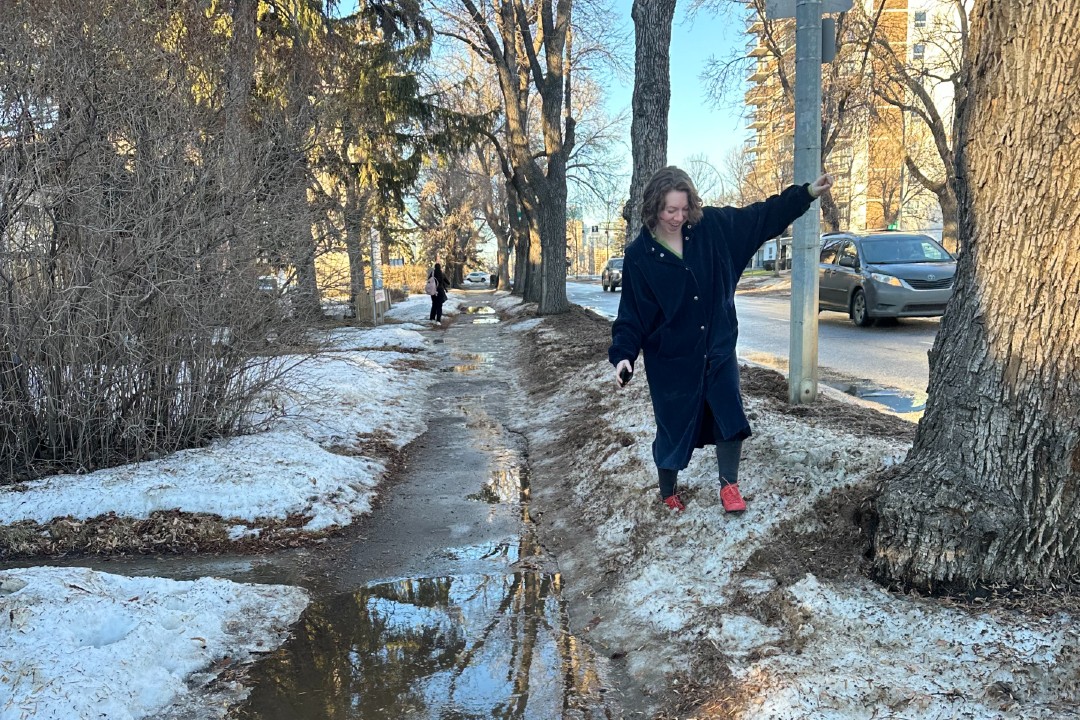
The City of Edmonton is conducting a survey to better understand how winter weather impacts people who are walking, cycling, rolling, or using transit. The survey is open until May 13 and will help administration improve safety, equity, and accessibility in winter travel, the city said.
While it's possible to safely navigate a vehicle through some snow, it can be anywhere from difficult to impossible for people with mobility aids to use sidewalks that are covered in snow, ice, puddles, and ruts. Disability advocate Zachary Weeks told Global News it is isolating and dehumanizing to not be able to leave the house for basic needs like medical appointments and groceries. City-maintained sidewalks, shared pathways, and other pedestrian infrastructure are meant to be cleared within three days of the end of snowfall. But private sidewalks are the responsibility of property owners. In the 2024-2025 winter season, the city received 12,400 complaints about snowy and icy sidewalks and gave out 1,400 tickets.
Edmonton's December snowfall was four times higher than usual, complicating snow removal efforts. By Jan. 25, the city had received 4,500 complaints about uncleared sidewalks and given out 640 tickets. The city received more than 30,000 complaints about snow removal in general, and it stopped accepting complaints for a period of time in mid-January.
Around that time, Mayor Andrew Knack and councillors Aaron Paquette and Jon Morgan were among those calling for changes to how snow clearing is funded and executed. Knack said even in an average snowfall year, snow clearing is not up to expectations, and it's likely the $67-million annual budget will need to be increased in the next budget cycle to reach those expectations. Paquette introduced a motion calling for the city to create an option for surge snow-clearing capacity during extreme weather events like the record snow of December. Morgan also introduced a motion directing administration to look for different or innovative snow and ice control tactics. The information asked for in both motions will be included in a review of the city's snow-clearing policy, which is set to be presented to council on Aug. 31.
It costs much more for city crews to clear snow from sidewalks and bike lanes than from roads. The City of Edmonton spends close to the same amount clearing snow from 11,000 linear kilometres of roads as it does clearing it from about 1,500 kilometres of active pathways and other pedestrian spaces. The city told Taproot this is because active transportation infrastructure requires more specialized equipment and is typically cleared to a different standard than roads.
Meanwhile, another city councillor is conducting his own survey, open until June 19, about snow and ice removal in residential neighbourhoods. Coun. Mike Elliot said in a blog post that he wants community input, given the challenging snow conditions that happened this winter. Elliott will also host a townhall on June 29. He wrote that the information will be used to inform his budget decisions later this year.

Housing is more than a shelter — it's a human right
The Edmonton Coalition on Housing and Homelessness invites you to celebrate 40 years of housing advocacy at a vibrant community event at the Alberta Avenue Hall on June 13. There will be live music, inspiring speakers, and meaningful connections, plus complimentary bannock and beverages.
Headlines: May 8, 2026
- The City of Edmonton rescheduled a prescribed burn at Jan Reimer Park for May 8, after an earlier cancellation due to high winds. The prescribed burn will cover 19 hectares of grassland to reduce wildfire risk and enhance biodiversity. Nearby trails and the Terwillegar Park Footbridge will be closed, and smoke is expected to be visible from mid-morning to late afternoon. The burn remains dependent on daily weather conditions.
- The Ben Calf Robe Traditional Pow Wow is set to take place May 9 at the Commonwealth Recreation Centre in Edmonton. This free, family-friendly event, with Grand Entry at 1pm, honours Indigenous cultures and traditions through drumming, dancing, and ceremony. This year's theme is "Prayers for Peace (nitotamâtan pêyâhtakeyimowin)."
- PulseMedica was the top winner at the YEG Startup Community Awards on May 7, taking home Most Edmonton Startup of the Year. Business operations lead Dom Beaupre earned Best Supporting Actor of the Year. PulseMedica is developing a non-invasive laser treatment for eye floaters. Other winners included Polymorph as Disruptor of the Year, Aqtiva as New Startup of the Year and Messed Up Mondays for Community Initiative of the Year.
- Elections Alberta issued 568 cease and desist letters to individuals who accessed a leaked provincial voter list. Chief electoral officer Gordon McClure sent 23 letters to those who were provided the list by The Centurion Project, and 545 to others who accessed it. The Centurion Project had uploaded the list, containing phone numbers, addresses, and unique identifiers of 2.9 million Albertans, to its public website. An injunction ordered the group to remove the list and identify individuals. Elections Alberta and the RCMP are now investigating how The Centurion Project obtained the Republican Party of Alberta's copy of the list.
- Alberta Deputy Premier Mike Ellis is considering delaying the Oct. 19 referendums as investigations into the leak of a provincial electoral list intensify. The separatist Centurion Project allegedly used the list containing details for nearly three million Albertans, which the Republican Party of Alberta allegedly supplied. The Edmonton Police Service, RCMP, Elections Alberta, and Alberta's information and privacy commissioner have launched probes into the data breach.
- Lesser Slave Lake MLA Scott Sinclair rejoined the United Conservative Party caucus on May 7, more than a year after his expulsion in March 2025. Sinclair was removed for publicly criticizing the provincial budget, which he felt ignored rural communities.

Housing Forward to bring Prairie housing leaders to Edmonton
A message from the City of Edmonton:
The Housing Forward: 2026 Prairies Affordable Housing Summit will bring housing leaders from across Western Canada to the Edmonton Convention Centre from May 11 to 14 for four days focused on practical solutions to the affordable and non-market housing challenge.
Hosted by the City of Edmonton, the summit is designed for the people and organizations working to get housing built, funded, operated, and sustained. The summit comes at a consequential moment for Edmonton and the Prairie region. While Edmonton has increased its affordable housing by more than 40% since 2019, it still has Canada's third highest rate of core housing need. According to the City's affordable housing needs assessment, roughly one in four renters pays more than they can afford, lives in substandard or crowded housing, and can't afford to move. The need is significant, but so is the opportunity to learn from communities, organizations, and projects that are already finding ways forward.
Housing Forward is structured around applied knowledge, with sessions organized into four program streams: planning, permitting, and construction; funding, partnerships, and solutions; organizational health, operations, and governance; and housing, health, and homelessness. Sessions include topics such as unlocking land for housing, partnership structures that deliver non-market housing, supportive housing models, financing tools, cost-efficient delivery, and leadership in affordable housing organizations.
Dr. Carolyn Whitzman, an urban planner and adjunct professor at the University of Ottawa and the University of Toronto School of Cities, will deliver a keynote to kick things off on May 12. Andrea Nemtin, CEO of Social Innovation Canada, and Katie Maslechko, CEO of Rental Protection Fund, will deliver keynotes on May 13.
Don Iveson, board chair of CMHC and founder of Civic Good, will join David Miller of C40 Cities and Elbows Up for Climate for a fireside chat on housing, climate resilience, and what it takes to build cities that work for everyone. The former big-city mayors will draw on their combined decades of municipal leadership and their ongoing work in national housing and climate policy to offer candid reflection and a forward-looking perspective on the road ahead.
The summit also includes opportunities to see local housing innovation firsthand. Optional site tours on May 14 will take delegates to Edmonton projects including McArthur Place, Parkside North, Grace Village, Richfield I and II, and ACQBuilt, showing different models of supportive housing, accessible townhomes, community housing renewal, sustainable design, and off-site construction. Transportation is provided, and pre-registration is required.
Registration is now open. The $325 registration fee includes the Monday evening opening reception, both main summit days, keynotes, panel discussions, breakout sessions, the Prairies Housing Innovation Showcase, networking breaks, lunch, and the optional Thursday site tours.
For anyone working to advance affordable housing in the Prairies, Housing Forward offers a chance to connect with peers, learn from working models, and leave with ideas that can be put into practice.
A moment in history: May 8, 1989
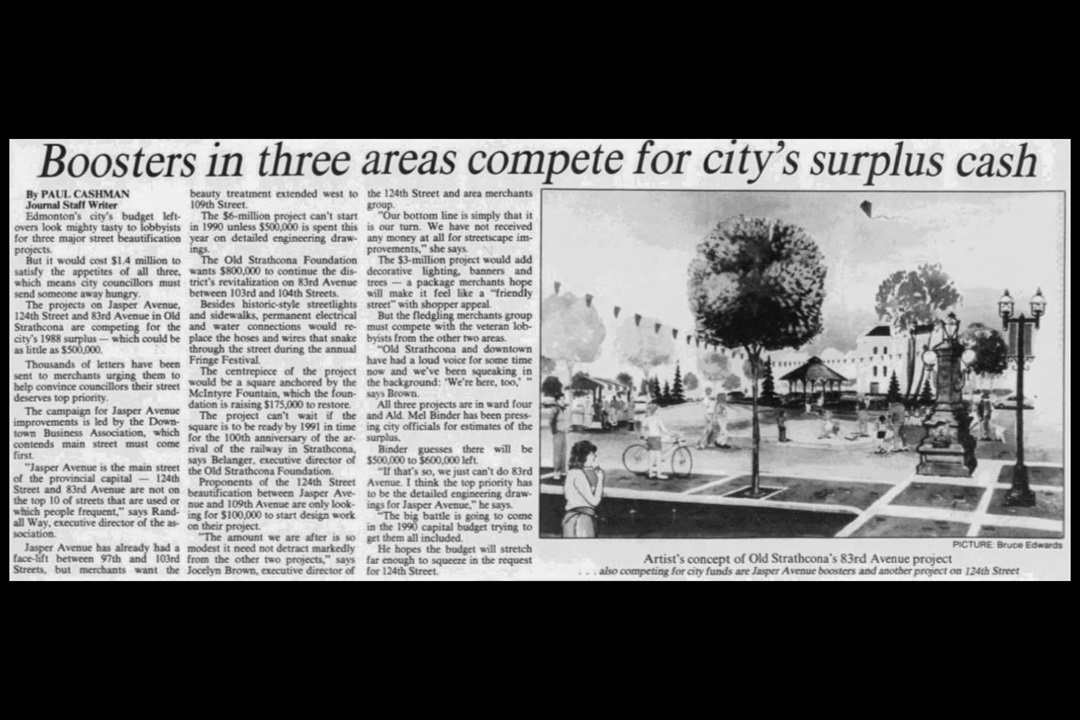
On this day in 1989, one of Old Strathcona's most well-known parks was fighting for a chunk of the city's surplus cash.
As noted in an Edmonton Journal article, proponents of beautification projects on Jasper Avenue, on 124 Street, and in Old Strathcona were vying for a piece of the expected budget surplus, knowing there likely wouldn't be enough to fund all three. The Old Strathcona Foundation sought $800,000 to revitalize the area around 103 Street and 83 Avenue. In addition to new streetlights and improved utility hookups for the Edmonton International Fringe Theatre Festival, they planned to build a new public square in time to celebrate the 100th anniversary of the railroad's arrival in Strathcona. That square would become Dr. Wilbert McIntyre Park, or, as many call it, Gazebo Park.

Wilbert McIntyre was born in Ontario in 1867. After studying medicine in Toronto, he moved to Strathcona in 1902. In 1906, McIntyre won a federal byelection to represent the Strathcona riding, which at the time encompassed a huge area that included Innisfail and Lloydminster. The win made McIntyre the first Member of Parliament to be elected in Alberta after it became a province.
McIntyre was a popular politician. So popular, in fact, that when he died young in 1909, his constituents gathered donations for a monument in his honour. In 1913, the Wilbert McIntyre Fountain was built in the middle of the road at 104 Street and 83 Avenue. The monument contained six drinking fountains: three for people, two for dogs, and one for horses. Its location made it a prominent landmark in Strathcona, but also put it in peril. Vehicles hit the fountain several times over the years, until it was finally destroyed by a car crash in 1952.
When the plan for Dr. Wilbert McIntyre Park was confirmed in 1989, plans began to recreate the fountain. The replica was installed in the park in 1991, where it still stands, as does the prominent gazebo that was built on the corner of the park, giving it its unofficial name. Of course, lots of Edmonton parks have gazebos, but this one is undoubtedly the best known. Over the years, the park and its gazebo have been key sites for the Fringe Festival, early Pride celebrations, as well as other smaller events, gatherings, and weddings. It's also just a nice place to sit on a sunny day and watch the crowds go to and from the Old Strathcona Farmers' Market down the street.
As part of the Old Strathcona Public Realm Strategy, the City of Edmonton is working on fully pedestrianizing 83 Avenue. It has also started charging for parking in the lot east of Gateway Boulevard, causing consternation for some farmers' market patrons and vendors.
This clipping was found on Vintage Edmonton, a daily look at Edmonton's history from armchair archivist Rev Recluse of Vintage Edmonton.

Happenings: May 8-10, 2026
Here are some events happening this weekend in the Edmonton area.
- May 8: Chamber Mixer starting at 3pm at MOD Kitchens in Fort Saskatchewan
- May 8: Chamber After Hours starting at 3pm at Pendennis Building
- May 8: Dark Matters: Science is Dope starting at 7pm at TELUS World of Science - Edmonton
- May 9: Edmonton Bike Swap at Alberta Avenue Museum
- May 9: ACE Conference (Alberta Condo Expo) starting at 8am at Edmonton Convention Centre
- May 9: World Migratory Bird Day starting at 10am at Lois Hole Centennial Provincial Park
- May 9: Get Ready in the Park starting at 10am at Edmonton EXPO Centre
- May 9: The Animators Town Hall starting at 11am at The Orange Hub
- May 9: Edmonton Stingers vs. Winnipeg Sea Bears starting at 1:30pm at Edmonton EXPO Centre
- May 9: Motherless Day starting at 7pm at Felice Cafe
- May 10: Real.Funny.Women starting at 3pm at Trinity Lutheran Church
- May 10: Perogies Cooking Class starting at 3pm at DON'YA Ukraine's Kitchen (Fort Road)
And here are some upcoming events to keep in mind:
- May 16: Elbows Up; A Tribute to Canadian Big Band Jazz at Edmonton Public Library (Stanley A. Milner)
- May 20: Reimagining Bystander Intervention at Earth's Refillery Coop
- May 21: From Point A to Point Care: Creating Seamless Paths to Support for Rural Caregivers online
Visit the Taproot Edmonton Calendar for many more events in the Edmonton region.

The Taproot Mini - No. 205
Test your crossword prowess and deploy a little of your Edmonton knowledge. Complete the puzzle.
Did you miss a Mini this week? You can find them all in the archive.
The Taproot Mini is brought to you by ATB, your homegrown source of good advice to help conquer life's tougher puzzles. Learn how.
