
The Pulse
May 14, 2026
In the May 13 edition of The Pulse, we inadvertently excluded Happenings and included two copies of Headlines. Sorry about that!
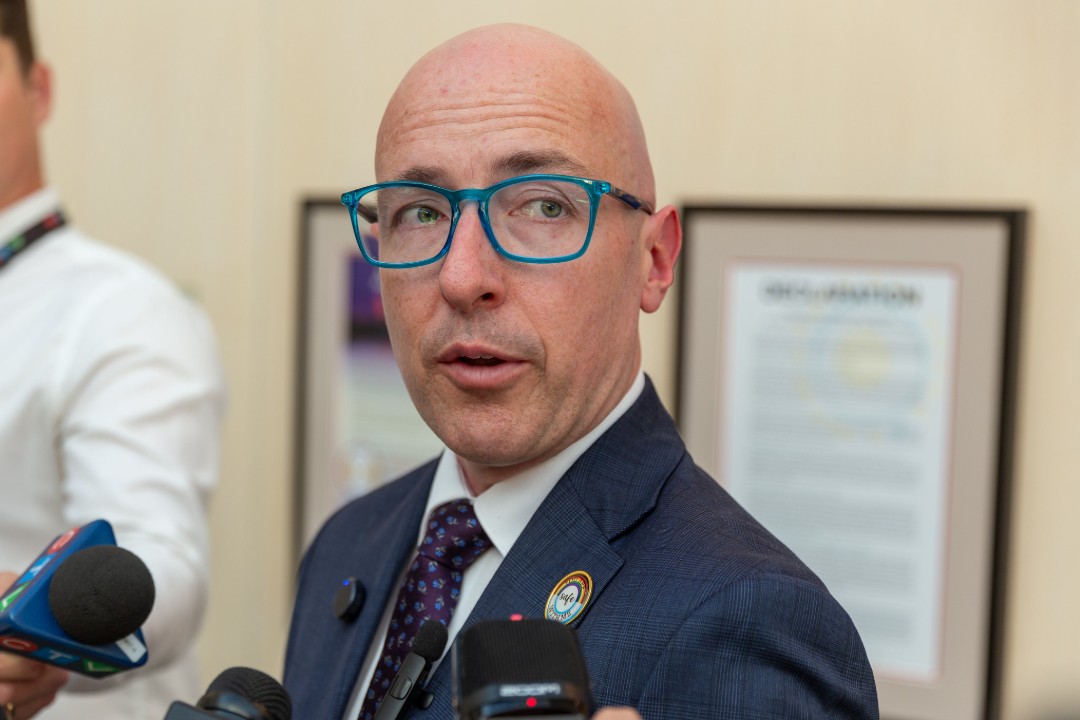
Enabling job creation should top mayor's agenda, says cities expert
When Mayor Andrew Knack delivers his first State of the City address, a key message should be what the City of Edmonton is doing to support job creation, says the head of the Cities Institute.
"Cities are labour markets, first and foremost," said Murtaza Haider, executive director of the University of Alberta-based institute focused on city-building. "If you see an urban economy growing, you see people gravitating to that place. If you see the urban economy deteriorating, people start leaving."
When the mayor addresses the Edmonton Chamber of Commerce on May 14, it may be a little early to show progress on how well Edmonton is performing at matching people with jobs and companies with workers since last fall's election. But Haider likes the lens that Knack is applying so far.
"Knack has pointed the city in the right direction by putting economic development near the top of the agenda," says a Financial Post op-ed that Haider co-authored with real estate veteran Stephen Moranis. "The test now lies with the council. Edmonton … needs a deliberate, sustained focus on becoming a city where good jobs are created, wages grow and talent sees a future."
That said, governments are enablers of economic development, not creators, Haider told Taproot.
"The job of governments is not necessarily to create jobs, but to create the enabling environment in which entrepreneurs come in and they start new businesses," he said.
A city that knows it is a labour market seeks ways to set off a snowball effect, Haider said. As jobs bring people, capital is rolled over into different industries. He added that city council should continue focusing on downtown, with development incentives to get more people living in the core being a step in the right direction.
"You need about 40,000 people to be in the downtown Edmonton area, living there and spending their evenings at restaurants and going to movies," Haider said, noting that the core's current population sits at just over 12,000. "It creates that culture, so you need to bring people in."
Headlines: May 14, 2026
- Environment and Climate Change Canada is predicting cool weather with strong winds and rain for Edmonton over the May long weekend. Wind gusts may reach up to 80 km/h, potentially causing driving hazards and power outages. Edmonton may experience a mix of rain and snow, with temperatures dropping to 8°C on May 16.
- Construction has begun on a $36 million cargo hub at the Edmonton International Airport, aimed at boosting the region's economic growth and global trade capabilities. The facility, supported by both federal and provincial funding, is expected to handle increased freight volumes and create about 400 jobs. The new hub is part of the airport's broader strategy to enhance its logistics infrastructure and attract more airlines and businesses to the area.
- Municipalities in the Edmonton area are managing tax hikes amid rising costs and infrastructure deficits. In Edmonton, the 2026 municipal tax levy increase is set at 6.9%, translating to an estimated $53 more annually for the average homeowner. Parkland County announced a modest 0.8% increase but faces infrastructure challenges. Strathcona County's taxes rose by 4.88%. Local governments are also contending with reduced provincial funding and potential constraints from proposed legislation, such as Bill 28, which may affect their taxation powers.
- The Green and Gold Community Garden in Edmonton is fundraising for new equipment to enhance its operations at the University of Alberta farm. Managed by Dion Bews, the garden is seeking $25,000 for machinery to improve efficiency and reduce manual labour, especially as the volunteer workforce ages. Since launching the fundraiser, it has raised about $16,000. All garden profits support "Tubahumurize," a Rwandan nonprofit aiding women with education and employment.
- The federal and provincial governments have committed $323 million to fund 41 affordable housing projects across Alberta. The investment, announced May 13, aims to create 2,700 new affordable homes, addressing the growing need for housing in communities throughout the province. The funding, which comes from Alberta's Affordable Housing Partnership Program, will benefit municipalities including Edmonton and surrounding areas.
- An Alberta Court of King's Bench justice overturned the approval of a petition for an Alberta independence referendum, raising questions about its future. Justice Shaina Leonard found the Elections Alberta decision flawed, citing a failure to consider Indigenous treaty rights. Premier Danielle Smith plans to appeal, saying that the ruling denies 300,000 Albertans the chance for their petition to be verified. Indigenous leaders urged cooperation instead of an appeal. The ruling follows controversies around the petition, including alleged increases in racism, misinformation, and inaccuracies.
- Alberta has introduced a $200 million grant to hire 1,400 teachers for the 2026 to 2027 school year, targeting Kindergarten to Grade 9. Education Minister Demetrios Nicolaides said the funding is part of a $355 million initiative to reduce class sizes. Edmonton Public Schools will receive $39.9 million to hire 296 teachers, while Edmonton Catholic Schools will receive $18.9 million for 140 teachers. Jason Schilling of the Alberta Teachers' Association expressed concerns over the lack of funding for high schools and future continuity of funds.
- A wildfire near Whitecourt is currently being held but remains a concern for residents northwest of Edmonton, Alberta Wildfire said. Despite firefighters managing to keep it from spreading, an evacuation order remains in effect, and residents have not yet been allowed to return to their homes.

Happenings: May 14, 2026
Here are some events happening today in the Edmonton area.
- Exploring Defence and Aerospace Opportunities starting at 8am at Villeneuve Airport
- Anti-Hate Intervention Training - Online Session starting at 9am
- ERIN Community Initiative Session #2 starting at 9am online
- State of the City Address starting at 11am at Edmonton Convention Centre
- BIPOC Media Lab: National Screen Institute Workshop starting at 2:30pm at Art Gallery of Alberta
- Aksis Member Showcase & BBQ Mixer starting at 2:30pm at Wingate by Wyndham Edmonton West
- Grand Opening: 15 Seasons of Local Love starting at 4pm at 124 Grand Market
- Table Top Games Night starting at 5pm at Earth's Refillery Coop
- SUSTAINABILITY SOCIAL: Expert Panel + Networking + Activities starting at 6pm at The Bell in Scona
- Wills & Wealth Transfer: What Every Family Should Know (But Rarely Talks About) starting at 6pm
And here are some upcoming events to keep in mind:
- May 28: Nerd Nite Edmonton #93 at Fringe Theatre Arts Barns
- May 29-30: UFest Edmonton Ukrainian Festival at Borden Park
- May 29-June 1: International Children's Festival of the Arts at St. Albert Place
Visit the Taproot Edmonton Calendar for many more events in the Edmonton region.

The Taproot Mini - No. 209
Test your crossword prowess and deploy a little of your Edmonton knowledge. Complete the puzzle.
Know someone who would love the Mini? Encourage them to subscribe to The Pulse.
The Taproot Mini is brought to you by ATB, your homegrown source of good advice to help conquer life's tougher puzzles. Learn how.
