
On the agenda: Budget, waste, and Blatchford
This week, councillors will begin deliberations on the 2027-2030 operating, capital, climate, and utility budget. They will also discuss reports at regular council and committee meetings.
Budget deliberations start with a public hearing on Nov. 23 and will continue on Nov. 24. There is a regular city council meeting scheduled for Nov. 25 and 27. Council will consider the utility budget on Nov. 26 at 9:30am. There is also an executive committee meeting on Nov. 26 at 1:30pm.
Here are some key items on the agenda:
- As of Nov. 20, there were 264 people signed up to speak to council at the Nov. 23 public hearing on the 2027-2030 budget. Several organizations have made their wishes known in advance. The Edmonton Chamber of Commerce said the budget is moving in the right direction but that more work remains. The People's Advocacy Voice of amiskwaciwâskahikan (PAVA), which was created after the sunsetting of the Women's Advisory Voice of Edmonton, is calling for more investment in affordable housing and community services; funding the currently unfunded $30-million active transportation package; pairing policing and enforcement with social services, housing stability, and community-based supports; and $15,000 for its first-year operations as it establishes itself as a nonprofit. ECVO warned that keeping funding static can create pressures for organizations, and bodies such as the Edmonton Arts Council, Explore Edmonton, the Edmonton Heritage Council, and REACH Edmonton may have to absorb costs, reduce services, or find additional funding elsewhere. The Edmonton Bike Coalition called for the full funding of the safe mobility strategy and for $100 million to be spent on protected bike lanes, both of which are unfunded in administration's proposed budget. The Edmonton Transit Riders group wants the city to double the funding for upgrading the bus fleet to prevent service cuts. Sport Edmonton is advocating for $10 million towards infrastructure investment and $1 million annually for its operating costs.
- Utility committee will review the proposed Industrial, Commercial, and Institutional Waste Roadmap, which targets waste generated by non-residential uses, amounting to as much as 80% of waste generated in Edmonton. The plan focuses on two areas: food and organic waste, and construction and demolition waste. Proposed measures include rebates to help businesses start separating their waste, educational resources, and a grant to support waste reduction in the construction industry. The city also plans to develop a bylaw requiring businesses and organizations to separate waste at the source, with a target implementation date of 2030. Administration is requesting $2.42 million in new funding to support the roadmap, which is incorporated into the proposed utility budget. Restaurant owners told CBC Edmonton earlier this year that separating organics would be difficult for many businesses. Gloria Bednarz, the owner of The Art of Cake, said that even separating cardboard out of the garbage isn't universal in the industry. "I just don't feel everybody's on board yet. And I don't understand why — is it because it isn't easy for them to recycle or … they just don't care?"
- Administration proposes charging Blatchford residents relatively more for their energy — though still not enough to cover its cost — despite a policy stipulating that the neighbourhood is to pay what other Edmontonians do. Utilities are generally set up so that user fees fully cover the cost of provision, but Blatchford is governed by a separate Business As Usual (BAU) policy requiring that its residents pay roughly the same amount for utilities as households elsewhere in the city. If Blatchford users were charged enough to cover the actual operating and capital costs of the renewable utility in their area, their bills would be far higher than a typical Edmonton household. Meanwhile, energy bills for standard ratepayers have been decreasing due to external factors. Administration proposes holding the majority of 2027 rates at 2025 levels. Blatchford customers would be paying about 4.7% more than the average ratepayer in 2027 and 15.6% more by 2030, the report said. Further, the utility requires a cash infusion of $79 million, and it cannot start planned capital work in 2028 without it. Administration said it will continue to update council on the financial health of the utility and land development in the neighbourhood, which it says is inherently linked to the utility. The utility rate requires council approval.
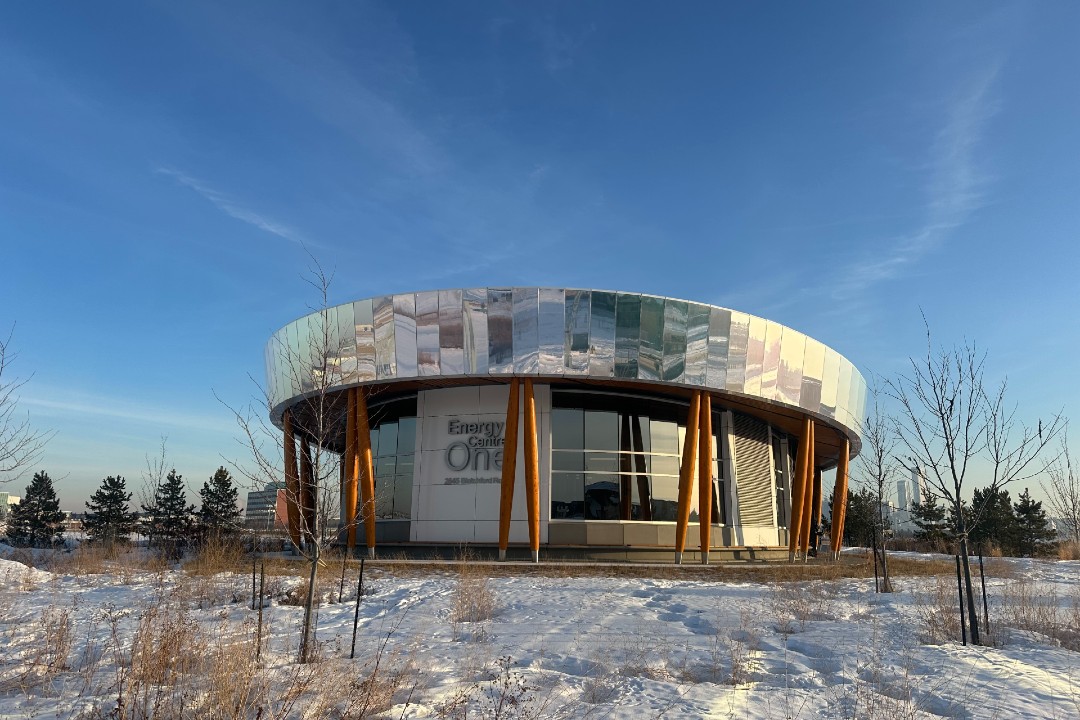
Energy Centre One supplies Blatchford with renewable energy. The Blatchford Renewable Energy Utility is facing a financial crunch. (Stephanie Swensrude)
Here are more key budget items:
- Councillors will review a new four-year rate plan for EPCOR's water and wastewater services, with the utility expected to submit its application to the city by Nov. 30. The proposed Performance Based Regulation (PBR) framework would set rates for water, wastewater collection, and wastewater treatment from 2028 to 2031, bringing the three services together in a single application for the first time. Under PBR, rates are initially set based on the utility's costs, then adjusted annually using a formula that accounts for inflation and an efficiency factor. The approach is intended to encourage EPCOR to find savings while giving customers more predictable rates. EPCOR generally bears the risk of ordinary cost and revenue fluctuations, though extraordinary events outside its control may qualify for additional rate adjustments. Utility committee is being asked to recommend a regulatory schedule and guiding principles for reviewing the application. The process includes a public review at utility committee in mid-2027, before council considers the new rates later that year. The rates would take effect on Jan. 1, 2028.
- Utility committee will review the capital budget for waste services. The department is requesting $179 million over four years to fund projects including new equipment, the final capping of the Clover Bar Landfill, and infrastructure upgrades at the Edmonton Waste Management Centre. The rate filing includes a 0.5% increase in 2027.
- Council will debate whether to expand the downtown district energy system to more city-owned buildings or privately owned buildings, or whether it should be expanded at all. Administration said "financial constraints and changing policy conditions" have forced the city to pause and consider how to proceed with the planned Phase 1A expansion to the Stanley A. Milner branch of the Edmonton Public Library, the Citadel Theatre, and City Hall, as well as the preliminary design work for Phase 2, which was expected to bring the system to up to 20 mostly private buildings and two new developments. Councillors on the utility committee will also review the utility's rate filing, which proposes a 0.2% decrease on the fixed monthly charge and a 3.4% increase on the variable charge based on actual energy consumption.
Here are items to be discussed at regular committee and council meetings:
- Kehewin Cree Nation seeks to acquire 14.5 hectares in Blatchford to establish an urban reserve adjacent to the Blatchford Gate LRT Station. The vision for Eagle's Landing includes residential, commercial, and hospitality uses, as well as community gardens and health, childcare, and governance buildings for nation members. Administration said the Nation's proposed development would not align with the current master plan for Blatchford and would require significant changes to the planned land use framework, density distribution, parks and open space network, transportation system, and servicing assumptions for the area. It would also lead to lost revenue for the Blatchford renewal energy utility. The below-market sale would impact the financial viability of Blatchford as a whole, as its servicing is funded by land sales. The Nation has not completed a detailed assessment including yearly financial projections, revenue assumptions, funding sources, or market research to inform the viability of aspects of the vision, saying it would like the city to indicate a willingness to proceed with the proposal before making a more significant investment into planning.
- The Edmonton Police Service entered into non-competitive agreements for armoured vehicles, remotely operated bomb disposal vehicles, uniforms, pistols, and software, among other purchases, says a report that will be presented to executive committee. The service is required to report on non-competitive agreements above $250,000. There are other agreements for polygraph services for use in recruitment screening, and for body-worn cameras, tasers, and software from Axon.
- Administration will update council on the province's directive to amend the zoning bylaw to parameters that were in place prior to 2024.
- The City of Edmonton could support the Edmonton Region Defence Alliance and CFB Edmonton by leading the coordination of essential infrastructure, says a report to be presented to city council's executive committee on Nov. 26. Administration said it already supports ERDA the way it does any industrial business, but stakeholders told the city it could lend more support by coordinating infrastructure upgrades to facilitate operational mobility of both defence users and commercial transport. Administration also floated leveraging the Edmonton Energy and Technology Park for an expansion of the adjacent CFB Edmonton.
- Administration will prepare new competitive procurement agreements for custodial services for LRT stations, city-owned pedways, transit centres and active bus shelters, public washrooms, and on-street waste bins. The city's seven-year contract with Bee Clean Northern Alberta is set to expire at the end of 2026. Administration will split the contract into three going forward, and market bidding is underway. Executive committee will be asked to approve a six-month extension of Bee Clean's contract while the bidding process continues.
- Administration outlined ways to support innovation through procurement in a report that will be presented to executive committee. The city proposes adding a weighted criterion to requests for proposals to evaluate how bidders plan to use innovative solutions; using innovation allowances to separate the cost of new, innovative technology from the base bid; and designing evaluation criteria that encourage suppliers to carve out portions of the project.
- Council will no longer approve the business plans and budgets for GEF Seniors Housing after changes to provincial legislation, says a report that will be presented to council. GEF, Alberta's largest not-for-profit provider of affordable seniors' housing, operates nearly 4,000 units across the province, including 3,777 in Edmonton. Under the new rules, GEF can directly requisition the city for money to cover its operating deficit and to build a mandatory capital maintenance reserve. GEF estimates it will need $1.48 million annually from 2027 to 2031 to build that reserve to $5.5 million. Its planned 2027 operating deficit requisition is $4.9 million, matching the annual funding it received from the city in the previous budget cycle. The changes mean those funding requests will be included in the city's budget for information, rather than being subject to council approval. The city is also advocating for the province to give municipalities a formal right to review housing management bodies' budgets and to provide provincial funding for mandatory reserves.
- Administration is requesting two temporary employees and a $100,000 communications budget to develop an inclusive playgrounds strategy. Council can request an unfunded service package be added to the 2027-2030 operating budget for debate.
- Executive committee will discuss a proposal to renew the Edmonton Edge Fund as part of the Edmonton Advantage economic development strategy. The first phase of the fund awarded $4.75 million to 17 companies, which went on to grow their revenue by $15.4 million, the report said. The renewed program would be similar to the first phase, but would focus on the targeted sectors of advanced manufacturing, AI and technology, tourism, defence and dual-use, energy and clean technology, food processing and agribusiness, life sciences, and transportation and logistics.
- Administration proposes expanding the brownfield redevelopment grant program to include all privately owned contaminated sites. The program currently helps owners of former gas stations with the costs of investigation, assessment, remediation, and redevelopment. The changes would also add affordable housing and sustainable remediation as factors in grant decisions. Administration proposes that the downtown community revitalization levy fund grants for lands within the CRL's area. The change would require a $2-million increase in CRL expenditure, funded by tax uplift. Executive committee will review the changes before council makes a final decision.
- Council will discuss a renewed lease for the Veterans Housing Project in Pleasantview. The renewal also requires a statutory public hearing because a small portion of land will be removed from the municipal reserve.
- Council will hear private updates on intergovernmental relations, civic agencies, and the city manager's office.
And here are updates on some of the items we told you about last time:
- Council's urban planning committee endorsed reintroducing 30 km/h school zones on some arterial roads, but city council must still vote on the change. The committee also backed 40 km/h limits on high-pedestrian arterial sections in business improvement areas, including 124 Street and 107 Avenue. Council is to vote on the amendments on Nov. 25.
- A city naming committee approved Buffalo Crossing as the proposed name for Government Centre LRT Station, formerly called Grandin Station. City council will consider making the name official on Nov. 25. The change is expected to cost about $350,000.
- Councillors endorsed an approach to community safety and well-being funding and asked for an unfunded service package to be brought to the 2027-2030 budget deliberations. The discussion took place in private.
- The City of Edmonton is aligned and well-positioned to seize federal funding opportunities to deliver integrated housing and health projects, administration told councillors on Nov. 15.
- Urban planning committee endorsed amendments to the business licence bylaw that would require short-term rental platforms, such as Airbnb and Vrbo, to acquire a business licence. The changes would also require such platforms to provide a monthly list of active listings in Edmonton, establish a policy to prevent rentals from causing excessive noise or disturbances, and remove listings that no longer have a valid licence. Council is set to vote on the changes on Nov. 25.
- The city will convene a panel to hear from Edmontonians about growth management and the cost of living to inform potential updates to the City Plan. The panel will consider built-form regulations to homes in both developing and redeveloping neighbourhoods; a review of financial performance for redeveloping and developing neighbourhoods; a review of the mass transit strategy; and a review of greenhouse gas emissions and the climate budget.
- Urban planning committee recommended in a 2-1 vote that city council rescind a motion from 2024 that changed the interpretation of the substantial completion standard. The standard requires developing areas to achieve a defined level of progress before authorizing a future growth area for development. Prior to 2024, that meant that even though the south side of Edmonton was mostly developed, because the north side was not, developers couldn't start working on neighbourhoods in the southern future growth area. In 2024, council voted to change the standard to consider quadrants of the city. Council will vote at a future meeting on reverting to the city-wide approach.
- Coun. Karen Principe removed herself from the delegation to the Calgary Stampede while councillors discussed the common travel budget, which is more than $30,000 over the recommended budget and about double what was requested in 2026. The change would bring the 2027 estimate from $105,600 to about $102,600.
Meetings stream live on YouTube on the Chamber channel and River Valley Room channel.
For more on civic affairs, including the provincial legislation targeting bike lanes, the citizen panel on the City Plan, proposed changes to the substantial completion standard, and what to do about "City of Champions" in light of the Elks' Grey Cup win, check out Episode 381 of Speaking Municipally.
Share