
The Pulse
Feb. 6, 2026

Here's what you need to know about Edmonton today.
Your turn: Nuclear energy, county satisfaction, Fort Sask policing
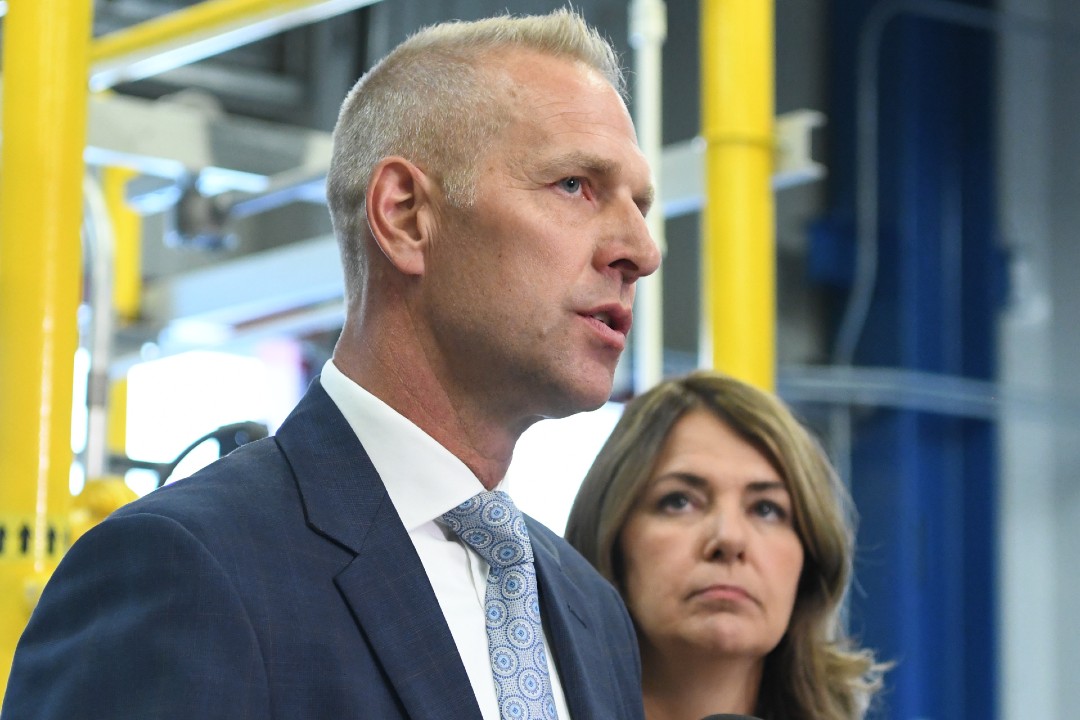
The provincial government's public engagement sessions on nuclear energy will make their way to Edmonton on Feb. 17.
The Nuclear Energy Engagement and Advisory Panel is chaired by Chantelle de Jonge, MLA for Chestermere-Strathmore, and includes Deron Bilous, the former NDP MLA for Edmonton-Beverly-Clareview; Tim Boston, who worked in the energy industry for 25 years with companies such as EPCOR, Capital Power, and ENMAX; Stephen Buffalo, CEO of the Indian Resource Council of Canada; Rudiger Tscherning, a nuclear researcher at the University of Calgary; and Harrie Vredenburg, a public policy researcher at the U of C. The session's location has yet to be announced.
The provincial government has said nuclear power facilities can provide reliable electricity without producing any direct greenhouse gases. However, opponents are concerned about nuclear waste. The province conducted webinars on the issues to consider on Dec. 8, Dec. 10, and Jan. 16.
Energy Alberta, a nuclear company based in Calgary, has proposed a nuclear power facility in the County of Northern Lights near Peace River. Voters were divided when asked non-binding questions about the proposed project during last October's municipal election. The federal government develops policy for overseeing radioactive waste.
Bilous told attendees at a January session in Bonnyville that Alberta's demand for electricity is expected to double or triple by 2050, and that forecast doesn't fully account for the increased pressures expected from data centres. Global electricity demand is expected to keep rising to support electric vehicles and data centres, and big tech companies such as Microsoft and Google are securing nuclear energy deals to meet the growing power demands related to generative artificial intelligence.
This is the second phase of engagement after a online survey and Indigenous consultation was conducted last year. The feedback is intended to help inform a comprehensive roadmap and regulatory framework to support a nuclear energy industry in Alberta. The panel is expected to deliver a final report to the Minister of Affordability and Utilities by March 31.

Let's Find Out about the Whale Society of Edmonton
Did you know Edmonton once had a save-the-whales club, and it made a big splash? Learn more at a live recording of Let's Find Out, a podcast about history. Chris Chang-Yen Phillips will speak to Candas Jane Dorsey and Kathryn Ivany about this moment in Edmonton's past and other treasures in the city archives. Join us on March 3!
Headlines: Feb. 6, 2026
- Hawrelak Park will reopen on March 13, marking the end of a three-year rehabilitation project. The park features a new playground, lakefront promenade, modernized pavilion, and paved multi-use trails, with a grand opening celebration planned for May 30.
- An interim post-election report found that long waits and complex procedures frustrated voters during Edmonton's 2025 municipal election, with 16% waiting more than an hour to vote. Changes driven by provincial legislation, including a ban on electronic tabulators and introduction of a permanent electors register, contributed to delays and confusion at polling stations. The city auditor recommended more comprehensive hands-on training for election workers ahead of the next municipal election in 2029.
- Ward O-day'min Coun. Anne Stevenson says that new Edmonton neighbourhoods, including the proposed Kettle Lakes expansion within the Decoteau area, are projected to be a net financial loss for the city. Stevenson said that approving such developments means approving future tax increases for residents, as city costs surpass revenue. She is advocating for revenue-neutral new developments, increased commercial and industrial growth, and higher density in new neighbourhoods.
- The King Edward Park Community League in Edmonton is on the verge of closing due to a severe lack of volunteers and a shrinking board and is set to discuss permanent closure on Feb. 22. If it closes, the community risks losing amenities like its halls, skating rink, and tennis courts, along with the capacity to organize events and access grants.
- A Feb. 5 report from CBRE indicates that high construction costs and rising development fees are "dampening" Edmonton's real estate market, despite a low 5% industrial vacancy rate expected to drop to 4.5% in 2026. CBRE's Mark Anderson said that construction prices for improvement projects have nearly doubled to $150-$175 per square foot.
- A teachers' convention kicked off at the Edmonton Convention Centre on Feb. 5. The North Central Teachers' Convention Association is hosting the two-day event, featuring 200 speakers. It is the first of nine provincewide teachers' conferences planned.
- The Alberta government is facing scrutiny over slow progress on a combat sports regulation review, triggered by the November 2024 death of Trokon Dousuah following an amateur MMA match in Enoch, west of Edmonton, CBC reported. Alberta is the only Canadian province without centralized regulation. Sport Edmonton has already implemented stricter athlete safety measures in response to the 2017 death of Tim Hague.
- A group of 171 Alberta lawyers from the Law Society of Alberta published an open letter on Feb. 5, warning that Premier Danielle Smith's policies and rhetoric threaten the province's democratic institutions. The letter cited Smith's recent remarks about directing judges, characterizations of judges as "activist," and willingness to use the notwithstanding clause as examples of a sustained attack on the judicial branch. In response, the province said it aims to strengthen public trust and protect the rule of law.
- Edmonton Oilers forward Leon Draisaitl criticized the team's inconsistency and leadership after a 4-3 loss to Calgary Flames, saying problems start with the coaches and extend through the lineup. He cited poor defense, a weak penalty kill and shaky goaltending as Edmonton clings to a playoff spot in a tight Pacific Division, warning the team must improve quickly after the Olympic break.

Murray's story: Pain to power
A message from Accessible Acupuncture:
Murray, a retired teacher from Calgary, had been struggling with the painful effects of peripheral neuropathy for some time.
"My feet had strange sensations, constant pain, my balance was off, and the bottoms of my feet felt hot and sore," he recalls.
Peripheral neuropathy is a condition caused by damage to the peripheral nervous system, often resulting in pain, numbness, tingling, and discomfort. After an electromyography test last summer, Murray was diagnosed with moderate to severe neuropathy. As someone who had always lived life passionately, he grew increasingly frustrated as pain began to limit his daily activities.
Murray experienced many common symptoms of neuropathy, including burning, tingling, numbness, and sharp pain in his feet. Over time, the discomfort caused him to withdraw from activities he once enjoyed. Unfortunately, Murray's experience is all too common for Canadians living with peripheral neuropathy. For many, pain makes simple tasks — such as walking, shopping, or getting a good night's sleep — extremely difficult.
Things began to change when Murray read an article about Dr. Melanie Morrill, Dr. Ac., a Doctor of Acupuncture in Edmonton known for helping patients with peripheral neuropathy without invasive procedures or medication.
"At first I thought, 'I'm in Calgary and they're in Edmonton — this sounds too good to be true,'" Murray says. "But I wondered if they could help me." He contacted the clinic and booked his initial consultation.
Melanie uses the time-tested science of acupuncture alongside advanced technology originally developed by NASA to help improve circulation and support the body's natural healing processes. This non-invasive approach has been providing meaningful relief for Murray and many others living with neuropathy-related pain.
Murray's wife, Marilyn, remembers how difficult simple outings used to be. "We would walk about seven blocks, and Murray had to rely on trees, handrails, benches, and walls for support the entire way," she recalls. After starting treatment, the couple attended an event that required a long walk. Marilyn was amazed to see Murray complete the distance without stopping.
After just a few treatments, Murray began noticing significant changes. "I have my life back," he says. "My feet don't hurt anymore, and my balance has improved so much. I stand up straighter and walk with confidence again."
Despite the long drive from Calgary to Edmonton, Murray says the journey was more than worth it. Today, he is enjoying life again and returning to the activities he loves. "I have a pep in my step that I didn't have before," he says.
Melanie has been helping patients with chronic and complex pain for over seven years, with a special focus on conditions that have often been deemed "hopeless" or "untreatable."
For residents of Edmonton and surrounding areas, relief from peripheral neuropathy is now more accessible than ever. If pain has been limiting your life, it may be time to explore a different option. It's time to let your golden years be golden.
Call 587-879-7122 to schedule your consultation at Accessible Acupuncture.
A moment in history: Feb. 6, 1947
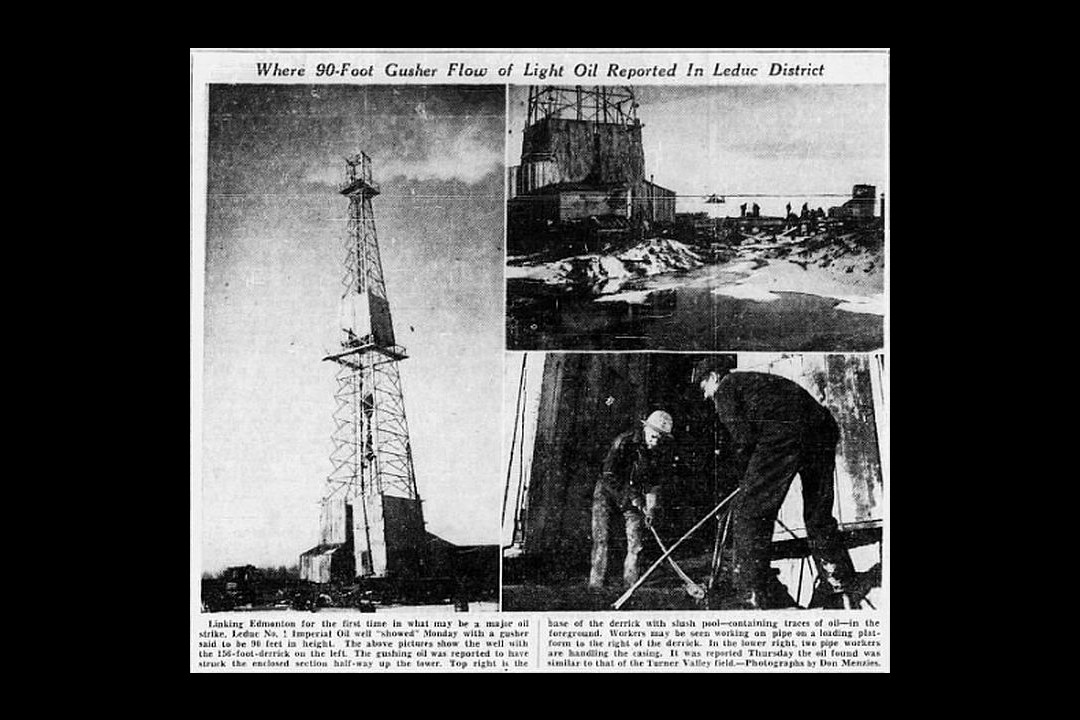
On this day in 1947, there were hints of an oil discovery that would forever change Edmonton and Alberta as a whole.
People have been making use of Alberta's oil reserves for centuries. Indigenous peoples collected bitumen that bubbled up out of the ground, using it to waterproof canoes. Mentions of the oilsands were made by European settlers as far back as 1778. In the early 20th century, a few petroleum discoveries inspired a couple of small oil booms. Alberta's first major oilfield was in Turner Valley, which began production in 1914 and would provide 90% of the oil Canada used during the First World War. But at the time, no one was aware of the vast, untapped reserves hidden deep under the soil.
That would change with Leduc No. 1. The oil well, located on a farm outside of Devon, was a long shot. It was one of the final wells planned by Imperial Oil, which had put millions of dollars into exploratory drills in Alberta. Up until that point, the search had been a disaster. The company was on a losing streak, drilling 133 dry holes. Leduc No. 1 was one of half a dozen last-chance attempts before giving up.
On Feb. 3, testing produced traces of oil, according to newspaper accounts at the time. But even with that little to go on, there was excitement, with the story suggesting the well might link "Edmonton for the first time in what might be a major oil strike."

Those hopes would be realized a week later. On the afternoon of Feb. 13, a gusher of mud and water erupted from the derrick. Soon, the mud gave way to what the drillers had been hoping to find: oil.
Leduc No. 1 was just one well, but it was also a signal that there was far more to be discovered than previously thought. It kicked off a flood of new explorations and investment, which led to more successful wells and changed the future of the province. Before the Leduc discovery, Canada was producing very little of its own oil, importing 90% of its consumption from the United States. A decade after Leduc, that had changed, with the country producing 65% of what it needed, the vast majority of it coming from the new western Canadian wells kicked off by the Leduc discovery.
Not surprisingly, it had a massive impact on Edmonton. More wells were drilled in the area, and those wells needed workers. The oil boom fuelled the city's population boom. It also led to an influx of new businesses providing services to the oil industry, adding to the blue-collar fabric that remains part of Edmonton to this day. The economic impact has also made it challenging to diversify beyond fossil fuels, despite what we know about their contributions to climate change.
Leduc No. 1 would operate for more than 20 years before ceasing operation in 1974. While no longer in operation, the equipment remains, and the well was deemed a national historic site in 1986 for the impact it had on Canada's oil industry. Beside the site is the Canadian Energy Museum, which holds more artifacts from early oil exploration in Alberta. The museum, which has been closed to the public since November, is scheduled to reopen later this spring. Almost 80 years after Leduc No. 1's first gusher, oil booms and busts continue to shape us. In the last year, the industry saw a sharp rise in production, while at the same time cutting 10,000 jobs.
This clipping was found on Vintage Edmonton, a daily look at Edmonton's history from armchair archivist Rev Recluse of Vintage Edmonton.

Happenings: Feb. 6-8, 2026
Here are some events happening today in the Edmonton area.
- Feb. 6: La Chandeleur - Candlemas starting at 5:30pm at Laurier Heights Community Hall
- Feb. 6: Cocktail Class - Gatsby starting at 7pm at Cocktail Culture
- Feb. 6: Alberta Unbound Live Taping: Alberta and the World starting at 7pm at University of Alberta
- Feb. 6-16: Silver Skate Festival at Sir Wilfrid Laurier Park
- Feb. 7: Vietnamese Tết Lunar New Year Festival & Concert starting at 11am at Villa by Nerval
- Feb. 7: Food as Liberation - Congo Edition starting at 11am at Queen Alexandra Community Hall
- Feb. 7: The House of 1000 Sues starting at 7pm at Orange Hall Strathcona
- Feb. 7: It Takes Two… to Gamba starting at 7:30pm at First Presbyterian Church
- Feb. 7: Chronos Vocal Ensemble: Uplifted starting at 7:30pm at All Saints Anglican Cathedral
- Feb. 7-8: Togather Chinatown Arts Festival at Pacific Mall
- Feb. 8: Elevated High Tea and Tattoo Experience for Galentine's Day starting at 11am at Halo Bar and Bistro
- Feb 8: Swing'n Skate: The Misery Mountain Boys starting at 1pm at City Hall Plaza
- Feb. 8: Where We Rest: A Gathering Place starting at 1:15pm at YWCA Edmonton Cushing House
- Feb. 8: Book Launch with Diane Wishart starting at 2pm at Audreys Books
- Feb. 8: Script Salon Featuring Lynda Celentano starting at 7:30pm at Holy Trinity Anglican Church
And here are some upcoming events to keep in mind:
- Feb. 24: Mental Health Foundation Annual Fundraising Breakfast at Edmonton Convention Centre
- Feb. 27: Love Pro Wrestling 45: A Fistful of Tights at The Rec Room South Edmonton
- March 3: Let's Find Out: About The Whale Society of Edmonton at City of Edmonton Archives
Visit the Taproot Edmonton Calendar for many more events in the Edmonton region.

The Taproot Mini - No. 143
Test your crossword prowess and deploy a little of your Edmonton knowledge. Complete the puzzle.
Did you miss a Mini this week? Find them all in the archive.
The Taproot Mini is brought to you by ATB, your homegrown source of good advice to help conquer life's tougher puzzles. Learn how.
