
The Pulse
Feb. 12, 2026

Help us better serve you by filling out the Taproot audience survey!
Essentials
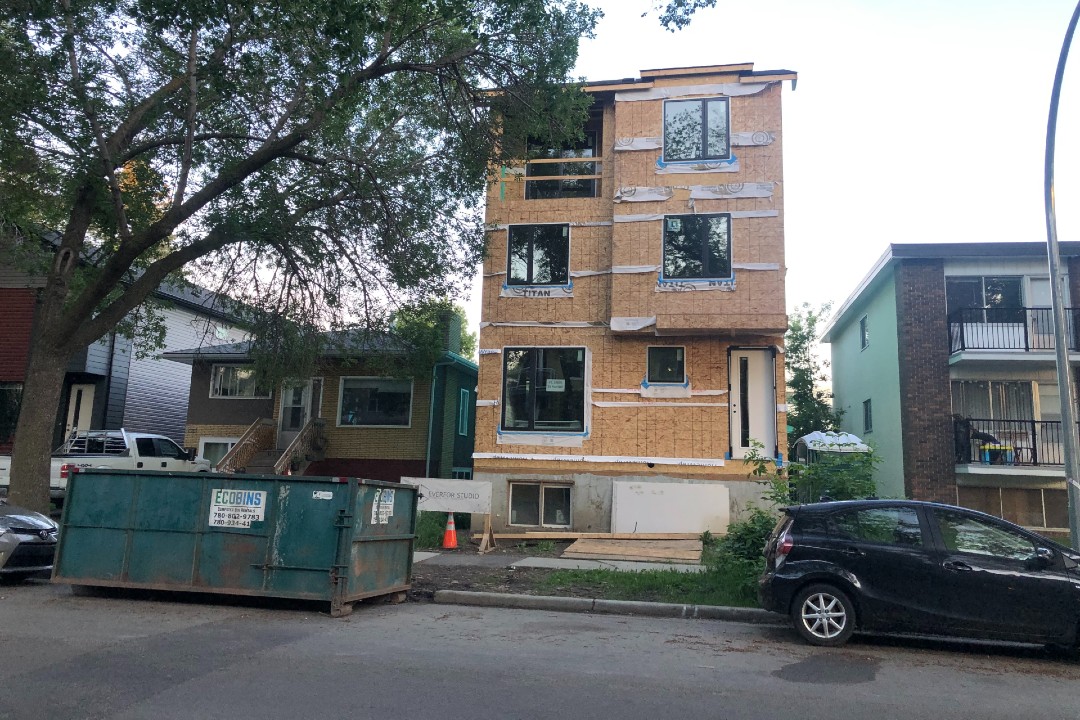
Housing advocates on both sides unhappy with proposed infill changes
As Edmonton city council prepares to decide what to do with some proposed changes to bylaws governing infill, neither opponents nor supporters of infill development are likely to be satisfied with the outcome.
Council's urban planning committee decided not to make a recommendation to council on two infill-related matters after hearing from dozens of residents on Feb. 9 and 10. Administration had recommended lowering the maximum number of units that can be built mid-block from eight to six in the RS zone, which applies to most mature neighbourhoods, as well as increasing the minimum lot size for each unit. Administration had recommended against making amendments to lower the maximum height allowance and to protect trees on private property.
All of this is now on city council's agenda for Feb. 17, with continuation scheduled for Feb. 18. If council supports making changes, administration will draft amendments to be debated at a public hearing, probably on April 7.
Before urban planning committee met on the matter, Taproot spoke to two advocates on either side of the infill debate: Dallas Moravec of Edmonton Neighbourhoods United and Jacob Dawang of Grow Together Edmonton. For Moravec, the proposed changes did not go far enough.
"It's the massing and the volume of the buildings that's actually creating the problem," said Moravec, a real estate agent whose group seeks to amplify the voices of residents who oppose multi-unit infills in mature neighbourhoods. "If we don't actually limit the length, the height, the width of the buildings … we don't feel like it's actually going to solve the problem."
On the other hand, Dawang worried that any further restrictions on infill could turn back important progress in Edmonton. His group sees infill as integral to housing sustainability and affordability.
Zoning that restricted development in mature neighbourhoods before "created a city where the only choice that many people had, if you could not afford a single-family home, was either to go out into the suburbs or maybe hope one day that you could afford a single-family home," Dawang said, adding that restricting infill "will give us less homes, it'll be pushing people out towards the suburbs once again, it'll be excluding people from neighbourhoods."

Four new works by women premiere at SkirtsAfire Festival 2026
This March, SkirtsAfire will proudly present four bold, brand-new works by women artists — stories that chart identity, belonging, healing, and resistance: Ms. Pat's Kitchen by Jameela J. McNeil; I Am Eagle by Matricia Bauer; Put Your Lips Together by Louise Casemore; and Things I Shouldn't Tell You by Shannan Calcutt.
Headlines: Feb. 12, 2026
- Edmonton city council's executive committee unanimously backed a proposal on Feb. 11 to designate "Happy Beer Street" (78 Avenue between 100 Street and 99 Street) as an entertainment district. To address concerns, the district would have a 10pm closing time, on-site security, and no outside liquor. The move would allow businesses like Bent Stick Brewing, Shiddy's Distilling, and Sea Change Brewing to more easily host events with public alcohol consumption. If approved by city council, it would be Edmonton's third entertainment district.
- Edmonton Public Schools brought school police officers back into six schools this month, after cancelling the program in September 2020 amid concerns about a "school-to-prison pipeline" for racialized students. The board voted to bring back the program in April 2024, citing increased school violence, including the April 2022 death of Karanveer Sahota. The redesigned program, developed with the Edmonton Police Service, features wraparound supports, mental health therapists, and a memorandum of understanding defining officers' preventative and educational roles.
- Edmonton's urban planning committee sent proposed amendments to municipal infill development regulations to city council, following two days of debate. The proposed changes would reduce the maximum mid-block units from eight to six and increase the minimum unit size. About 70 speakers spoke during the committee meeting, with developers arguing more restrictions could raise housing costs. Some residents expressed concerns about large infills affecting privacy and sunlight, regardless of unit count.
- In an online post, architect Josh Kjenner raised concerns over a proposal from Westrich Pacific for an interim parking lot at the vacant downtown Edmonton site of the former Bank of Montreal main branch, located at 101 Street NW and 102 Avenue NW. The site, empty since its 2017 demolition, was listed for sale in November 2025. Westrich Pacific presented its temporary plan to the Edmonton Design Committee on Jan. 20. Kjenner argues for the City of Edmonton to design development conditions through land acquisition and targeted subsidies to achieve desirable, high-quality buildings, rather than accepting stopgap measures that delay meaningful development.
- Charges are pending against the driver of a tractor-trailer that became lodged on Edmonton's High Level Bridge on Feb. 11. The Edmonton Police Service said there was significant damage to the bridge. No injuries were reported, and the investigation continues.
- The Edmonton Police Service charged 48-year-old church deacon Frezghi Zerezghi with sexual assault and sexual interference on Feb. 11 in connection with an incident that happened in November 2025 at a church near 121 Avenue and 103 Street in Edmonton. He was arrested on Dec. 12 and released on an undertaking. Police believe there may be other victims and ask anyone with information to contact EPS or Crime Stoppers.
- Alberta Premier Danielle Smith said "significant" deficits are coming, as the government prepares to unveil its provincial budget later this month. Smith ruled out tax hikes and deep service cuts despite low oil prices. Finance Minister Nate Horner stressed making "hard decisions." Opposition NDP Leader Naheed Nenshi criticized the government's spending, citing controversies and issues in health and education, while Smith also called for federal tax reform.
- The Edmonton Elks announced six new signings during CFL Free Agency. The team added defensive lineman Malik Carney (through 2027), quarterback Taylor Powell (through 2027), offensive lineman Coulter Woodmansey (through 2028), offensive linemen Brendan Bordner (through 2027) and Jordan Murray (through 2027), and wide receiver Brendan O'Leary-Orange (through 2026).

Happenings: Feb. 12, 2026
Here are some events happening today in the Edmonton area.
- Intellectual Property Bootcamp - Learn the basics starting at 9am at Heavy Metal Place
- Edmonton Realtor Forum starting at 9am at Delta Hotels by Marriott Edmonton South Conference Centre
- The Right to Housing in Canada: Law, Power, and Lived Reality starting at 12pm online
- Solving the Canadian ScaleUP Gap starting at 4:30pm at Fu's Repair Shop
- BBVA Innovation EXPO starting at 5pm at Edmonton Unlimited
- 2026 City of Edmonton Leader's Reception and Dinner starting at 5pm at Westin Edmonton
- Pitch Night starting at 5:30pm at Alberta School of Business
- Wildfire Festival: Wildfire Junior Finals starting at 5:30pm at Rapid Fire Exchange
- RecreACTION: Panel Discussion starting at 6pm at Elements Outfitters Edmonton
- Behind the Pages starting at 6pm at Edmonton Public Library (Stanley A. Milner)
- Passive Solar Greenhouse Workshop starting at 6:30pm at Millhurst Community Hall
And here are some upcoming events to keep in mind:
- Feb. 27: LPW 45: A Fistful of Tights at The Rec Room South Edmonton
- March 3: Let's Find Out: About The Whale Society of Edmonton at City of Edmonton Archives
- March 6: She Leads Brunch at Westin Edmonton
Visit the Taproot Edmonton Calendar for many more events in the Edmonton region.

The Taproot Mini - No. 147
Test your crossword prowess and deploy a little of your Edmonton knowledge. Complete the puzzle.
You can learn about such things as the answer to 6-Across in the Food Roundup.
The Taproot Mini is brought to you by ATB, your homegrown source of good advice to help conquer life's tougher puzzles. Learn how.
