
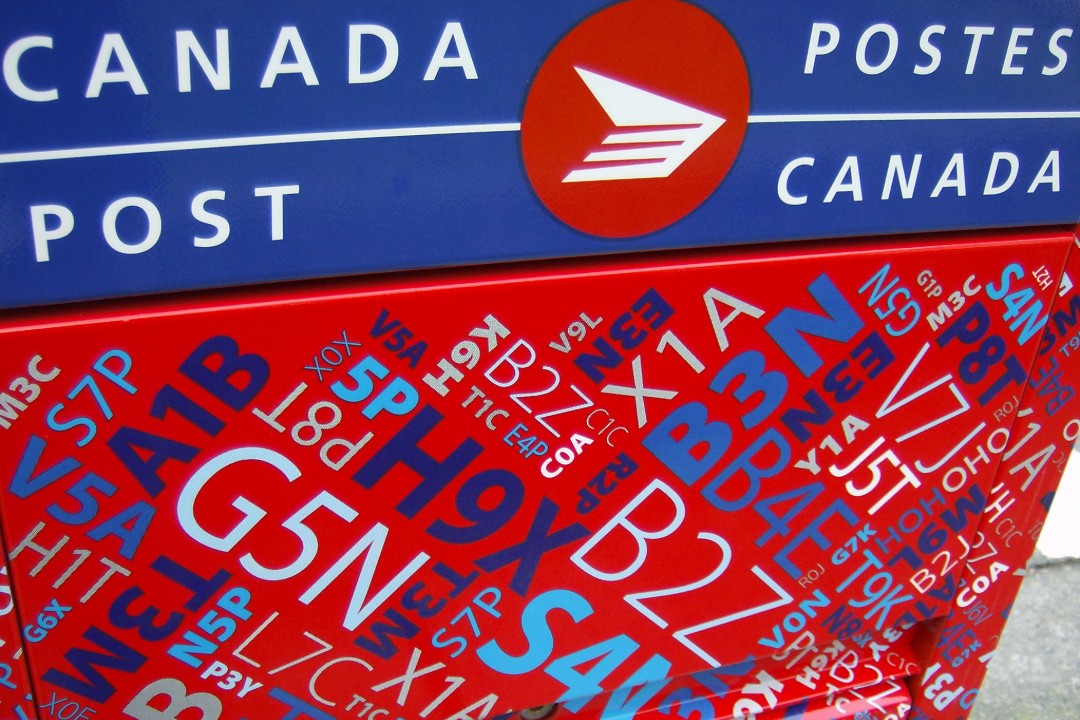
The ongoing strike within Canada Post could change who gets access to information or even ballots, the co-hosts of Speaking Municipally discussed. (Michael Francis McCarthy/Flickr)
Noted: Strikes plural, candidates speak, downtown's epicentre
The potential ramifications of two concurrent strikes on the Oct. 20 municipal election, quotes by candidates at a recent event, and how downtown's epicentre might shift westward were just some of the things on the minds of the co-hosts of Episode 326 of Speaking Municipally. Here's a quick snapshot.
Strike out
As of Oct. 3 at noon, the looming strike by roughly 51,000 teachers at public schools across Alberta is still a go and will play on the minds of voters. And the already-launched Canada Post strike, where 55,000 postal workers are off the job, means the mail is not mailing.
Co-host Stephanie Swensrude noted that one potential effect of the postal strike could be on special ballots for the upcoming election. "I looked on the city website and it said, 'Despite the Canada Post strike, voters who apply for special ballots will receive their packages.'" She noted the city is offering people the option to switch delivery methods. Another bit of paper stuck in the mail, Swensrude added, could be voter information cards. "Those are those cards that come a few weeks before any election, and they say, 'Hey, there's an election coming up. You can go to this place to vote in advance, or you can go to this place to vote on election day," she said. "I'm not sure if those are going to come out via the mail … It really worries me."
Swensrude also noted that she has spoken with council candidates who have put significant campaign material into the mail that will now not reach voters. One under-examined reason this matters is that this is often the only way candidates can connect with residents who live in multifamily housing. Co-host Mack Male agreed on that point, noting "it's hard" for candidates to even get into multifamily buildings, let alone speak to their residents at the door.
Quoting candidates
Male recently attended a candidate event held by the REALTORS Association of Edmonton, and turned his recorder on when he asked candidates questions. Male found interesting nuance and detail on candidate positions on parties and slates, day shelters, transit between Whyte Avenue and downtown, and even Lucy the elephant.
Male said asked questions of mayoral candidates Tim Cartmell, Tony Caterina, and Rahim Jaffer, as well as council candidates Aaron Paquette, Giselle General, Anand Pye, Diana Steele, Terrie Holgerson, and Stephen Hammerschmidt specific questions about their ideas for the future (and Taproot has more about these and all other candidates right here).
But Cartmell's response to Male's question about how dollars raised by the Better Edmonton party might be allocated to its candidates was particularly interesting. "Well, every ward is different," Cartmell told Male. "Each candidate has individual and distinct needs … Some have been able to raise money on their own, through their own campaigns; others have had less of an opportunity to do that. So it is an interactive thing about where the dollars have come in and where the dollars have ended up going out. You know, part of that is that council campaigns tend to be ground campaigns. They tend to be door knocking, a very door knocking focus, so it's lawn signs and door knocking. Mayor campaigns are air campaigns. It's advertising, it's social media promotions, it's a more costly campaign."
Shifting the epicentre
The co-hosts discussed Swensrude's recent story about developers downzoning housing proposals downtown to make them financially buildable. All of it, the story reported sources sharing, is being incentivized by the city's Warehouse Park.
But Swensrude tied the context of that story with the even broader conversation about downtown, which includes the slow-motion challenges at Edmonton City Centre. The potential with new housing alongside MacEwan University, NorQuest College, and with the soon-to-open Valley Line LRT extension, is big, she said. "I think that this has the potential to shift the epicentre of downtown a few blocks over. Because, I mean, right now, you could maybe say City Centre mall is kind of like the epicentre, but I think that this is … a huge deal."
The Oct. 3 episode of Taproot's civic affairs podcast also includes a discussion of a moderator's questionable comment at a recent Alberta Next panel in Calgary. Listening and subscription options are all right here.
Share