
Coyote sightings increase in fall, but fear not, says researcher
A rise in the presence of coyotes in Edmonton doesn't inherently mean increased risk for humans, but fall is a time to watch out for a little teenage rebellion, an expert says.
"This is the time of year when the young are often dispersing away from the den," said Sage Raymond, who served as a graduate student researcher for the Edmonton Urban Coyote Project out of the University of Alberta. "Those are often going to be young coyotes heading out in all different directions, trying to make their way in the world. It's very much like a teenager stage, where sometimes those animals are going to be trying new things."
In mid-October, one Reddit user spotted a coyote near Rogers Place after dark, and another spotted a few in Queen Alexandra in broad daylight. But such sightings don't tell the full story. In autumn, nightfall comes sooner, and that's when coyotes are most active; during the day, fallen leaves make coyotes easier to see. Data, especially since COVID-19, shows more coyotes reported in Edmonton, but that may have more to do with us than them, Raymond said.
"People (have been) paying more attention," Raymond told Taproot. "We were all locked up in our houses and looking out our windows and noticing coyotes — some of us noticing those animals for the first time. We were, as a population, spending more time walking around in the river valley because we couldn't do anything else with our free time, and of course a lot of coyotes live in the river valley."
But coyote-spotters aren't delusional; data shows that acts of boldness have increased in Edmonton and other parts of North America.
"Animals are perhaps abnormally comfortable with people and their infrastructure," Raymond said of the apparent spike in daytime sightings. "These animals might be more likely to approach people or their pets, making us a lot more likely to see them."
Bolder coyotes doesn't necessarily mean a greater number of coyotes who are bold. Raymond said boldness-prone coyotes are more likely to find a habitat in cities, and urban environments exacerbate their boldness. More access to human food changes eating habits (and even physiology), and exposure to humans and our junk numbs a natural avoidance.
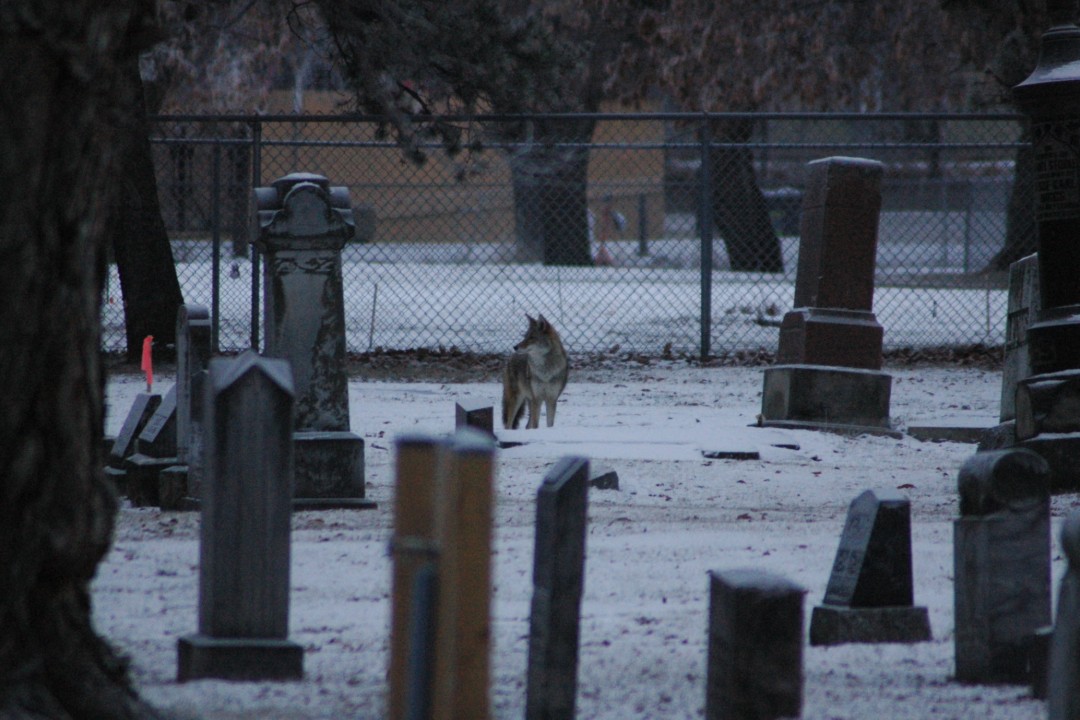
A coyote explores the Edmonton Cemetery on a November day in 2024. (Jon Spencer/Flickr)
One consequence of the urban coyote population in Edmonton has been the risk of disease, particularly for people living in encampments. Coyote scat can contain parasitic eggs that survive for extended periods and can infect nearby humans. The result is larvae in the body that affect the liver with a 90% fatality rate, CBC reported in June. But transmission of alveolar echinococcosis is rare, Alberta's Primary and Preventative Health Services told Taproot in an email, reaching just four confirmed cases since the CBC story was published.
When people see coyotes as a one-dimensional problem to be solved, Raymond said, they miss the positive attributes the canines bring to a city. Coyotes eat pests such as mice, clean up dead animals from the landscape, and are part of seed dispersal and nutrient cycling.
Plus, "there is a lot of evidence that nature connection is very important for people, including people who live in cities," Raymond said. "I think that coyotes bring a bit of a wildness to urban spaces that sometimes people don't have the ability to exit."
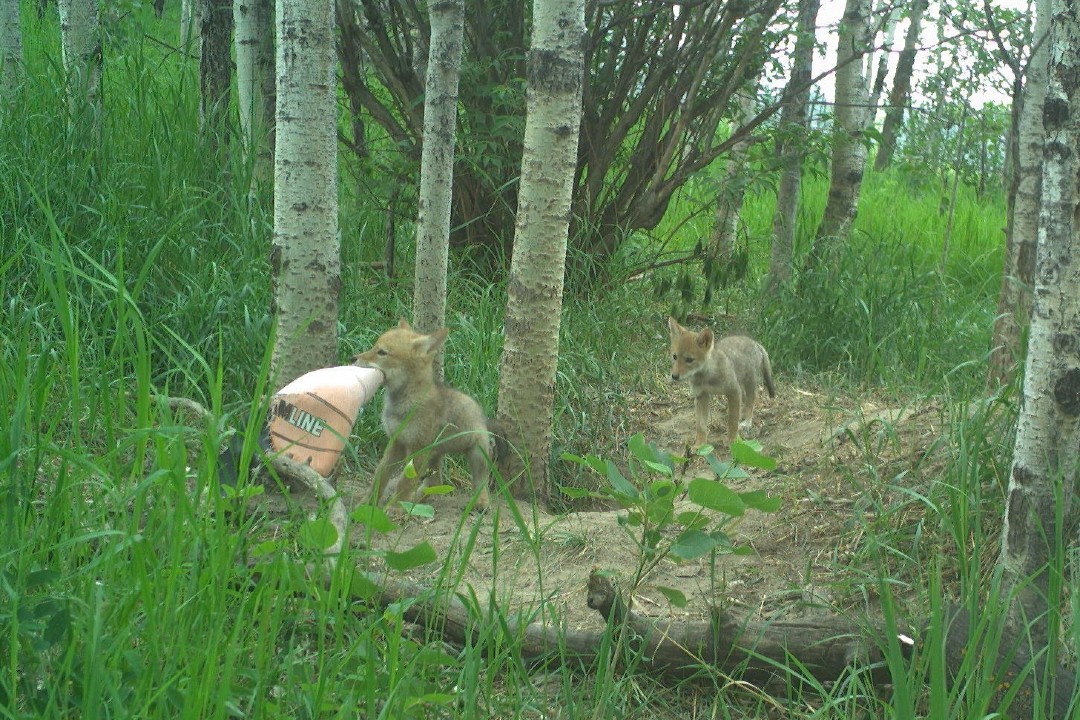
Young coyotes are active during the fall season, but don't write them off as pests, says researcher Sage Raymond. (Edmonton Urban Coyote Project)
Urban wildness can be fleeting. Taproot's very first story, in 2016, was about a "surprising deer paradise" in an industrial part of south Edmonton. That paradise has been lost for some time now.
"Fish and Wildlife Enforcement Services relocated four deer from the Edmonton Ethane Extraction Plant to the Bruderheim Provincial Recreation Area between 2022 and 2023," a spokesperson for Alberta's Public Safety and Emergency Services told Taproot by email.
Why? The deer were not in good health and — as much as it may pain coyote-lovers to hear it — increased coyote interest in the deer posed a danger to the workers in the area. Four of the six known deer were found, tagged, and taken to Bruderheim. The tags are not equipped with GPS, and Fish and Wildlife has received no reports on the creatures since the move.
A fifth deer was later found dead, but the fate of the sixth is unknown. The agency is not aware of any other urban clusters of deer in Edmonton, but they are known to move through the city via the river valley. It's uncommon, but wild white-tailed deer can live up to 10 years, so one can dream that No. 6 is still out there.
It's worth noting that to wildlife biologist Colleen St. Clair, who leads the Edmonton Urban Coyote project and supervised Raymond for her now-completed PhD in ecology, deer are more dangerous to humans than coyotes.
"It's astonishing how aggressive deer can be towards people and pets," St. Clair told Taproot in 2016.
For her next adventure, Raymond is moving up the food chain to study interactions between grizzly bears and humans in Kananaskis Country as a Liber Ero postdoctoral fellow for the University of British Columbia.
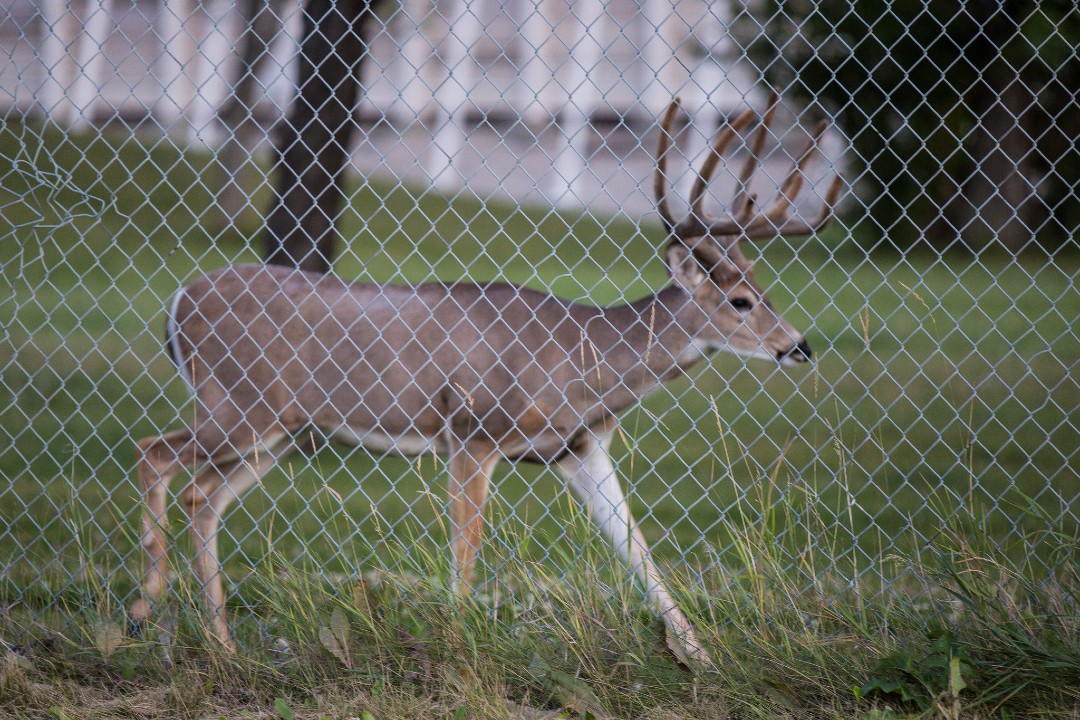
Edmonton's surprising deer paradise at the Edmonton Ethane Extraction Plant near 23 Avenue NW is no more, but in 2016, it was home to a small herd. (Mack Male)
Share