
The Pulse
Dec. 5, 2025
Here's what you need to know about Edmonton today.
Essentials
- -11°C: Periods of snow. Local amount 2 cm. Wind up to 15 km/h. Temperature steady near minus 11. Wind chill near minus 16. (forecast)
- 9-4: The Edmonton Oilers defeated the Seattle Kraken on Dec. 4. Connor McDavid scored a hat trick. (details)
- 8pm, Dec. 6: The Oilers host the Winnipeg Jets at Rogers Place. (details)
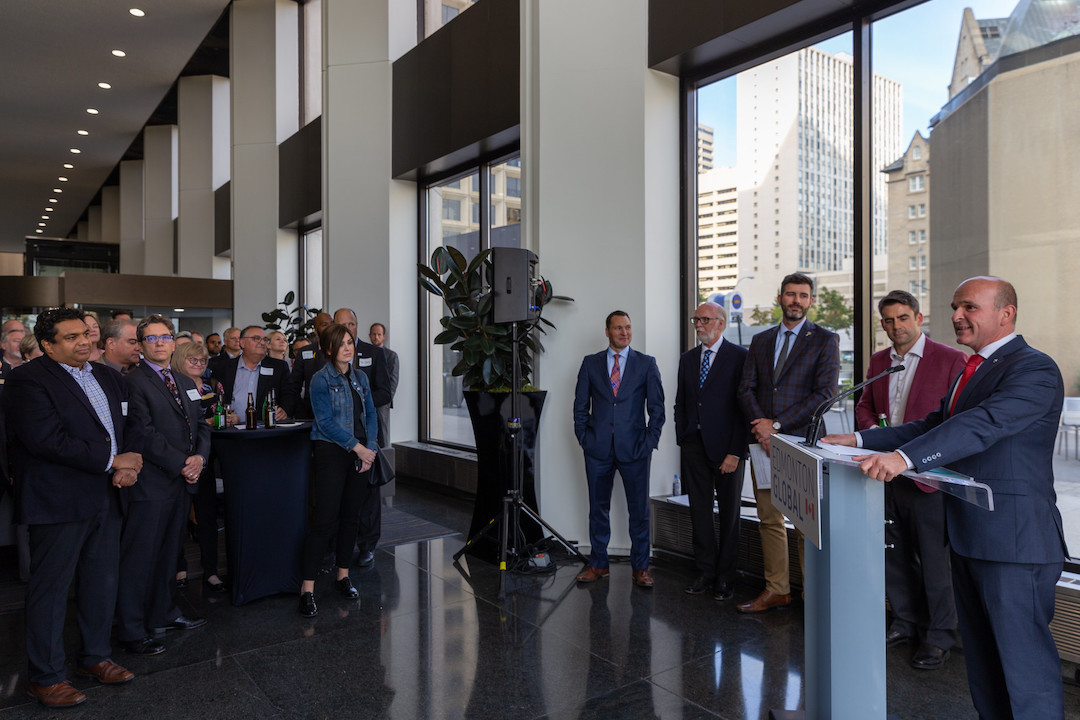
Three municipalities finalize departure from Edmonton Global
Devon, Sturgeon County, and Strathcona County will leave Edmonton Global in 2026, voting recently to follow through on their 2023 announcements that they would depart as the window to reverse those decisions was set to close.
The decisions are part of a growing conversation about how regional economic cooperation and planning will work in the future. In 2023, member municipalities abandoned the Edmonton Metropolitan Region Transit Commission. In January, the provincial government pulled funding for the Edmonton Metropolitan Region Board, which subsequently folded. Across 2023 and 2024, six municipalities announced intentions to leave Edmonton Global. In October, the organization's newly-hired CEO, Daryn Edgar, said she planned to refresh municipal relationships. And in November, newly elected Edmonton Mayor Andrew Knack said figuring out regional cooperation was high on his agenda. "As a region, we stand far more to gain if we're actually working together," Knack said on an episode of Speaking Municipally.
Edmonton and 14 surrounding municipalities launched Edmonton Global in 2018. The stated aim was to attract foreign investment by selling a region rather than an individual municipality. (The town of Bon Accord left shortly after Edmonton Global started operations.) "This is the most important thing we need to do — pull the region together," then Edmonton mayor Don Iveson said at the time. "But that would not be possible without all of you agreeing that that was what we needed to do."
In late 2023, councils in Devon, Strathcona County, Sturgeon County, Parkland County, and Fort Saskatchewan all voted to end their Edmonton Global membership. In December 2024, Leduc County did the same. Each had a two-year window to change course, with an optional three-month extension. Fort Saskatchewan, Parkland County, and Leduc County have not yet voted on their final course, though two will make that decision before the end of 2025. Once departed, municipalities must wait five years to reapply for membership.
Taproot reached out to the six municipalities to learn what's next. Each provided their sense of how regional cooperation could work in the future.
Devon
Devon's town council voted to proceed with an exit on Nov. 10. Town administration noted in a report that Devon was paying $29,000 per year for membership. Edmonton Global had offered a deadline extension until March 31, at a cost of $7,300 in dues. The town declined.
"Devon is not reconsidering its decision," Justin Janke, a spokesperson for Devon's council, told Taproot. "Council made this choice after a detailed review of all municipal expenses and priorities. Like many municipalities in Alberta, Devon is facing significant fiscal pressures, and council wanted to ensure every dollar provides strong value to residents and taxpayers."
Janke said Devon will continue to pursue international and domestic investment by attending industry events. He added that the town will continue to work with Invest Alberta, a provincial Crown corporation, to attract foreign investment. "This organization offers very similar tailored assistance in investment attraction that Edmonton Global does, but without the shareholder fees."
Sturgeon County
Sturgeon County council voted to confirm its stated intention to leave Edmonton Global at a meeting on Nov. 25. Edmonton Global made a presentation at that same meeting, but did not change council's mind.
"Sturgeon County and other shareholders have expressed concerns about the organization's return on investment, as well as matters related to governance, strategic alignment, and reporting," Mayor Alanna Hnatiw told Taproot in a statement. "Shareholders also have no meaningful role in key decision-making, despite funding the organization; the county has advocated for a greater role and line-of-sight in board decisions and direction, but we do not feel at this time that enough meaningful change has occurred."
Headlines: Dec. 5, 2025
- Edmonton city council concluded its budget discussions on Dec. 4, setting the property tax increase at 6.9%. Councillors approved the widening of Whitemud Drive as a joint project with the province and Enoch Cree Nation. They also funded a new $5.8-million traffic safety enforcement team. Mayor Andrew Knack advocated for the traffic unit, comprising peace officers, to enhance street safety. The team is not expected to be operational until late 2026 due to hiring and training.
- More than one-third of Edmonton Public Schools students, approximately 39,600, were chronically absent from class during the 2024-2025 academic year, nearly tripling since 2019-2020. Data obtained by CBC News reveals chronic absenteeism, defined as missing 10% or more of the school year, has surged across both Edmonton public and Catholic schools since the COVID-19 pandemic. Edmonton Catholic Schools data shows about 30% of high school students have been chronically absent in each of the past four years. Both divisions are implementing varied strategies to improve attendance.
- Hyperlocal print publications in Edmonton, including community league papers like The Westmount Window and those managed by Calder Publications, along with student newspapers like The Gateway at the University of Alberta, are keeping local journalism alive. These often volunteer-run efforts focus on community connection and fill gaps in mainstream media. Despite the past closures of publications like The Yards and VUE Weekly, these hyperlocal outlets thrive by providing relevant, localized content, acting as historical records, and building a sense of community for residents and students, The Griff, the student newspaper at MacEwan University, reported.
- Dave Chappelle's Edmonton show at Rogers Place on Dec. 3 faced disruptions due to hecklers and yelling, frustrating both the comedian and audience members. Many attendees took to social media to lament the behaviour, with some questioning Chappelle's return to Edmonton. Additional complaints included poor sound quality and the temperature in the venue.
- ATB Financial announced Chris Turchansky as its next president and CEO, with his tenure beginning Jan. 1. Turchansky, who grew up in rural Alberta and has nearly 30 years of financial services experience across the province, will succeed Curtis Stange. The Alberta government has formally approved his appointment.
- The Alberta government introduced Bill 14, which would transfer control over citizen-led referendums from the Office of the Chief Electoral Officer to the justice minister and could derail a court case on the constitutionality of a proposed separation question. The bill would also remove limits on whether referendum proposals can violate the Constitution and would cancel unissued petitions, with a short window to reapply. It also introduces new political party naming rules, restricts mandatory training for lawyers, and bans DEI-related requirements.
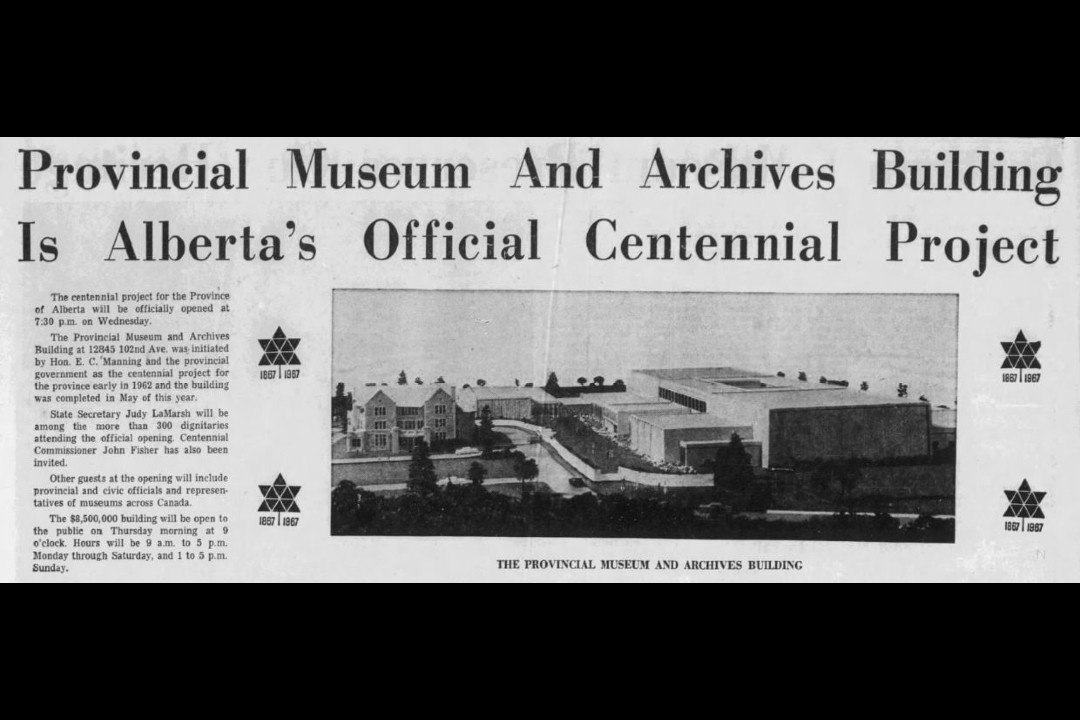
A moment in history: Dec. 5, 1967
On this day in 1967, Alberta's new provincial museum was set to open its doors.
The year was Canada's centennial, which led to lots of investment from Ottawa and hundreds of community projects across the province. The biggest of which was a provincial museum, meant to preserve and promote Alberta's natural and cultural history. With $2.5 million in funding from both the provincial and federal governments, construction began in 1962.
Both the location and the design of the new museum were carefully chosen. The site in Glenora, overlooking the river valley, was right beside Government House. The materials used to build the museum were purposefully sourced from across the country as a symbol of national unity — black granite from Quebec, marble from Ontario, slate stone from British Columbia and Alberta. The most memorable, though, was the Tyndall stone from Manitoba, containing visible fossils, which was used on the exterior. Recreations of the ancient Petroglyphs found at Alberta's Writing-on-Stone Provincial Park were also carved into the exterior.
When the Provincial Museum and Archives opened its doors to the public, it featured exhibits on Canada's fur trade, Indigenous history, and the history of farming and industry in Alberta. It was instantly popular: More than 310,000 people visited in its first year of operation, helped, no doubt, by the fact that admission was free.
Soon, the museum expanded, both publicly and behind the scenes. The well-known dioramas of Alberta wildlife were added in 1969, with permanent displays on geology and Indigenous history added soon after. But, as with many museums, exhibits are only part of the story. The institution also expanded its research programs to include things like botany, military history, and ethnology.
In 1982, much of the museum's fossil collection, as well as the scientists working in its paleontology program (including famed Alberta paleontologist Phil Currie), were transferred to southern Alberta to create the Tyrell Museum in Drumheller.
In the late 1980s and into the '90s, attendance declined. This led to a shift to revitalize the museum's public programming. Some of the older displays were reworked, and renovations included a large new feature space for special exhibitions.
Just as Canada's centennial led to its creation, the province's own 100th anniversary was a big moment for the Provincial Museum. In 2005, as part of the Alberta Centennial, Queen Elizabeth II visited the site and granted it royal patronage, which led to a new name: The Royal Alberta Museum.
In 2011, the province announced a new plan for the RAM. The original building, now showing its age, would be closed down, and a new facility would be built downtown. The original museum closed its doors on Dec. 6, 2016, exactly 48 years from when it opened. Over the next two years, museum staff embarked on a massive undertaking, transferring the extensive collection and equipment over to the new museum.
When the new RAM opened in 2018, it was the largest museum in Western Canada, with more than 7,600 square metres of exhibit space. For the first week, as a nod to the original 1967 opening, admission to the museum was free. During that time, 41,000 people visited.
With the new building now established, there has been a debate for nearly a decade about what should happen to the original building. Last year, the provincial government reversed its unpopular plans to demolish the structure. And just this week, it announced that it was currently in negotiations with an unidentified third party to redevelop the site.
This clipping was found on Vintage Edmonton, a daily look at Edmonton's history from armchair archivist Rev Recluse of Vintage Edmonton.

Happenings: Dec. 5, 2025
Here are some events happening this weekend in the Edmonton area.
- Dec. 5: Festive Fusion Marketplace starting at 3pm at 10133 97 Street NW
- Dec. 5: Christmas in Millwoods starting at 6pm at Calvary Community Church
- Dec. 5: The Nutcracker starting at 7pm at Northern Alberta Jubilee Auditorium
- Dec. 5: Messiah at the Market starting at 7pm at EPIC Market
- Dec. 5: Mt. Rotterdam starting at 7:30pm at The Aviary
- Dec. 5-7: OddBird Art & Craft Fair at Old Strathcona Performing Arts Centre
- Dec. 6: Le Marché Bohème starting at 10am at Bonnie Doon Centre
- Dec. 6: A Kidsmas Carol starting at 1pm at Capitol Theatre
- Dec. 6: Christmas Night Market starting at 3pm at Alberta Council for the Ukrainian Arts
- Dec. 6: Festival of Carols starting at 7pm at Winspear Centre
- Dec. 7: Christmas Streetcars starting at 12pm at High Level Streetcar (Strathcona Terminal)
- Dec. 7: Holiday Appetizer Bites starting at 2pm at Get Cooking
- Dec. 7: A Christmas Carol, with Vocal Collective starting at 3pm at McDougall United Church
- Dec. 7: Winter Sugar Shack Experience starting at 4:30pm at Chartier
- Dec. 7: The Good Lovelies Christmas Show starting at 7:30pm at Maclab Centre for the Performing Arts
And here are some upcoming events to keep in mind:
- Dec. 18: HER Motherhood Shift at Fort Edmonton Park
- Dec. 20: Girl Brain, Actually at Roxy Theatre
- Until Jan. 4: Zoominescence: A Festival of Light at Edmonton Valley Zoo
Visit the Taproot Edmonton Calendar for many more events in the Edmonton region.

The Taproot Mini - No. 108
Test your crossword prowess and deploy a little of your Edmonton knowledge. Complete the puzzle.
A great way to stay up-to-date on things like 1-Across and 8-Across is to listen to Speaking Municipally, Taproot's weekly podcast about city hall!
The Taproot Mini is brought to you by ATB, your homegrown source of good advice to help conquer life's tougher puzzles. Learn how.
