
The Pulse
July 26, 2023

Here's what you need to know about Edmonton today.
Essentials
- 15°C: Cloudy with 60% chance of showers. Wind becoming west 20 km/h gusting to 40 in the morning. High 15. UV index 3 or moderate. (forecast)
- 10,000: The number of faithful unable to complete the Lac Ste. Anne Pilgrimage due to extreme weather. (details)
- Green/White/Red: The High Level Bridge will be lit green, white, and red for the Iglesia Ni Cristo/Church of Christ anniversary. (details)
- 8pm: The Edmonton Stingers (8-10) play the Calgary Surge (10-8) on the road. (details)
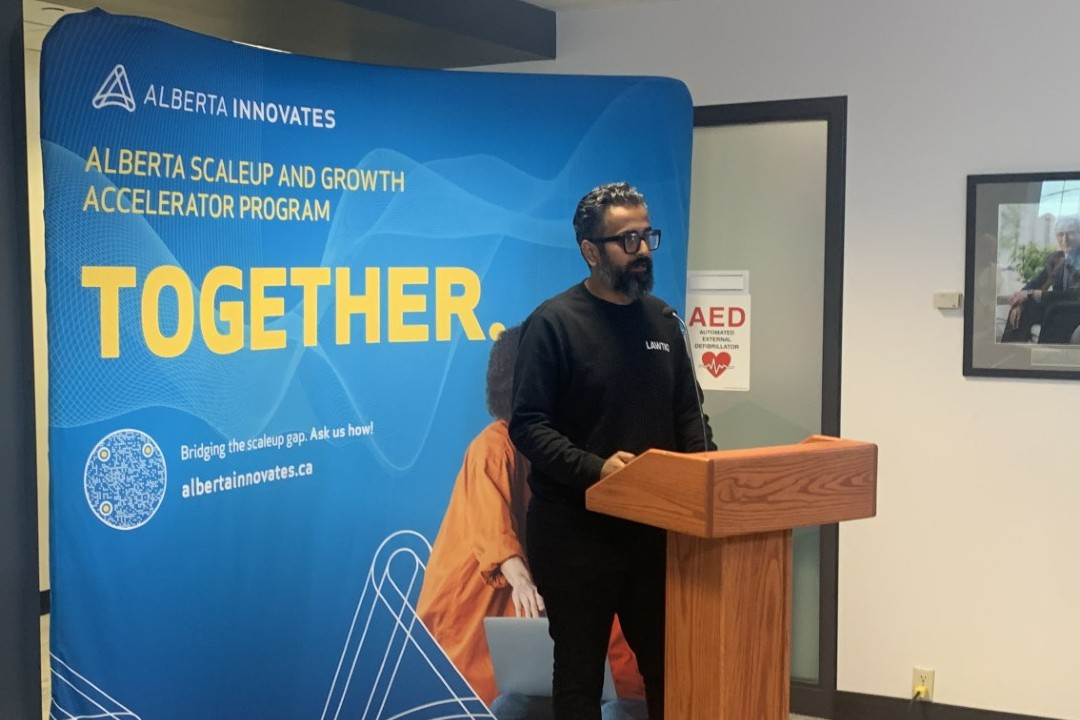
Edmonton startup credits Scaleup GAP for glow up
An Edmonton startup that helps immigrants navigate the settlement process in Canada credits a suite of accelerators brought to the province by Alberta Innovates for helping it get traction.
Lawtiq began as a "marketplace for lawyers like Expedia" before it joined Alberta Catalyzer, one of five programs created under the Alberta Scaleup and Growth Accelerators Program. After participating in the pre-accelerator, Lawtiq became an AI-powered "immigration and settlement platform providing services to newcomers in Canada," co-founder and CEO Ali Salman told Taproot.
"Because of Alberta Catalyzer, we hired our first employee," he said at a July 25 event highlighting the accomplishments of the program known as Scaleup GAP. "We pivoted to immigration and settlement, and that's exploded for us."
Salman's Lawtiq is one of 234 Alberta companies that have benefited from Scaleup GAP since it began in earnest 15 months ago with the creation of Alberta Catalyzer and the introduction of four accelerators: Alberta Accelerator by 500, which is run by 500 Global; Plug and Play Alberta, which is run by Plug and Play Tech Center; the TELUS Community Safety and Wellness Accelerator, powered by Alchemist; and the SVG | Thrive Canada Accelerator, run by SVG Ventures.
"Our target was 100 companies that we would help during that first year," Alberta Innovates CEO Laura Kilcrease told reporters. "I'm pleased to say we knocked the ball out of the ballpark."
Alberta companies participating in Scaleup GAP have raised $147.5 million in investment, created 118 jobs, and grown revenue by $12.4 million, Alberta Innovates says. The province has invested $35 million over three years in the program.
Aside from Lawtiq's first hire and pivot, Salman credits the program with his company's first customer transaction. He also says it directly led to growth that includes seven hires in the past six months and 30 to 40 more to come.
"One of the things I would emphasize is the conversations with the mentors," Salman said. "These mentors are someone that you cannot access. These are all successful business people. They are the ones who have made it."
Having graduated from Alberta Catalyzer, a joint project between Edmonton Unlimited and Platform Calgary, Lawtiq is now part of the current batch of companies in Alberta Accelerator by 500.

Help transform your community
With funding from Edmonton Community Foundation, YONA-Sistema is helping young people in priority neighbourhoods learn skills, succeed academically, and gain confidence through music.
Headlines: July 26, 2023
- Iskwewak Iskotew Nihkotawan (Women's Fire Lodge), which held its grand opening on July 24, will house 20 Indigenous women at risk of homelessness for stays of up to 18 months. The lodge is a partnership between the Esquao Institute for the Advancement of Aboriginal Women and Homeward Trust, and "delivers a recovery oriented approach and allows women experiencing homelessness to move into independent and permanent housing as quickly as possible, with no preconditions." Each one-bedroom unit rents for $750 per month, including utilities and internet.
- The Edmonton Elks have partnered with My Radio 580 AM to broadcast its July 29 game against the B.C. Lions in Punjabi. "We're once again excited to be making history, this time with the first professional football game broadcast in Punjabi," said Elks president and CEO Victor Cui. Calling the Elks-Lions game will be veteran sports broadcasters Harpreet Pandher and Taqdeer Thindal.
- Groat Road will be closed from 107 Avenue to River Valley Road from Aug. 10 to 14 so that new bridge girders can be installed for the Valley Line West LRT project. Marigold Infrastructure Partners, the consortium building the line, said crews will be working "around the clock" but most of the construction will occur during the day to minimize noise.
- J. Karen Parker, a program manager in data analytics at the City of Edmonton, has developed a dashboard for Taste of Edmonton based on data scraped from the festival's website. "You can search for menu items or restaurants as well as filter by dietary restrictions and number of tickets required," Parker shared.
- The Edmonton Valley Zoo has welcomed a new Grevy's zebra, born on July 23 to parents Zuri and Cody. The zoo said the birth is "extremely important" given the Grevy's zebra is endangered, with only about 2,500 adults remaining in the wild. The foal will be named in the future.
- Porter Airlines is adding a non-stop route between Edmonton and Ottawa beginning Oct. 4. "This exciting addition to our flight offerings not only strengthens business and government ties between our regions, but also enhances tourism opportunities for travellers seeking a seamless connection to our country's capital city," said Myron Keehn, president and CEO of the Edmonton International Airport. Introductory round-trip fares start at $184.
- Flair Airlines confirmed it is cancelling its route between Edmonton and Kamloops after Sept. 6, citing low demand. The route, which started on June 18, was the first between the two cities since WestJet ran a trial in 2021.
- Edmontonian Kristy Carlyle and her son found a dinosaur fossil — possibly from a Hadrosaurus — when walking along the river near Terwillegar looking for rocks. "I've been down here for so many years and I've never found anything like that," Carlyle told Global News. In Alberta, fossils belong to the government, but individuals may keep a fossil legally if they find it above ground, the Royal Tyrrell Museum explains.
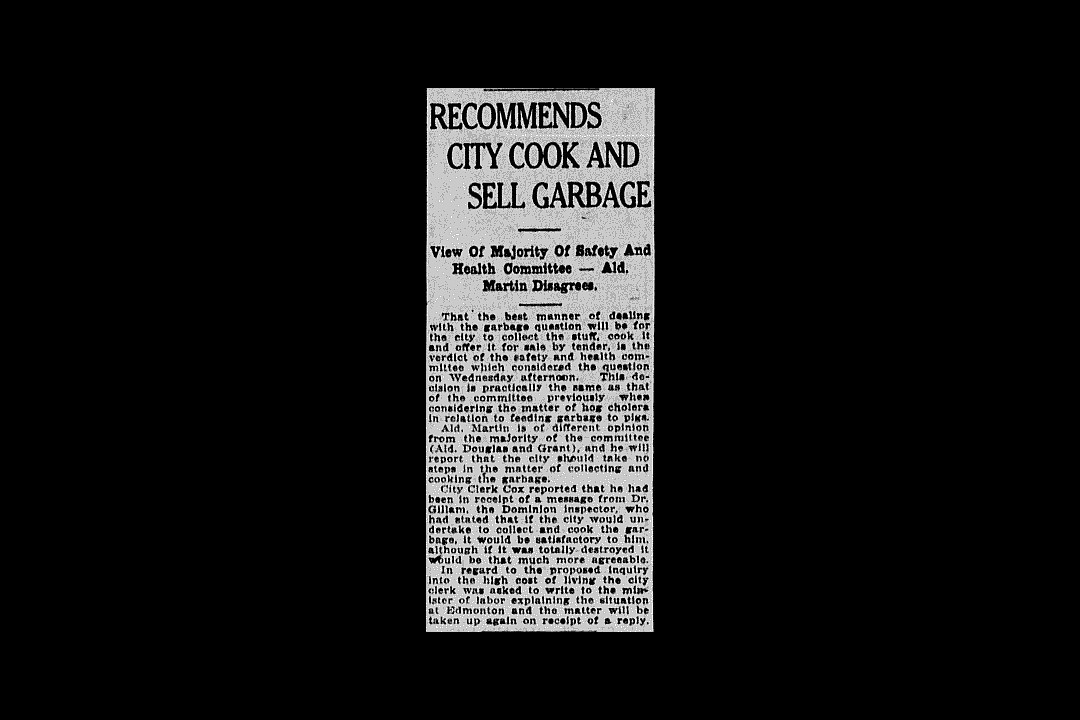
A moment in history: July 26, 1917
On this day in 1917, Edmonton gave a short-lived thumbs-up to a plan to cook and sell the city's trash.
What should be done with waste was a major question for many cities in the 1900s, Edmonton among them. In its earlier days, there was no organized process for getting rid of trash. Most people just dumped it out on the street. From there, it would be collected by scavengers and scrappers, who made a living from collecting and selling what others had abandoned. Household garbage could be cleaned and sold; metal, ash, and wood could be used for construction; and food slops could feed livestock.
And, when all else failed, you could always just toss your trash in the river valley. That was the official advice of the city's engineering office.
And so, the river valley became the city's trash receptacle. The escarpment where the Hotel Macdonald now stands was a particularly convenient and popular place to dispose of trash. So popular that it formed a vast collection of food waste, household goods, and refuse, which soon became known as the Grierson Dump.
But the Grierson Dump wasn't just home to waste. Soon, people began to move in, drawn by the possibility of finding treasure among the trash. A shantytown sprung up, housing mostly young men who would scour the dump for scrap to salvage and sell.
While the engineering office might have encouraged the dump, others weren't so keen. Police felt the shantytown was a hotbed for crime. Firefighters often had to battle blazes at the dump. And those living near the refuse grounds complained of flies that "swarm into houses" and a stench that remained "even in cold weather."
In 1913, an outbreak of cholera in hogs spread among animals that fed from the Grierson Dump, sparking a new debate over its impact. The city stopped allowing slops to be dumped but didn't ban anything else.
Finally, in 1917, there was a push to change how the city dealt with its trash. Aside from floating the idea of cooking garbage (which was thought to make it less likely to poison pigs and other livestock), Edmonton introduced a system to collect waste from homes. The same year, the mayor developed a plan that would see the city pay people to bury the trash in Grierson Dump to reduce the problems.
Despite these plans, as well as years of protest and petitions from nearby residents, Grierson Dump refused to disappear. As the city's population grew, so did the dump into the 1920s and 1930s. The Great Depression spurred a new wave of people to sift through the city's waste, looking for anything valuable to sell. A 1937 feature by the Edmonton Journal found one recent immigrant who made a decent living in the shantytown by turning trash into flower pots and other items.
But the dump's days were numbered. During that decade, the city had made many attempts to finally close down the Grierson Dump and repeatedly tore down the homes of the 60-odd residents who lived there. But the shanties would be rebuilt just as quickly. Finally, in 1938, the city made a final strike against the dump by evicting the residents and bulldozing anything that stood on the grounds.
The dump would sit idle as an abandoned trash pile for years. Then it became a Chinese market, a parking lot, and, eventually, its current form: Louise McKinney Park, which opened in 2008.
Waste disposal remains a big issue for Edmonton, although the times of just chucking everything into the river valley are thankfully long over. In the past year, the city has launched multiple new waste initiatives — some more controversial than others — including collecting food scraps from apartment buildings and reducing single-use bags and other items.
This is based on a clipping found on Vintage Edmonton, a daily look at Edmonton's history from armchair archivist @revRecluse — follow @VintageEdmonton for daily ephemera.