
The Pulse
Aug. 8, 2025

Here's what you need to know about Edmonton today.
Essentials
- 20°C: Showers. Risk of a thunderstorm in the afternoon. Local smoke in the afternoon. Amount 5 to 10 mm. High 20. UV index 2 or low. (forecast)
- Red/Green/Yellow/Purple/Orange: The High Level Bridge will be lit red, green, yellow, purple, and orange for Cariwest Caribbean Arts Festival and Parade. (details)
- 5:30pm: The Edmonton Elks play the Montreal Alouettes at Percival Molson Memorial Stadium. (details)
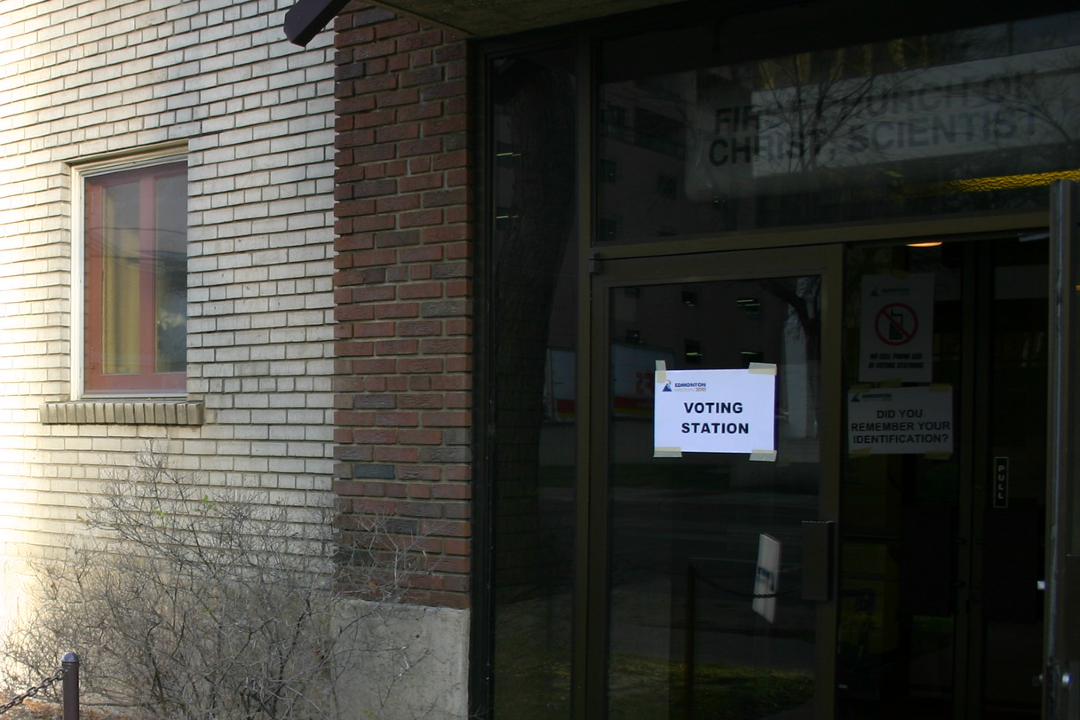
Explainer: The role of parties and slates in the 2025 election
Municipal elections in Edmonton and Calgary have often featured candidates for council and mayor who lean somewhat toward existing provincial or federal parties, even though those parties have not been formally allowed. As one scholar points out, it's impossible to stop candidates from working together as they would in a formal party. But what's shifting for the 2025 election in October, now that the United Conservative Party government has changed the Local Authorities Election Act, is that parties are allowed this time around.
As part of Taproot's ongoing election analysis and coverage, today we examine parties and slates in the coming election and what that might mean for voters.
New rules allow parties
"You can't prevent people from coordinating with each other in the way that parties do," Jack Lucas, a professor of political science at the University of Calgary and a co-director of the Canadian Municipal Barometer research partnership, told Taproot in an interview. He added that the UCP government's bills 20 and 50 have changed policies around parties, and these changes also affect fundraising rules and what a ballot looks like.
Why did the province make these changes? Municipal Affairs Minister Dan Williams told Taproot via email that partisan politics are already happening at the municipal level, so these changes just make it clearer. "Local political parties and slates will make municipal candidate affiliations transparent and accountable, helping Albertans make informed decisions on election day," Williams said.
Under the new rules, parties are allowed to fundraise collectively, and their candidates can also fundraise individually. The pooled funds can support the campaigns of any candidate in addition to their solo funds. Coun. Andrew Knack, who, like the majority of Edmonton's mayoral candidates, is running as an independent for mayor, previously told Taproot that parties have an unfair financial advantage compared to independents and that party discipline raises questions about whether party candidates are loyal to the voter or the party.
Alberta's history with municipal parties
Lucas said there is a history of parties in municipal politics in Alberta. Party-like campaigning was common in Edmonton and Calgary roughly between the First World War and the early 1970s, he said. "In Edmonton and Calgary, in the past, organizations would take out a newspaper advertisement and say, 'Labour endorses these candidates, and this is your Labour slate for 1937."
Lucas has studied voter attitudes on municipal political parties in Canada and said the decline of parties at the municipal level is due to multiple factors. Those factors, Lucas said, included voter concerns that elected officials be loyal to their parties instead of their wards, and candidates, who preferred to govern without party oversight.
Today the municipal structures in Vancouver, Burnaby, Surrey, Montreal, and Quebec City all use a party system for their elections. Lucas said there's a logic behind the system in Vancouver, especially. There, the city has no electoral wards. Vancouver voters, therefore, want a greater understanding of who's on their ballot. "It's just really hard to imagine a totally non-partisan system in (Vancouver), where there might be 80 candidates," Lucas said. "How do you keep track of which of these 80 candidates you want to cast your 10 votes for? It's very confusing."
In Edmonton, as of Aug. 7, only two parties have registered for the 2025 election. One is the Better Edmonton party, which includes mayoral candidate and current councillor Tim Cartmell. The party has a total of 13 candidates. Among its roster are Cartmell's fellow councillor, Karen Principe, as well as Reed Clarke, who is leaving his post as the CEO of Sport Edmonton, a city-affiliated nonprofit, to run. The other party is the Principled Accountable Coalition for Edmonton, or PACE, which has eight councillor candidates but no candidate for mayor.

Big Adventures for Little Dreamers!
All shows and activities at KidsFringe are FREE for kids (12 and under) and their caregivers. Join us in the heart of Old Strathcona, Aug. 14-24! Pictured: Alysse Billings
Headlines: Aug. 8, 2025
- The Edmonton Brothers Basketball (EBB) program, which provides a sense of belonging and competitive leagues for underserved youth and men aged 12-22, is at risk of shutting down due to financial difficulties. Founded by Sharmarke Abdulkarim seven years ago, EBB began in North Edmonton before expanding citywide, offering low registration fees and helping participants develop discipline. The program, described as "more than basketball," is seeking donations through a GoFundMe campaign to cover gym rentals, uniforms, and participant fees for another season.
- The Holocaust Centre of Quebec is urging Edmonton city council to rename Savaryn Drive in the Summerside neighbourhood. The centre made the request on Aug. 7, stating the road is named after a former Nazi. This initiative is part of broader efforts to address public spaces named after people with controversial histories.
- With 75 days remaining until the municipal election on Oct. 22, the Edmonton mayoral race is missing a front-runner, with potential paths to victory for several candidates, Postmedia opinion columnist Keith Gerein wrote. This contrasts with earlier expectations of a two-candidate contest between current Mayor Amarjeet Sohi, who is not seeking re-election, and Coun. Tim Cartmell. Despite Cartmell's initial fundraising and organizational advantages with his "Better Edmonton" party, recent missteps, including calling for a partial infill ban and then missing a crucial zoning vote, have potentially damaged his campaign. This has left the race wide open for contenders like Coun. Andrew Knack and former MP Rahim Jaffer, Gerein wrote.
- Cariwest, a three-day Caribbean carnival celebration featuring live music, cuisine, and a marketplace, kicks off this weekend in Edmonton. On Aug. 9, the Cariwest Parade will start at 108 Street and 99 Avenue at 12pm, closing Jasper Avenue, 99 Avenue, 100 Street, and 108 Street. Several bus routes, including the 1, 2, 5, 7, 8, and 9, will detour from 10:30am to 4pm, impacting the Government Centre Transit Centre. Additionally, rehabilitation work on the southbound Low Level Bridge has closed it to all traffic, rerouting southbound vehicles to the northbound bridge and northbound traffic via the James MacDonald Bridge.
- The Edmonton Folk Music Festival is on at Gallagher Park from Aug. 7-10. Edmonton Transit Service will increase Valley Line Southeast frequency for attendees, recommending Arc cards for easier fare payment and free parking at Davies Transit Centre. Parking is restricted in nearby neighbourhoods, so public transit, biking to the Muttart Conservatory bike lock-up, or using e-scooters or e-bikes to designated zones are encouraged. Pets are not permitted, except service animals.
- Lonely Planet published a guide to top Indigenous cuisine across Alberta, highlighting a movement revitalizing ancestral flavours. Downtown Edmonton features fine dining at Bernadette's by Mushkego Cree chef Scott Iserhoff and market-fresh options from Cree chef Shane Chartrand's Paperbirch at the Old Strathcona Farmers' Market. Outside of Edmonton, destinations include Métis Crossing in Smoky Lake, offering farm-to-table dishes from Chef Ron Ladouceur, and Twisted Fork in Saint Paul, known for its Treaty 6 terroir cuisine by Chef Debra Poulin.
- The Alberta government has refused to release early results of its Alberta Next surveys to Postmedia, prompting three requests for review with the province's information and privacy commissioner. Premier Danielle Smith's Executive Council cited a section of the Access to Information Act that allows the withholding of records deemed "advice to officials." The surveys, launched June 24, sought public input on a provincial pension plan and immigration, following panel events in Edmonton and Sherwood Park. This refusal mirrors a 2023 incident where the province delayed releasing pension survey results for two years.
- Trevor Daroux officially took command as the new Deputy Commissioner of Alberta RCMP in a ceremony held in Edmonton on Aug. 7. This appointment places Daroux in charge of the provincial police division.
- Tsuut'ina Nation Chief Roy Whitney, 71, faces two sexual assault charges in Edmonton, the Edmonton Police Service announced on Aug. 7. The charges relate to historic incidents reported by two male complainants from Tsuut'ina Nation, police said. The first alleged assault occurred in early 1994 in west Edmonton and the second in summer 2005 near Stony Plain Road and 178 Street. Whitney's lawyer, Jim Lutz, states his client "absolutely denies any wrongdoings" and claims the accusations are baseless and politically motivated.
- Court of King's Bench Justice Colin Feasby reserved his decision on whether to halt a judicial review of a proposed Alberta separation referendum question, with a ruling expected by Aug. 14. Alberta Chief Electoral Officer Gordon McClure referred the question — "Do you agree that the Province of Alberta shall become a sovereign country and cease to be a province in Canada?" — to the Edmonton court to determine its constitutionality, including treaty rights. Mitch Sylvestre of the Alberta Prosperity Project argued the review is premature. Premier Danielle Smith and Justice Minister Mickey Amery criticized McClure's referral.
A moment in history: Aug. 8, 1979
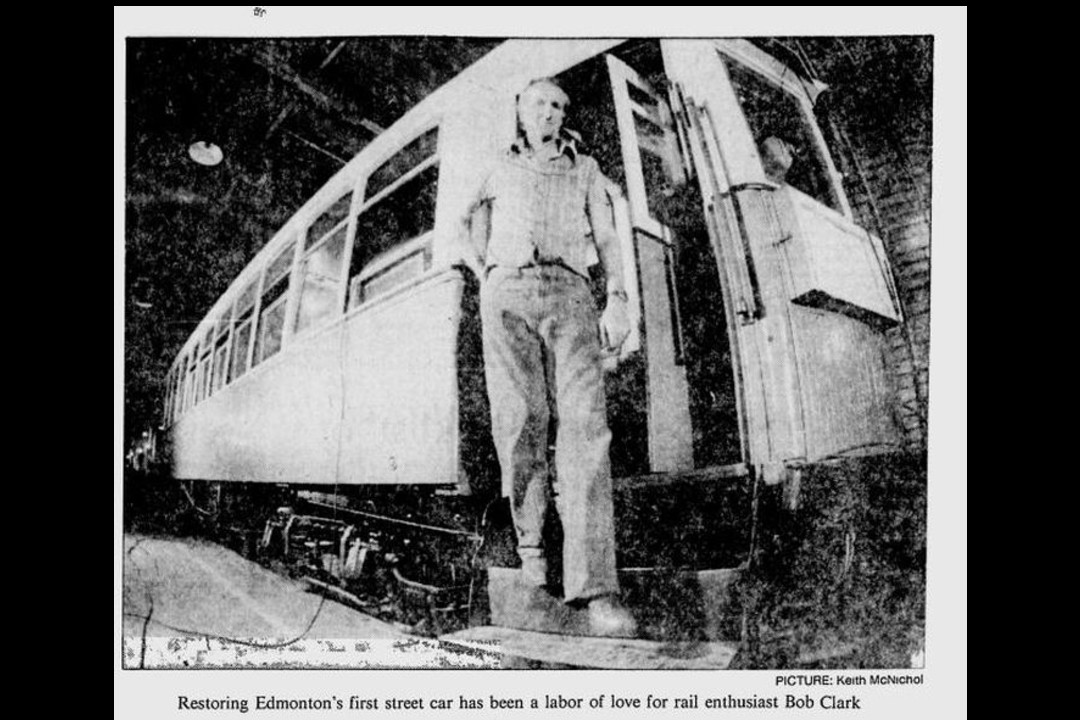
On this day in 1979, Edmonton's first streetcar was resurrected to run the rails once again.
In 1908, when the Edmonton Radial Railway opened, the city became the first on the Canadian Prairies to enter the age of electric transit. The network initially had 21 kilometres of track. Jasper Avenue served as its hub, and multiple streetcar lines fanned out into the city from that street. The lines were served by a fleet of four cars, including Streetcar #1, which was given the name 'Old Faithful'.
The 11.7-metre wooden streetcar certainly lived up to the name. Over its nearly 50 years of active service, Old Faithful travelled an estimated 2.4 million kilometres — a distance that one railway magazine noted is about the same as three roundtrips to the moon. That distance shows just how important the radial railway was to Edmonton in the first half of the 20th century.
A large crowd braved the November day in 1908 to witness the system's grand opening. And on that first day, the system brought in about $150 in fares. At five cents a ride, that translated into roughly 3,000 trips (since transfers weren't introduced until 1909, riders had to pay for each trip) on the first day alone.
Edmonton's early streetcars didn't offer the most comfortable ride. They were run by a driver and a conductor, who would take fares and help passengers board and disembark safely. They had no heat and could handle 40 riders at a time. But despite the spartan conditions, ridership rapidly grew. By 1912, the system had a yearly ridership of 10 million, an impressive achievement for a city with a population just under 55,000. With the opening of the High Level Bridge in 1913, a streetcar line was installed on the top of the span, making it one of the highest streetcar river crossings at the time.
All those new routes and riders needed new streetcars. The city added dozens to its fleet in those early years. While many of them were passenger vehicles, the radial railway also added several specialty cars to its garages. Some were used to maintain the system, like sweeper cars to clear snow or special cars to help construct new routes. Others provided public services unrelated to the railway itself, including sprinkler cars that ran through the city to spray water on unpaved roads to reduce dust. In 1919, the city introduced a car painted white-and-gold that took people on sightseeing tours around the city for 25 cents. But the best-known specialty streetcar has to be the mobile library, which started in 1941 and shuttled thousands of books (and an actual librarian) around the city twice a week to connect with people who couldn't make it to a physical library branch.
Streetcars remained a common sight in the city through the 1940s. But following the Second World War, the transportation demands of the city and its residents changed. The city began to move towards buses and trolley buses, while also removing streetcar tracks to expand streets for private vehicles. In 1951, when the service was eventually closed, Old Faithful, the same streetcar that launched the radial railway, took then-mayor Sidney Parsons and others across the High Level Bridge for a final time.
But that wasn't the last time Streetcar #1 would ride the rails. After spending a decade in storage, which saw the streetcar become heavily damaged by the elements and vandalism, a group of dedicated volunteers worked to restore it to its former glory. In 1979, the newly restored streetcar made another trip across the High Level Bridge with 38 passengers to celebrate Edmonton's 75th anniversary. Streetcar #1 is now stored at Fort Edmonton Park, where it still operates for special occasions.
Almost 75 years after the closure of the Edmonton Radial Railway, many Edmontonians still rely on trains for their daily commutes. The city's LRT system is seeing increasing use, with 60 million riders counted in 2024. The LRT system is in the midst of a long-term expansion plan. Earlier this week, the city received the first of the new LRT cars planned for the Valley Line West expansion, currently under construction.
This clipping was found on Vintage Edmonton, a daily look at Edmonton's history from armchair archivist Rev Recluse of Vintage Edmonton.

Happenings: Aug. 8, 2025
- Aug. 8-10 Animethon 2025 at Edmonton Convention Centre
- Aug. 8-10 Cariwest Caribbean Arts Festival at Churchill Square
- Aug. 8 Niagara River Lions vs Edmonton Stingers starting at 7pm at Edmonton EXPO Centre
- Aug. 8 Friday Nite Live - Stevon and Kayla starting at 7pm at The Carrot Community Arts Coffeehouse
- Aug. 9 Savour Strathcona Food Tour (August) starting at 11am at MEAT
- Aug. 9 Afternoon Sound Sessions on 124: Kat Krys starting at 12pm at Remedy Cafe (124 Street)
- Aug. 10 Canadian Ultimate Championships: Juniors at Ivor Dent Sports Park
- Aug. 10 GameCamp Edmonton - August Picnic 2025 Edition! starting at 4pm at Victoria Park
And here are some upcoming events to keep in mind:
- Aug. 14-24 Edmonton International Fringe Theatre Festival
- Aug. 15 Toronto Argonauts vs. Edmonton Elks at Commonwealth Stadium
- Aug. 15-16 Afro Music Fest at Fan Park
Visit the beta version of the Taproot Edmonton Calendar for many more events in the Edmonton region.

The Taproot Mini - No. 25
Test your crossword prowess and deploy a little of your Edmonton knowledge. Complete the puzzle.
The Taproot Mini took a little break, but it's back now. Enjoy!
The Taproot Mini is brought to you by ATB, your homegrown source of good advice to help conquer life's tougher puzzles. Learn how.
