
The Pulse
May 12, 2026
Here's what you need to know about Edmonton today.
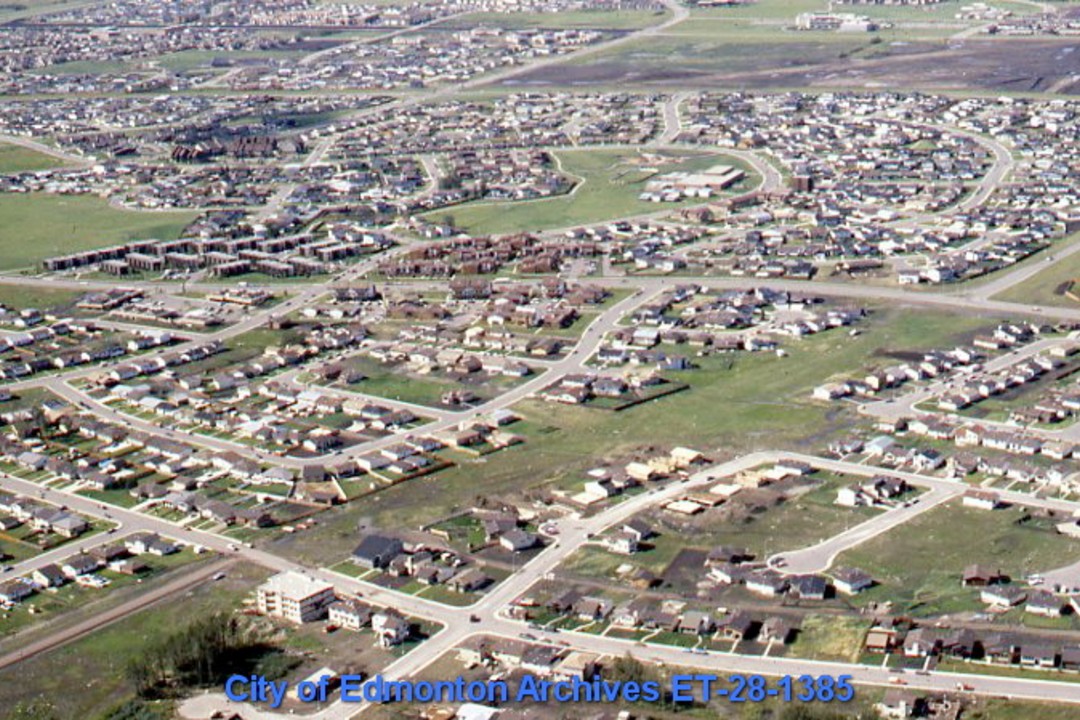
Historian seeks to tell the real story of Mill Woods
Mill Woods, the 24-square-kilometre development that makes up most of Edmonton's southeast quadrant, isn't quite what it seems from the outside, says historian Catherine C. Cole.
"The perceptions of people inside the community and outside the community are totally different," Cole told Taproot.
That's just one theme she aims to explore in her forthcoming book about the history of Mill Woods. She is hosting listening sessions with current and former residents at the Mill Woods branch of the Edmonton Public Library on May 13 and June 10 from 1pm to 4pm to better understand how Mill Woods has changed over time.
"It's an opportunity for people to talk about what it has been like for them to grow up in Mill Woods, or to live in Mill Woods — to watch Mill Woods grow up around them," she said, noting that she hopes to continue the sessions in the fall.
Mill Woods, with a population of around 78,000 (based on the 2019 municipal census), is commonly described as one neighbourhood, but it's actually a collection of more than 20 distinct neighbourhoods. It is bounded by 91 Street to the west and 34 Street to the east, and by Whitemud Drive and Anthony Henday Drive on the north and south.
Cole has hosted two listening sessions already, and so far, attendees have been a diverse mix, including a man and a woman who were among the first couples to build a home in the neighbourhood. "She actually brought a piece of paper with all these photographs of their house under development," Cole said. Another attendee was a recent immigrant to Canada who came "because he wanted to learn about the place he was moving to, and he wanted to listen to the conversation."
Cole said with a laugh that she has no connection to Mill Woods — she lives in Riverdale — but she's interested for a variety of reasons. The development started in the 1970s and would end up facing issues that are still relevant today: the need for affordable housing, the costs of suburban sprawl, the preservation of agricultural land, the need for transportation. "There's just so many urban challenges that played out through that development," she said, adding that she thinks it has lessons to teach city planners today, especially those working on Blatchford and similar projects.
Mill Woods began as a city-led housing development. In the late 1960s, land available for suburban development was declining, and the city was having trouble expanding the infrastructure necessary to access more, especially roads. The province owned a land bank southeast of what was then the city boundary. "The province acquired this chunk of land — the largest land bank in North America — and the federal government lent the money to the province to buy the land, and then the province sold it to the city at 1969 prices over the period of its development," Cole said.
Phil Ellwood, a senior city planner at the time, said the city should act as a land developer to help with housing affordability. In the original development concept, planners envisioned "a place for people — a community with a sense of place where the physical environment will be realized in the context of human scale," and a neighbourhood "large enough in its own right to create its own identity and sense of place."
That's one example of the city's perception of the neighbourhood not matching the reality of living there, Cole said. "One of the things I find really interesting is that people who are live in Mill Woods, or are from Mill Woods, really see how unique the community is and and they see it as being a very accessible, walkable, human-scale kind of place, whereas the rest of Edmonton either have never heard of Mill Woods, never been there, don't know what it is, or they think it's way out there."
Headlines: May 12, 2026
- The western portion of Whitemud Drive in Edmonton is slated for major upgrades with a $27.9 million investment shared equally by the province, the city, and Enoch Cree Nation. The project will expand the freeway from one to four lanes between Lewis Estates Boulevard and 231 Street, and add intersections, traffic signals, and street lights. Enoch Cree Nation Chief Cody Thomas said the historic collaboration will improve safety and better connectivity for commuters from Edmonton, Spruce Grove, and Stony Plain.
- The Edmonton Queen riverboat experienced mechanical issues on May 11, leaving more than 200 passengers stranded during a Mother's Day cruise. The port hydraulic pump failure hindered the port-side paddlewheel, prompting the captain to beach the vessel. Fire crews arrived around 4:22pm to assist, and passengers were safely evacuated by 7:30pm. No injuries were reported. The operator plans to repair the issue by its next event. The riverboat had a similar problem in July 2019 that also required evacuation.
- The City of Edmonton has completed the installation of bridge girders for the Capital Line South LRT extension, a significant milestone in the project's progress. The installation took place over five days starting April 30, using heavy cranes to place 12 girders.
- Edmonton will host the Canada-Wide Science Fair from May 13 to 20, welcoming more than 500 of the nation's top young scientists to compete and present their innovative projects. Hosted at the Edmonton Convention Centre, the event aims to inspire future generations in the science, technology, engineering, and mathematics fields.
- The Edmonton Police Service has charged six men with 33 counts of vehicle fraud following an investigation into an unusual scheme, allegedly using aggressive tactics during vehicle purchases made through online platforms. Police said they distracted sellers and tampered with vehicles to claim damages, ultimately coercing the sale at reduced prices.
- NAIT in Edmonton will soon begin construction on a new advanced skills centre, bolstered by a $380 million commitment from the Alberta government. The centre aims to enhance students' practical skills in technology and trades, addressing the growing demand for skilled workers in the region.
- Alberta's information and privacy commissioner has raised concerns about Bill 31, which allows Alberta Gaming, Liquor, and Cannabis to sell personal customer data from its Play Alberta platform. The legislation bypasses the Protection of Privacy Act prohibition on selling personal data, which privacy commissioner Diane McLeod said sets a dangerous precedent. The province said customers can opt out before any data is sold. Meanwhile, 49 companies are interested in Alberta's online gambling market, which opens to private firms in July.
- A wildfire evacuation order was issued for Woodlands County, northwest of Edmonton, on May 11, due to an escalating wildfire threat. The area affected includes several communities, leading to fears of property and environmental damage. Residents are instructed to evacuate immediately as local officials coordinate relief efforts.
- The Edmonton Elks have signed defensive backs Benjamin Sangmuah and Jaxxon Brashear. Sangmuah, a second-round pick from the University of British Columbia, recorded 162 tackles and five interceptions in 41 games. He recently attracted attention from the NFL, securing a mini-camp invite from the Indianapolis Colts. Brashear, from the University of Ottawa, tallied 87 tackles and two interceptions in 29 games. The Edmonton Elks' 2026 Training Camp began May 10 at Clarke Stadium.
Happenings: May 12, 2026
Here are some events happening today in the Edmonton area.
- The Defence Opportunity: Navigating Investment & Procurement Pathways starting at 9:30am at Edmonton Unlimited
- Screenwriting with Eric Janvier: How I Learned to Stop Worrying and Love the Process starting at 1:30pm at Art Gallery of Alberta
- FascinAsian Film Festival: Opening Ceremony Reception starting at 5:30pm at Art Gallery of Alberta
- A Night With Libby Ward & Honest Motherhood starting at 7pm at Daisy Chain Book Co. (High Street)
- Book Launch: Marika and the Auction starting at 7pm at Audreys Books
- Among Neighbors starting at 7pm at Capitol Theatre
- Request Programme starting at 7:30pm at Fringe Theatre Arts Barns
- Akashi + Q&A with Nach Dudsdeemaytha starting at 7:30pm at Art Gallery of Alberta
And here are some upcoming events to keep in mind:
- May 20: Reimagining Bystander Intervention at Earth's Refillery Coop
- May 26: Voices of Hope at ATB Entrepreneur Centre
- May 29-30: UFest Edmonton Ukrainian Festival at Borden Park
Visit the Taproot Edmonton Calendar for many more events in the Edmonton region.

The Taproot Mini - No. 207
Test your crossword prowess and deploy a little of your Edmonton knowledge. Complete the puzzle.
Did you miss the news story that 7-Across refers to? You'll find it here.
The Taproot Mini is brought to you by ATB, your homegrown source of good advice to help conquer life's tougher puzzles. Learn how.
