
The Pulse
Sept. 4, 2026
Here's what you need to know about Edmonton today.
Essentials
- 20°C: A mix of sun and cloud. 30% chance of showers late in the afternoon with risk of a thunderstorm. Wind becoming west 20 km/h in the morning then becoming north 20 gusting to 40 in the afternoon. High 20. UV index 4 or moderate. (forecast)
- Yellow/Green/Blue: The High Level Bridge will be lit yellow, green, and blue for Our Locomotive 107 turns 107. (details)
Your turn: Land use updates in the region
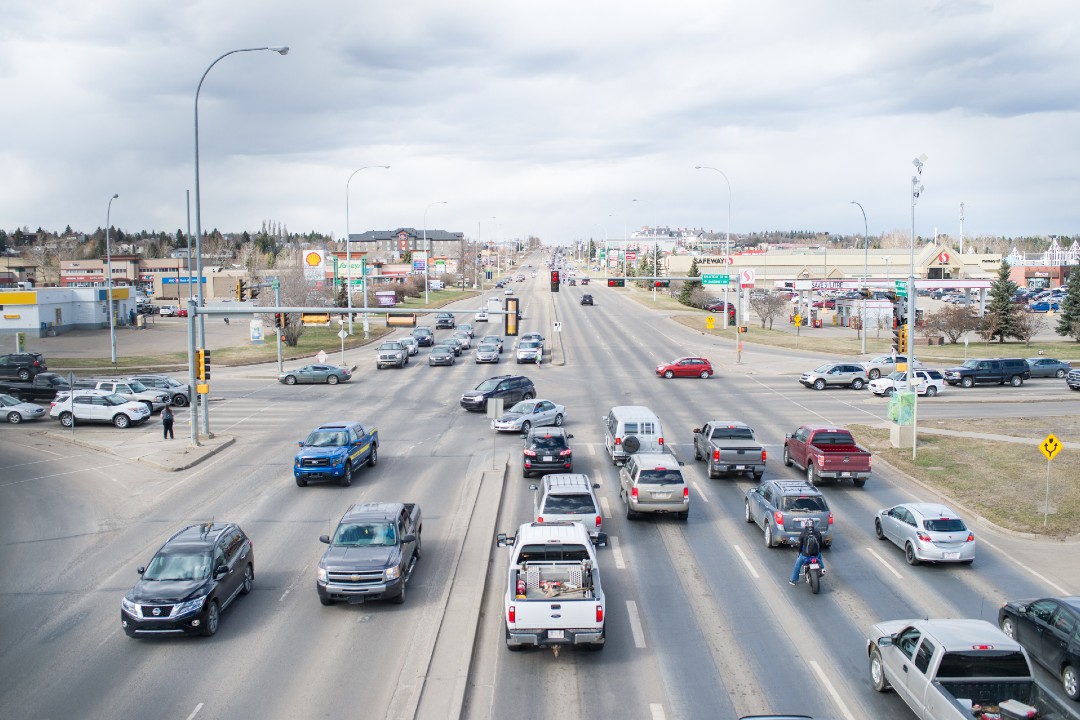
This week's roundup of calls for public engagement includes a public hearing about proposed changes to St. Albert's land use bylaw that would make it easier to build small-scale infill in mature neighbourhoods, as well as transit-oriented development along St. Albert Trail.
St. Albert council is set to hear from residents at a public hearing on Sept. 15 on changes to its land use bylaw that would address two out of seven initiatives it is expected to fulfill under the Housing Accelerator Fund from the Canadian Mortgage and Housing Corporation. St. Albert intends to have 20% of new homes built along St. Albert Trail and within established neighbourhoods.
The first change would make it easier to build small-scale infill in established neighbourhoods. Administration proposes decreasing the minimum width for lots, enabling slightly narrower single-detached and semi-detached homes in neighbourhoods where they're already allowed. Administration was adamant that it is not making changes that would enable the type of infill in mature neighbourhoods that is regularly met with opposition in Edmonton. "What we're NOT doing is introducing six- or eight-plexes, nor changing regulations for parking, building heights, setbacks, and more," the city said.
Staff recommends amending the trail corridor commercial district to allow apartment buildings as-of-right, instead of requiring permission from a development planner. The district's maximum height would also increase by three metres to 25 metres, or about eight storeys.
The changes would also introduce a mixed-use, transit-oriented development district that could only be used along St. Albert Trail with a maximum height of about 15 storeys. The city intends to make it easier to build housing and mixed-use spaces within 800 metres of planned transit nodes on St. Albert Trail.
The proposed changes to the land use bylaw are among the initiatives St. Albert has committed to in return for $11.8 million in federal funding. It is also in the process of finalizing its housing affordability strategic plan based on its housing needs assessment report. Future initiatives include exploring how city-owned land can be used for housing and launching an online permit portal for developers. St. Albert is "making good progress" on its housing action plan, according to the CMHC's progress tracker.
Meanwhile, Fort Saskatchewan postponed voting on its renewed land use bylaw in August so it could have a more in-depth discussion on Sept. 3. That discussion led to a series of motions asking administration to bring back amendments related to various matters including density and height, which passed.
The proposed bylaw reduces the number of districts from 55 to 18, and regulates sites based on "built form" instead of uses — in other words, the shape and appearance of a building instead of what kind of activities are allowed there. However, each built form will still conform to a permitted list of activities. Administration said a land use bylaw based on what a building looks like is almost entirely unique in Alberta. "This approach ensures scale- and place-appropriate development and compatibility between the allowed activities, and streamlines the permitting process," Shree Shinde, the city's manager of current and long range planning, said in August. There will be a public hearing before council makes its final vote.
Leduc has extended the timeline on its land use bylaw renewal to allow for more public feedback. Residents told city staff that they want more housing options that are carefully integrated into establishing neighbourhoods, they want to keep current parking regulations in place, and they support having convenient and walkable places to gather and connect within neighbourhoods. A new draft is set to be presented in early 2027. And Morinville has begun engagement on its land use bylaw, with plans to consult the public in spring 2027.
Headlines: Sept. 4, 2026
- Construction has begun on an expanded habitat for Lucy the Elephant at the Edmonton Valley Zoo. The project, expected to be completed in 2027, will nearly triple her enclosure to about 70,000 square feet and add a new indoor facility and larger outdoor yard. The upgrades are intended to improve Lucy's comfort and care as she ages. The zoo is also exploring accreditation from theAssociation of Zoos and Aquariums, which would require meeting enhanced standards for elephant care and safety.
- Edmonton city council's executive committee approved $114.58 million in climate-related actions for consideration during the city's four-year budget deliberations, while four no-cost measures can begin immediately. The plans include making city operations more energy-efficient, improving electrical-grid resilience with EPCOR and incorporating extreme weather into planning. Funding proposals for December include decarbonizing the city's vehicle fleet, supporting climate-resilient buildings and expanding facilities that provide relief during extreme heat, cold or smoke.
- As more than 70,000 students return to school, the City of Edmonton is increasing police patrols at public transit hubs during weekday rush hours through Sept. 18. Peace officers and transit staff will also be stationed near post-secondary campuses and will attend student orientations to provide safety information and resources.
- NorQuest College criminologist Dan Jones told Postmedia the decision by the Edmonton Police Commission to move meetings online and suspend public speaking could damage police legitimacy. The commission cited months of abusive and threatening behaviour for the temporary changes. Jones said he saw no extreme behaviour at a contentious July meeting and argued uncomfortable criticism is part of public oversight. Mayor Andrew Knack said public participation is an important part of the democratic process.
- St. Albert Mayor Scott Olivieri criticized Edmonton Coun. Michael Janz for suggesting municipalities outside Edmonton are not doing enough to address homelessness and emergency shelter needs. Janz made the comments during an Aug. 25 public hearing on a proposal to convert a Hope Mission facility into a year-round emergency shelter, pointing to a lack of permanent shelter beds outside Edmonton. Olivieri called Janz's remarks "short-sighted" and said the issue is more complex than his comments suggest. Janz defended his position, saying shelter and addiction services should be distributed across the region.
- Elections Alberta said it began mailing referendum special ballot packages after receiving about 225,000 requests, nearly four times the 2023 total. It said special ballot applications now close Sept. 25, and completed packages must arrive by 5pm on Oct. 16.
A moment in history: Sept. 4, 1947
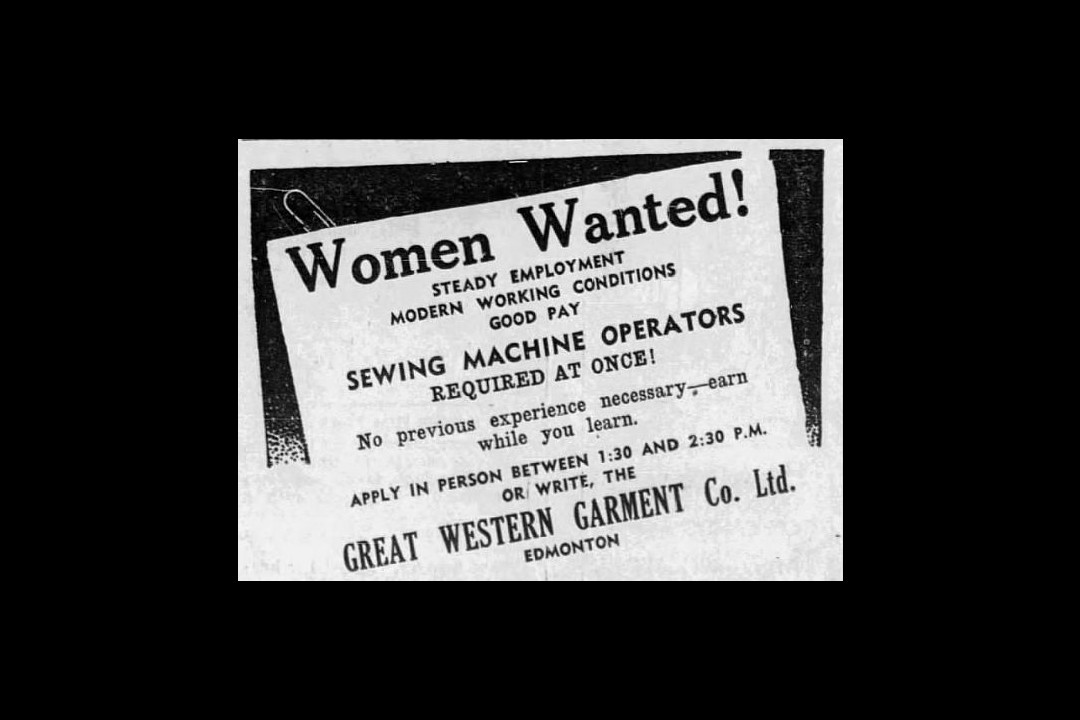
On this day in 1947, Edmonton's Great Western Garment Company was advertising for new workers.
GWG was once a massive name in the clothing industry. But when the company was founded in 1911, it started with just 15 workers and eight sewing machines. Alberta's first premier, Alexander Rutherford, along with Alfred E. Jackson and salesman Charles A. Graham, started it. The garment maker targeted farmers, ranchers, and other workers with affordable, durable clothing under the motto "They wear longer because they're made stronger."
Shortly after the company's founding, its staff unionized, forming Local 120 of the United Garment Workers of America at Edmonton. GWG recognized the union. Workers secured conditions like an eight-hour workday and a 44-hour workweek, which were rarities in the notoriously employee-unfriendly garment industry. And GWG was able to market its clothing as union-made, which likely helped with its working-class customer base.
The company grew quickly. Within a year, it had more than 100 employees, most of whom were women, as clothing was one of the few industries that would employ them at the time. In 1917, the company moved to a new factory in a former department store on 97 Street and 103 Avenue. GWG continued to grow throughout the 1920s, expanding both its workforce and its factory. During the 1930s, the company weathered the Great Depression by adding lines for women's wear and children's clothing, as well as making uniforms for city workers.
By the time the Second World War broke out, GWG was reputed to be the largest garment manufacturer in the British Empire. During the war, the company's workforce swelled to 500, and it was producing up to 12,500 uniforms a week. Most of them were destined for the Canadian military, but GWG also sent tens of thousands of garments across the Atlantic to outfit the Netherlands' armed forces in 1946. The emphasis on military uniforms and cotton rationing caused a shortage of GWG clothing in retail stores. The company still advertised heavily, telling customers that their garments were durable enough to last them through until peacetime.
During the war years, the company also put a great emphasis on efficiency and speeding up the manufacturing process. This philosophy continued into the post-war years, with GWG quick to adopt new technologies and seek automation whenever possible. It also saw the company open a 100,000-sq.-ft. factory on 85 Street in 1953.
GWG is also credited with several firsts in the history of blue jeans. It was the first in Canada to sell pre-shrunk jeans in the 1920s, and the first to sell pre-washed jeans, called Scrubbies, in 1972. They became one of the company's most popular products.
Jeans giant Levi Strauss bought a large portion of GWG in 1961, and then gained full ownership in 1972. The '80s and '90s saw the company lose much of its share in the Canadian jeans market, as competition rose. Rounds of layoffs marked those decades, and the new owners shifted some parts of production to factories in Ontario and Mexico.
Finally, in 2004, Levi Strauss shut down all of its North American factories. Four hundred and eighty-eight Edmonton workers were laid off, down from GWG's peak workforce of 1,600. During its nine-decade history, Great Western Garment Company became one of Alberta's largest industrial employers and introduced many innovations — both technical and related to labour conditions — into the garment industry.
The former GWG factory building on 97 Street is listed for lease after a number of attempted reuses, including as the site of the Downtown Farmers' Market from 2019 to early 2024. While Edmonton is no longer the hub of garment manufacturing it used to be, it is still home to various independent designers and manufacturers, many of whom are advocating for a more sustainable and local clothing industry.
This clipping was found on Vintage Edmonton, a daily look at Edmonton's history from armchair archivist Rev Recluse of Vintage Edmonton.
Happenings: Sept. 4-7, 2026
Here are some events happening this long weekend in the Edmonton area.
- Sept. 4: The Green & Gold Pop-Up Market starting at 10am at University of Alberta (University Commons Building)
- Sept. 4: Bikes & Beverages x Grow Together starting at 5pm at The Buckingham Pub
- Sept. 4-5: BBE Trade Show at Beaumont Community Centre
- Sept. 4-6: Edmonton Art Crawl at O-day'min Park Pavilion
- Sept. 4-6: Kejia Festival at Louise McKinney Riverfront Park
- Sept. 5: Kinsmen Beer, Wine & Spirits Festival starting at 2pm at Kinsmen Club of Edmonton
- Sept. 5-6: Afro & Indigenous Cultural Festival at Borden Park
- Sept. 6: Alberta Culture Days: Métis Artists, Culture and Expressions of Identity starting at 11am at Father Lacombe Chapel
- Sept. 6: Soul Garden Patio Party starting at 4pm at Red Star Bar
- Sept. 7: Sheep Leaving Parade starting at 11am at Fort Heritage Precinct
- Sept. 7: Labour Day BBQ starting at 11:30pm at Giovanni Caboto Park
And here are some upcoming events to keep in mind:
- Sept. 11-13: Books2Buy Sale at Edmonton Public Library (Stanley A. Milner)
- Sept. 19: YEG Home-Based Business Expo at St. Basil's Cultural Centre
- Sept. 21: tahto awasis asitakimaw Every Child Matters Traditional Feast & Round Dance at Alberta Aviation Museum
Visit the Taproot Edmonton Calendar for many more events in the Edmonton region.

The Taproot Mini - No. 279
Test your crossword prowess and deploy a little of your Edmonton knowledge. Complete the puzzle.
If you need a crossword fix over the long weekend, check out YEGwords!
The Taproot Mini is brought to you by ATB, your homegrown source of good advice to help conquer life's tougher puzzles. Learn how.
