
The Pulse
Oct. 3, 2025

Here's what you need to know about Edmonton today.
Acclamations up across region in 2025
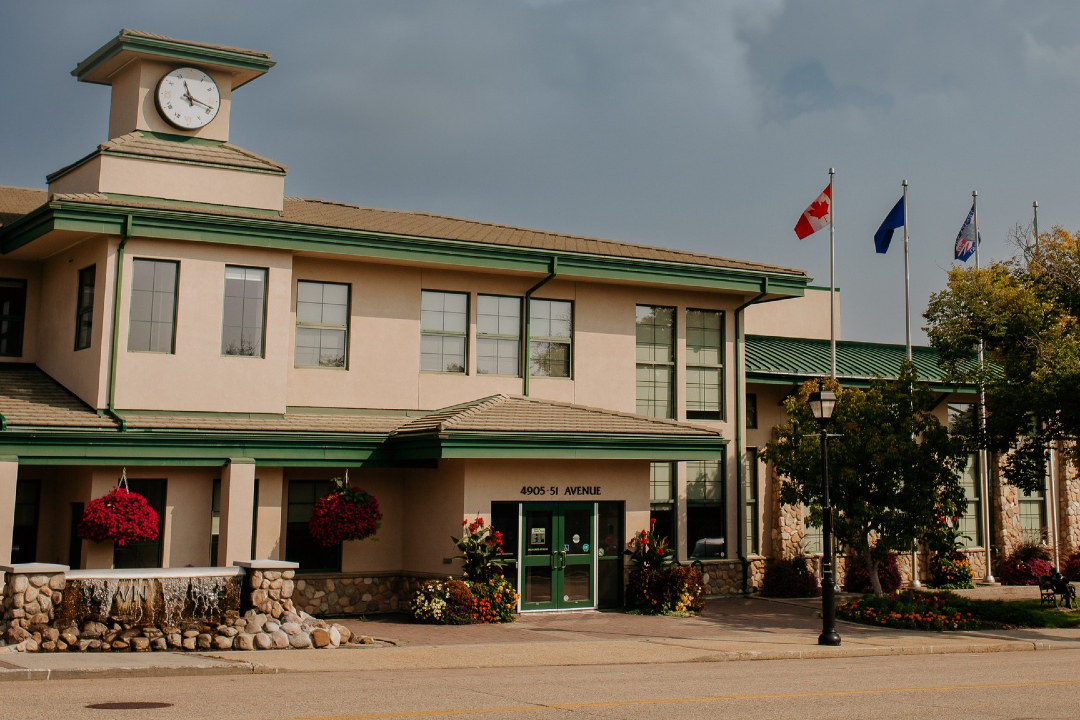
Two municipalities in the Edmonton region have now elected mayors through acclamation in 2025, compared to one in 2021.
The trend appears to be headed in a different direction across the province, where at least 19 other municipalities have done the same, compared to 35 in 2021. A full list of acclaimed mayors and councillors will be available when the Alberta government publishes its official election results after they are due from municipalities on Oct. 24.
Election through acclamation is the result of a lone candidate running without an opponent. To understand why such acclamations happen in municipal politics, Taproot looked at academic studies. That research suggests links between population and acclamations, as well as candidates running as incumbents.
Nomination day in Alberta was Sept. 22, and the withdrawal period for candidates was Sept. 23. That means any candidate running unopposed has now been acclaimed, per the Local Authorities Election Act.
Acclamations across the region
One newly acclaimed mayor is William Choy of Stony Plain. Choy was elected to council in 2007, elected mayor in 2012, acclaimed mayor in 2013, and elected mayor in 2017 and 2021. Choy is now the longest-serving current mayor in the region.
Simon Boersma has similarly been acclaimed mayor in Morinville. Boersma beat the incumbent, Barry Turner, in 2021. Before that, Turner was acclaimed as mayor in 2017.
Tanni Doblanko has been acclaimed as councillor in Leduc County, just as she was in 2021. Doblanko was first elected to council in 2013 and was reelected in 2017, ahead of her two later acclamations. In 2017 and 2021, Doblanko was chosen by her fellow councillors to serve as mayor. Leduc County is the lone municipality in the region where voters don't directly elect a mayor.
In Strathcona County, Aaron Nelson has been acclaimed as the councillor for Ward 5.
In 2021, Mayor Alanna Hnatiw of Sturgeon County was the only acclaimed mayor in the region. This year, she faces one challenger: Patrick Tighe, who was a Sturgeon County councillor from 2013 to 2021. He did not run for council or mayor in 2021.

Sharing the Stories that Shape Our City
Generosity fuels our city. Edmonton Community Foundation's The Well Endowed Podcast explores how philanthropy empowers the people and organizations shaping a stronger Edmonton.
Headlines: Oct. 3, 2025
- Edmonton mayoral candidates Rahim Jaffer, Michael Walters, and Andrew Knack pledged not to pause development at an Oct. 1 forum hosted by BOMA Edmonton, NAIOP Edmonton, and the Edmonton Construction Association. Walters emphasized the need for 5,000 new rental units annually and driving nonresidential growth to fund infrastructure, including the LRT expansion, while shifting toward smaller capital projects. Knack expressed concern about slowing development, noting Edmonton's 200,000-person growth in four years and the necessity of investing in services and amenities for new areas, while Jaffer called for faster permitting and a return to a more business-friendly atmosphere to reduce costs and delays for builders.
- The Alberta Teachers' Association (ATA) said on Oct. 2 that its members will return to bargaining if the province does, though further negotiations have not been scheduled ahead of the Oct. 6 strike deadline. ATA president Jason Schilling said talks have stalled over wages and working conditions, including student-teacher ratios. Finance Minister Nate Horner said the government's offer includes a 12% wage increase over four years and 3,000 new teachers. Schilling argues 5,000 more teachers are needed to meet student-teacher ratios from 2002, when teacher last went on strike. A strike by 51,000 teachers would impact more than 700,000 students across 2,500 public, separate, and francophone schools in Alberta.
- More than 20 restaurants along Stony Plain Road are taking part in SPR Dining Week 2025 as construction of Edmonton's Valley Line West LRT continues to hurt customer traffic. Business owners say sales have dropped sharply, with some reporting losses of up to 60% since work began three years ago. The Stony Plain Road Business Association hopes discounted menus and promotions will draw diners back during the event, which runs until Oct. 12. The $2.6-billion LRT line is scheduled for completion in 2028.
- Thousands of healthcare professionals rallied across Alberta on Oct. 2 with demonstrations taking place in front of the Royal Alexandra Hospital in Edmonton. The workers, represented by the Health Sciences Association of Alberta (HSAA), called for a better deal and working conditions. In September, nearly 60% of HSAA members who work for Alberta Health Services voted against a tentative contract.
- Edmonton's Bearclaw Gallery will celebrate its 50th anniversary with an exhibition opening on Oct. 4 and running through Oct. 15. The exhibit will showcase works from Cree, Dene, Ojibway, Iroquois, Métis, and West Coast Nations, featuring renowned artists like Jane Ash Poitras, Jim Logan, and Joseph Sanchez.
- Hawrelak Park in Edmonton is approaching completion of its $134.5 million rehabilitation and will reopen this winter, the City of Edmonton announced Oct. 2. The project, which closed the park in 2023, remains on schedule and within budget, the City said. Significant work included replacing deep underground utilities and making progress on landscaping and facilities. Recently completed tasks include paving roads and pathways, installing new playground equipment, and repairing the Trans Canada Trail, with final electrical, mechanical, and landscaping work ongoing.
- The Yellowhead Tribal Council (YTC) held a groundbreaking ceremony on Oct. 1 for the Belvedere Affordable Housing Project in Edmonton. Located at 560 Belvedere Way, this project will provide 149 mixed-income units. It aims to support First Nation families, seniors, individuals, young adults transitioning from care, women fleeing violence, students, and those visiting Edmonton for medical care. YTC, with its members O'Chiese, Sunchild, Alexander, and Alexis Nakota Sioux Nations, emphasized First Nations' role as strong partners in real estate development.
- Edmonton's unhoused population, numbering nearly 5,000, faces significant challenges due to funding cuts that have closed numerous daytime drop-in spaces, according to a Postmedia op-ed written by Renée McBeth, Ginetta Salvalaggio, Asha Ajani and Elaine Hyshka of the Inner City Health and Wellness Program. Organizations such as Operation Friendship Seniors Society, Bissell Centre, Boyle Street Community Services, Jasper Place Wellness Centre, and the Mustard Seed have had to close drop-in services, forcing people into public areas. Additionally, the shift to drug smoking, not accommodated by supervised consumption sites, and reduced street outreach teams further strain support for vulnerable individuals in central Edmonton, the authors wrote, urging Edmontonians to speak to mayoral and council election candidates about the issue.
- Alberta defence lawyers say Edmonton Police Service Chief Warren Driechel is threatening a judge and jeopardizing justice with his public comments on a manslaughter case involving the death of an eight-year-old girl. Shawn King, president of the Criminal Trial Lawyers' Association, warned the remarks could prejudice sentencing and undermine the accused's right to a fair hearing. Driechel defended his actions, saying a letter threatening to release case details was meant to address poor communication with prosecutors over a plea deal that reduced a murder charge to manslaughter. The woman pleaded guilty to manslaughter in September and her sentencing is set for February.
- The Edmonton Police Service announced they arrested Arjun Sahnan, 21, at the Edmonton airport on Sept. 20, for his alleged involvement in a series of "Project Gaslight" extortion-related drive-by shootings in late 2023. Sahnan faces charges including discharging a firearm recklessly and possession of a prohibited firearm. The shootings occurred in northeast Edmonton's Cy Becker neighbourhood on Dec. 21, 2023; Winnipeg on Dec. 24, 2023; and Sherwood Park's Fountain Creek on Dec. 29, 2023. Police believe the Sherwood Park shooting was a mistaken target, and say the same gun was used in all incidents.
- Municipalities surrounding Edmonton are dealing with pressures of a population boom, with 10 of 12 experiencing growth by the 2021 federal census, CBC reported. Beaumont saw a 20% increase to 20,888 residents by 2021, estimated at 24,593 by 2024. The City of Leduc grew 14% to 34,094 by 2021, reaching 36,060 by 2023. This rapid influx strains infrastructure, like sewer and water lines, and recreation centres, noted Coun. Kathy Barnhart of Beaumont. Coun. Ryan Pollard, a Leduc city councillor, said Leduc is pursuing annexation in Leduc County due to dwindling land supply.
- A premature baby has died from measles in Alberta, marking the province's first measles-related death of 2025. Adriana LaGrange, minister of primary and preventive health services, emphasized the heightened risks for children under five, pregnant individuals, and those with weakened immune systems, and advised individuals planning pregnancy to ensure they are vaccinated. Provincial health data for Jan. 1 to Sept. 27 reports 1,910 confirmed measles cases, with 152 hospitalizations and 15 ICU admissions.
- The Edmonton Oilers have trimmed their roster by eight players, placing defencemen Cam Dineen and Riley Stillman on waivers. The team also loaned blueliner Atro Leppanen and forwards Quinn Hutson, Josh Samanski, James Hamblin, Viljami Marjala, and Connor Clattenburg to the AHL's Bakersfield Condors. The Oilers play their final preseason game on Oct. 3 against the Canucks in Vancouver, before opening the 2025-2026 regular season on Oct. 8 at home against the Calgary Flames.
Snow and ice clearing: Where the candidates stand
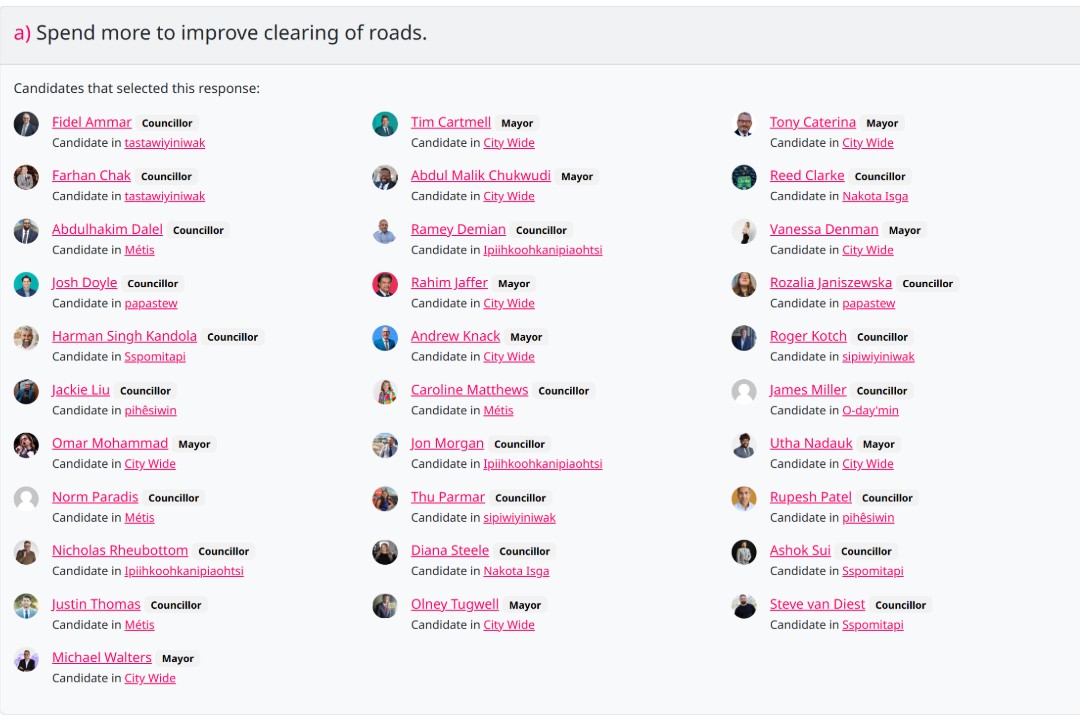
The majority of candidates for council and mayor said they would prioritize spending more money on clearing snow from roads over sidewalks and active pathways in response to the question "Which would you prioritize for snow clearing?" on Taproot's candidate survey.
Thirty-one candidates said they would Spend more to improve clearing of roads. All mayoral candidates but three chose this answer (Andrew Knack and Tim Cartmell both added comments, noting they want to increase funding to clear snow from both roadways and active pathways).
Meanwhile, 18 candidates said they would Spend more to improve clearing of sidewalks and pathways, including incumbent council candidates Michael Janz, Erin Rutherford, Keren Tang, Ashley Salvador, and Anne Stevenson.
Sixteen candidates said they would Spend the same amount, including mayoral candidates Paul Bakhmut, Ronald Stewart Billingsley, Jr., and Andy Andrzej Gudanowski. Aaron Paquette, who is running for re-election in Ward Dene, said he didn't have a position on the issue.
As of this writing, 28 candidates for council and mayor have not yet completed the survey.
The city spends $67 million annually to remove snow and ice, with 55% of that used to clear 11,000 linear kilometres of vehicle lanes and 45% to clear 1,500 kilometres of bike lanes, multi-use paths, public pedestrian squares, bus stops, LRT platforms, and staircases. Voters told Taproot that they are concerned about snow and ice clearing ahead of the election.
This past winter, the city added a mapping tool for non-road surfaces, split up its snow and ice crews and resources between roads and the rest of Edmonton's public surfaces, and tested a different kind of salt. Recent council decisions include a multi-year increase to the snow and ice control program, the creation of a high-priority sidewalk index, and an admin report that seeks $8 million to fix sidewalks and increase snow removal on active pathways. The next council will decide on that request.

Alberta's life sciences sector shines at Life Sciences Week
Here's a message from our sponsor, Life Sciences Week:
Life Sciences Week, which took place Sept. 22 to 26, brought together industry leaders, policymakers, researchers, innovators, and students across Alberta to celebrate the life sciences sector.
Several exciting announcements were made during the week. Applied Pharmaceutical Innovation (API) launched the Life Sciences Placement Program with Mitacs, aiming to support 1,000 paid internships at life sciences companies. NAIT's Centre for Advanced Medical Simulation, along with several partners, unveiled the Medtech Innovation Highway Pilot Program to help device startups de-risk and reach the market faster.
Both initiatives will help Alberta's thriving life sciences sector continue to grow.
Andrew MacIsaac, CEO of API, shared that the Edmonton–Calgary corridor is the fourth largest in Canada now. "Before, we were not even on the map, whereas now we're just nipping at the heels of B.C. in terms of sector size."
Stay connected with Life Sciences Week, and the life sciences sector, via lifesciencesweek.ca.
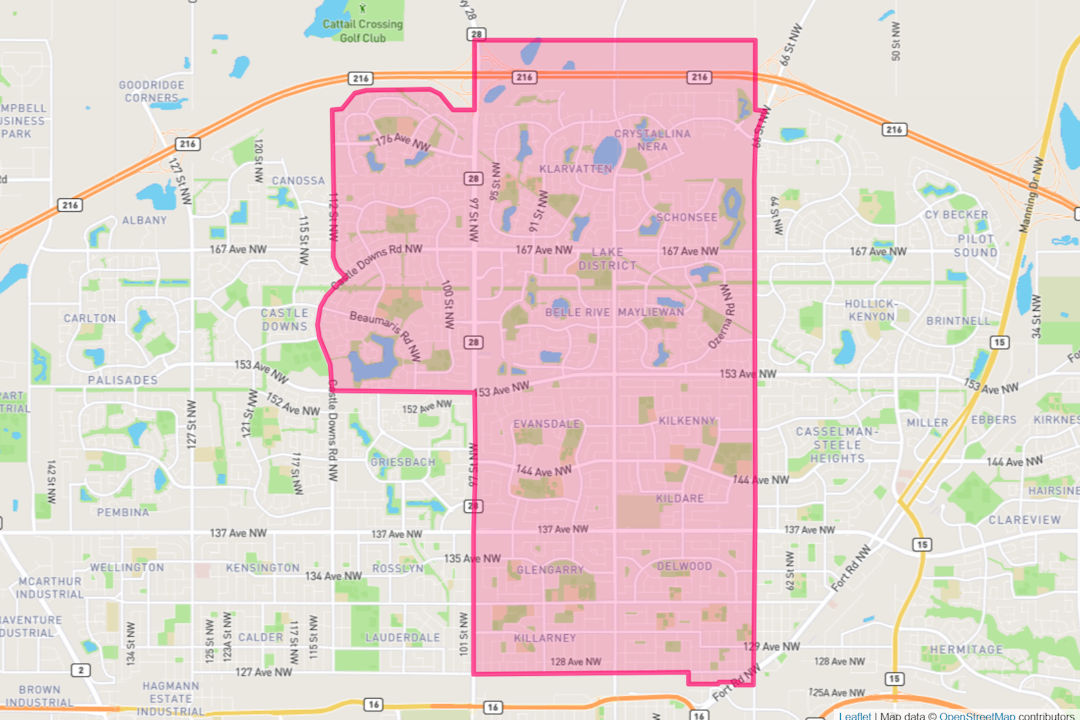
tastawiyiniwak: Where the candidates stand on the Taproot Survey
Taproot asked candidates to complete a 30-question survey covering a wide range of topics relevant to Edmonton's next city council. It was informed by the more than 900 responses to our election question, insights gathered at listening sessions, input from our election partners, and our own observations of what Edmonton's next city council will face.
Here are the answers we've received from the candidates in Ward tastawiyiniwak:
We have not yet received a response from Karen Principe.
Want to see which candidates best align with you on the issues that matter most? Take the survey and find out.
For more coverage of the 2025 municipal election in Edmonton, visit edmonton.taproot.vote.
A moment in history: Oct. 3, 1968
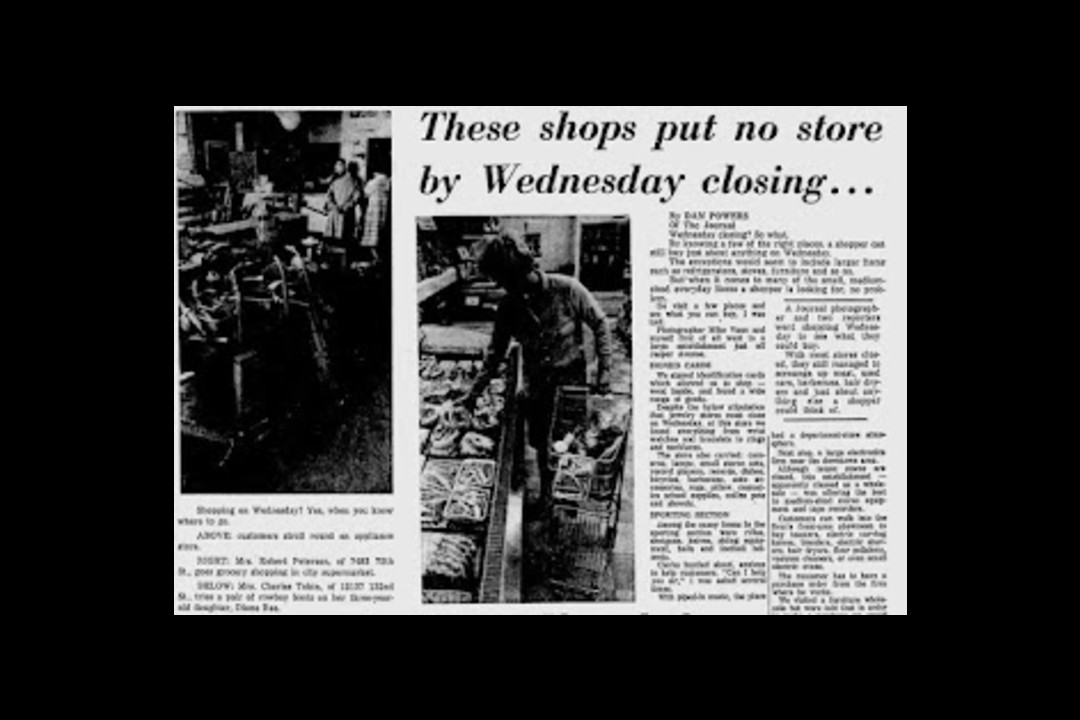
On this day in 1968, some Edmonton reporters were testing the limits of the city's Wednesday shopping ban.
Most people are familiar with Sunday shopping bans. Canada had a federal law for nearly 80 years restricting shopping on Sundays, until it was struck down by the Supreme Court of Canada in 1985, the same year Wednesday shopping bans were outlawed.
But why Wednesdays? At first, it seems arbitrary. One of the earliest references to the ban in Edmonton comes from a 1929 plebiscite. It asked voters if they would like to see the Wednesday "half-holiday" retail ban extended to the whole year, save for December. But there's no context as to what purpose it served, or why the idea was popular (most people voted yes, but not enough to reach the two-thirds majority needed). The city did eventually institute a bylaw extending the ban to every Wednesday outside of December.
In 1962, another vote was held to exempt all food stores from the Wednesday ban, regardless of size. Edmontonians rejected the idea soundly, showing that the ban was still largely popular.
Digging a little deeper reveals that the idea of a Wednesday half-holiday wasn't just an Edmonton thing. Similar shopping bans appeared in other towns and cities across the country. Looking at examples from Saskatchewan and Ontario, it seems like it was mostly to give retail workers a break in the middle of the week. In some towns in the United States, Wednesday half-holidays also freed people up for livestock auctions that were usually held on that day.
With Edmonton's ban, there were several exceptions and loopholes that allowed some shops to stay open. As the Journal reported in its 1968 story, businesses like florists and pharmacies could remain open, since they were stores that provided services "for the ill or the dead." Shops under a certain size could stay open. In 1962, another vote was held to exempt all food stores from the Wednesday ban, regardless of size. Edmontonians rejected the idea soundly, showing that the ban was still largely popular. The Journal writers also reported that stores were straight-up ignoring the ban, allowing them to get by nearly anything they were looking for, with a bit of digging.


The journalists who wrote that 1968 story on the shopping ban might have been inspired by an incident that happened a few months earlier. In March, Liberace — the famed and flamboyant pianist — was in Edmonton to play a couple of shows. Liberace was an avid shopper and had spent at least $15,000 on a previous trip to Alberta. But, since his only free day was on a Wednesday afternoon, his shopping plans were cut short.
Support for the shopping ban began to wane in the 1970s, partially due to pressure from larger grocery stores and retail chains, and stores could once again open on Wednesday afternoons.
Opening hours are no longer the concerns they used to be. But cities still have some power over what retail stores sell. Edmonton has not been shy about using it. The city enacted rules to reduce single-use plastics in 2023, which still might be an issue of contention in the municipal election this month. And earlier this year, council passed restrictions banning the sale of knives at convenience stores in an effort to curb violent crime.
This clipping was found on Vintage Edmonton, a daily look at Edmonton's history from armchair archivist Rev Recluse of Vintage Edmonton.

Happenings: Oct. 3, 2025
Here are some events happening this weekend in the Edmonton area.
- Oct. 3-4: Sturgeon Valley Fertilizer Sports Centre Grand Opening
- Oct. 3-4: Festival of Edmonton Seniors Theatre at Holy Trinity Anglican Church
- Until Oct. 4: Canadian Finals Rodeo at Rogers Place
- Until Oct. 4: Edmonton International Film Festival
- Oct. 4: Morinville Fire Hall Open House starting at 11am at Don Found Fire Station
- Oct. 4: Walk, Ride, or Roll for Warriors starting at 1pm at Lago Lindo Park
- Oct. 4: Book Fair starting at 4pm at Alliance Francaise of Edmonton
- Oct. 5: October Fall Colours Bike Tour starting at 9:30am at Terwillegar Park
- Oct. 5: Stollery Women's Network: UpliftHer 2025 starting at 9am at Westin Edmonton
- Oct. 5: Poetry Launch: Jennifer Bowering Delisle starting at 2pm at Audreys Books
And here are some upcoming events to keep in mind:
- Oct. 6: Pitch, Purpose, Power: Stepping Up Through Storytelling at Edmonton Unlimited
- Oct. 8: Mentorship That Matters - Part 1: Because No One Builds Alone at Edmonton Unlimited
- Oct. 15: General Election: State of Journalism- Misinformation and Disinformation online
Visit the beta version of the Taproot Edmonton Calendar for many more events in the Edmonton region.

The Taproot Mini - No. 64
Test your crossword prowess and deploy a little of your Edmonton knowledge. Complete the puzzle.
This week's puzzles were themed for Canadian Finals Rodeo Week in Edmonton. If you missed any, check out the archive.
The Taproot Mini is brought to you by ATB, your homegrown source of good advice to help conquer life's tougher puzzles. Learn how.
